Cotton Stem Canker and Dieback - Diaporthe ueckeri
October 15, 2026
Get Year-Round Updates From Our Agronomic Experts
Key Takeaways
- Cotton stem canker and dieback disease is a recently discovered disease in US cotton which was first found in northern Florida in 2024.
- The disease is caused by the pathogen Diaporthe ueckeri, a fungus previously known to cause cankers and root rots on crops like cassava and soybean in Brazil.
- The disease is favored by hot weather followed by long periods of rainfall and can cause rapid dieback and plant death under those conditions.
- Since this pathogen has not yet been fully characterized in cotton, variety susceptibility is not fully known and the disease needs more monitoring.
An Introduction to Cotton Diseases
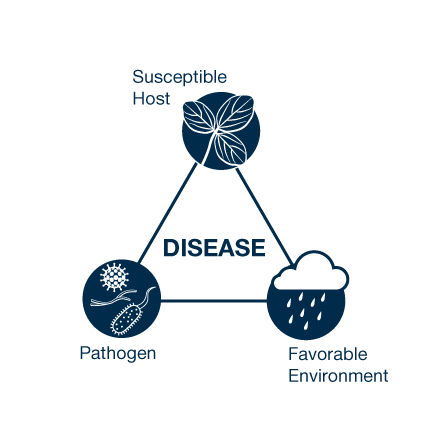
Across the Cotton Belt and elsewhere, cotton diseases can develop whenever pathogens, susceptible crops, and the seasonal return of growing conditions that favor disease development occur in the same place at the same time. Together, these three components form the disease triangle (Figure 1). Being aware of historical diseases in their growing area can help growers make proactive disease management decisions.1,2
Growers can do many things to help manage disease spread and intensity, including consulting previous and current crop scouting records, selecting resistant cotton varieties, managing soil fertility, and using crop rotation, seed treatments, foliar and soil-applied fungicides, insect and weed management, seeding rates, and nematicides.1,2 Knowing the causal agent for a disease is also helpful because management practices are different for fungal, bacterial, or viral diseases.1,2 More information on managing cotton diseases can be found here.
Overview of Cotton Stem Canker and Dieback From Diaporthe ueckeri
Cotton stem canker and dieback disease is a recently discovered disease in US cotton (Gossypium hirsutum) which was first found in northern Florida in 2024. University of Florida plant pathologists at the North Florida Research and Education Center (NFREC) in Quincy found that stem canker and dieback disease of cotton was caused by the fungus Diaporthe ueckeri.3,4
This plant-pathogenic fungus was previously known to cause cankers and root rots on crops like cassava and soybean in Brazil.3,4 It is similar to Diaporthe phaseolorum, which causes stem canker on soybean.1 Cotton stem canker and dieback disease development is favored by hot weather followed by long periods of rainfall and infection can cause rapid dieback and plant death under those conditions.3,4
Symptoms of Cotton Stem Canker and Dieback Caused by Diaporthe Ueckeri
In July 2024, NFREC researchers observed cotton plants (Deltapine 2127 B3XF) in the first flower stage showing unusual symptoms in experimental plots in Quincy Florida:
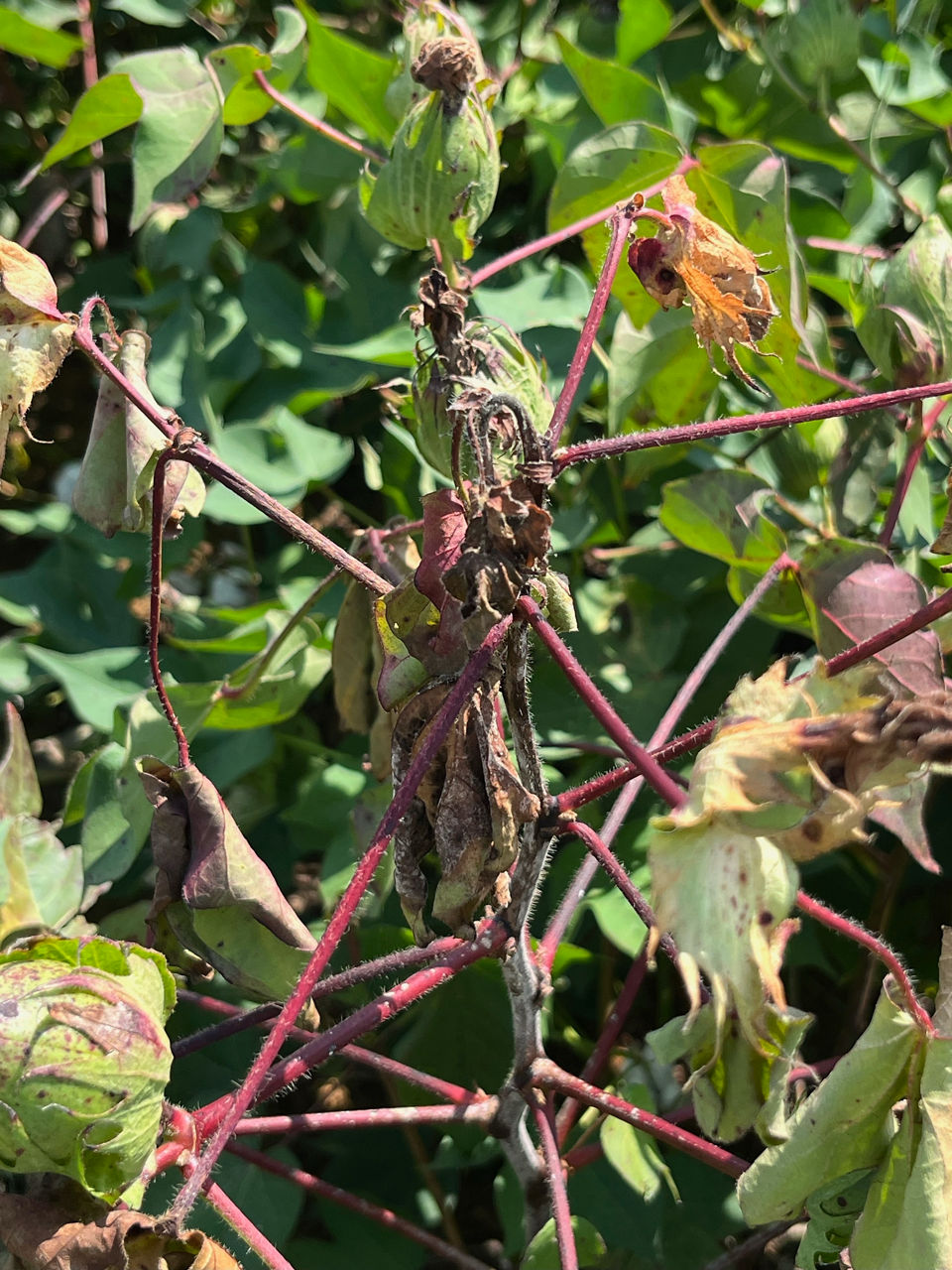
- Dark, elongated stem lesions (Figure 1).
- Sudden tip dieback forming a characteristic shepherd’s crook.
- Cankers progressing down the stem.
- Plant death within four to five weeks.
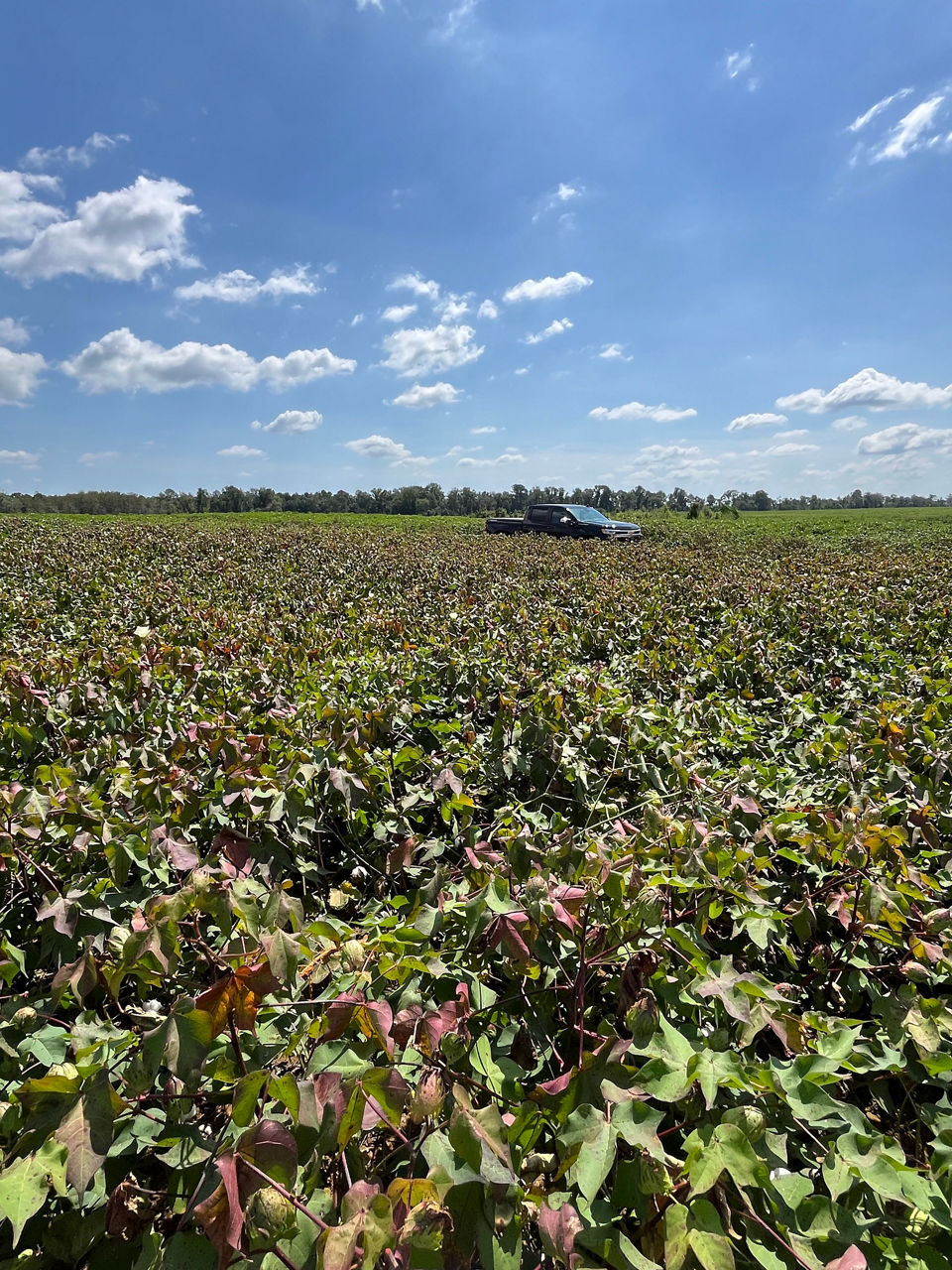
- Affected areas occurred in patches or small clusters (Figure 2).
- Coincidence with hot, wet periods, especially during early flowering.
- Occurrence 60 to 80 days after planting (DAP).3,4
Diagnostic Notes on Cotton Stem Canker and Dieback and the Diaporthe ueckeri Fungus
As mentioned above, the first report of Diaporthe ueckeri infecting cotton in the US came from Florida in July of 2024.3,4 During that event, disease incidence reached 25% in affected areas. Symptoms appeared after a period of temperatures over 90 °F (32 °C) followed by prolonged wet weather.3,4
In 2025, field trials were planted at the same NFREC location where the disease appeared the previous year. Despite thorough scouting during the early flowering and later reproductive stages, stem canker was not found in these trials.3,4
Since the disease appeared in 2024 but not 2025, researchers believed that environmental conditions may strongly influence outbreaks of this disease.3,4 More research is needed to fully understand this pathogen and any environmental conditions that may influence the spread of the disease in cotton.3,4
Potential Yield Loss and Control of Cotton Stem Canker and Dieback
Infection by the pathogen Diaporthe ueckeri leading to stem canker and dieback disease in cotton can cause rapid dieback and plant death, especially during flowering if environmental conditions support disease development. Cotton growers should be proactively scouting for this disease.3,4
As this pathogen has not yet been fully characterized in cotton, variety susceptibility to the disease is not yet known. Researchers still need to develop management strategies for cotton stem canker and dieback, which may eventually include recommending specific varieties, cultural controls, and fungicide timings.3,4
Sources
1Cotton Gossypium hirsutum. In, Texas plant disease handbook. Texas A&M AgriLife Extension. https://plantdiseasehandbook.tamu.edu/industry-specialty/fiber-oil-specialty/cotton/
2Ahumada, D. 2026. Disease management in cotton. 2026 cotton information. North Carolina State University. https://content.ces.ncsu.edu/cotton-information/disease-management-in-cotton
3Iriarte, F.B., Urbina, H., Paez, C.A. O’Brien, G.K., McVay, J., and Small, I.M. 2025. First report of canker and dieback caused by Diaporthe ueckeri in cotton (Gossypium hirsutum) in Florida. Plant Health Progress. 26(4). https://apsjournals.apsnet.org/doi/abs/10.1094/PHP-02-25-0072-BR
4Small, I., Iriarte, F., and O’Brien, K. 2026. Stem canker and dieback – an emerging disease of cotton. What Panhandle growers need to know. Cotton Farming. https://www.cottonfarming.com/current-issue/stem-canker-and-dieback-an-emerging-disease-of-cotton-what-panhandle-growers-need-to-know/
1411_990850
Disclaimer
ALWAYS READ AND FOLLOW GRAIN MARKETING AND ALL OTHER STEWARDSHIP PRACTICES AND PESTICIDE LABEL DIRECTIONS.