5 MIN READ
Diaporthe Soybean Disease Identification & Management
January 8, 2026
- Five major soybean diseases, pod and stem blight, Diaporthe seed decay, zone lines, northern stem canker, and southern stem canker are caused by Diaporthe fungi.
- The diseases are found in the major soybean production areas of the United States.
- A common factor that promotes development among the diseases is wet and warm growing conditions.
Pod and Stem Blight - Diaporthe sojae
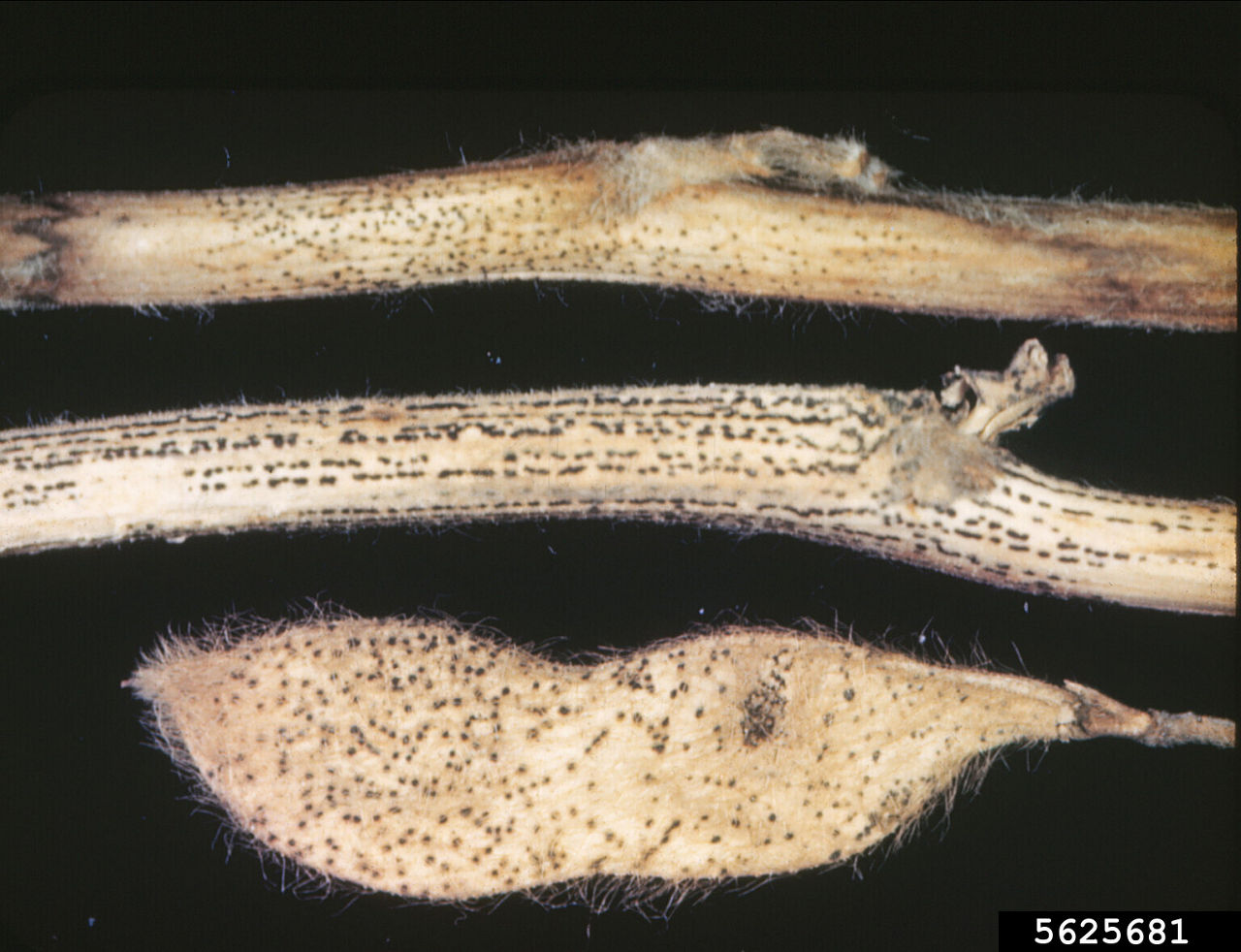
Infection by the fungus Diaporthe sojae can occur early in the growing season; however, symptoms of Pod and Stem Blight occur later in the season (R6 to R8 growth stages; full pod through harvest, respectively). A characteristic symptom of D. sojae infection is parallel rows of black, flask-shaped specks or pycnidia on mature soybean stems or other dead/dying tissues (Figure 1). The pycnidia may also develop on dry, poorly developed pods, but may be dispersed randomly rather than arranged linearly.1
Diaporthe Seed Decay - Diaporthe species
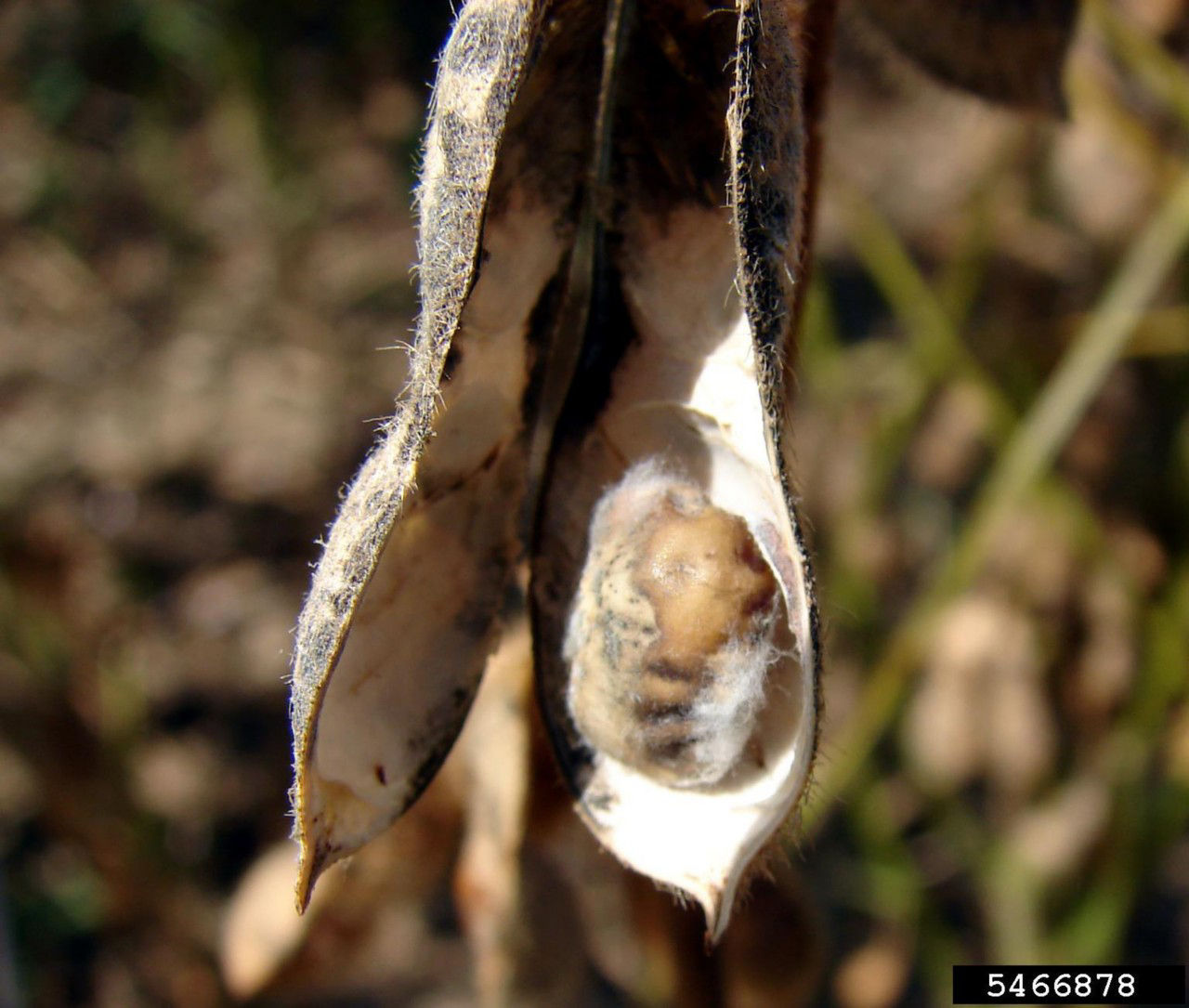
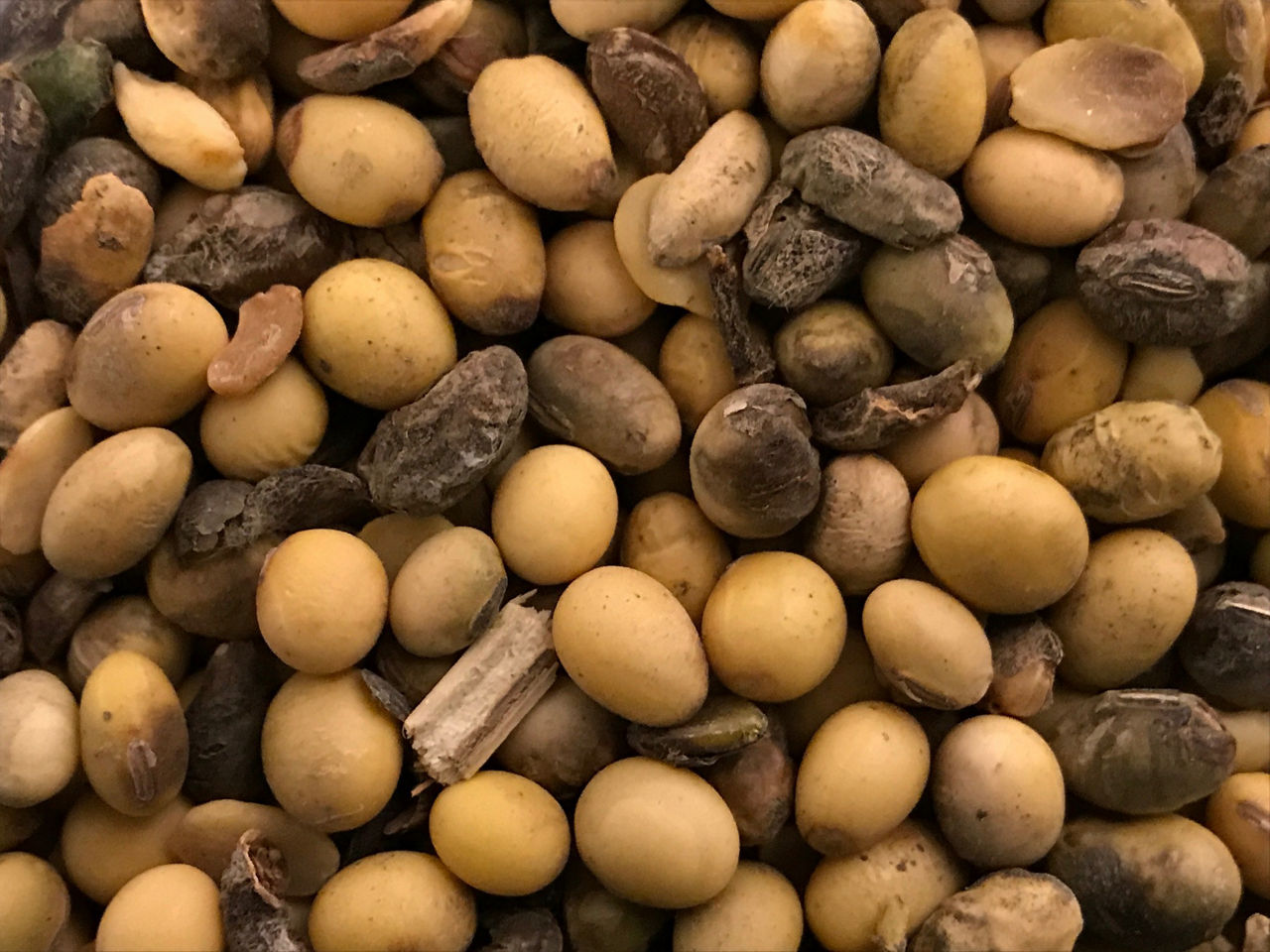
Diaporthe seed decay is caused by several species of the fungus Diaporthe.2,3 Incidence and severity of this disease is associated with warm, humid, or wet weather prior to maturity, and when there is a delay in harvest. Infected seeds—depending on severity—may appear shriveled, cracked, chalky, or healthy (Figures 2 and 3).4 Healthy appearing but infected seeds may produce weak seedlings, and severely infected seeds may fail to germinate.5 Seed quality, oil content, and test weight of infected seeds may be reduced.
Diaporthe Zone Lines - Diaporthe longicolla mycelium
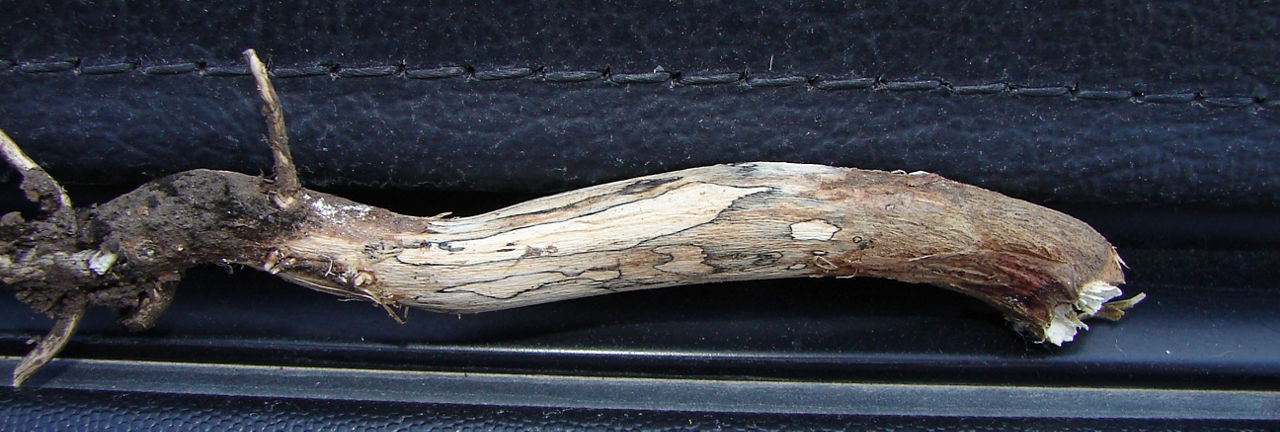
Zone lines are compact masses of mycelium (stroma) of the fungus Diaporthe longicolla, which are visible under epidermal tissues of stems and roots when plants mature or die prematurely.6 The dark thin lines are irregular in shape and may be circular (Figure 4). Stroma can persist in soybean residue and provide inoculum for future soybean planting. It is currently unknown what impact these structures may have on yield potential. Zone lines have been associated INCORRECTLY with charcoal rot, which is caused by the fungus Macrophomina phaseolina.6,7
Northern and Southern Stem Canker – Diaporthe caulivora & Diaporthe aspalathi
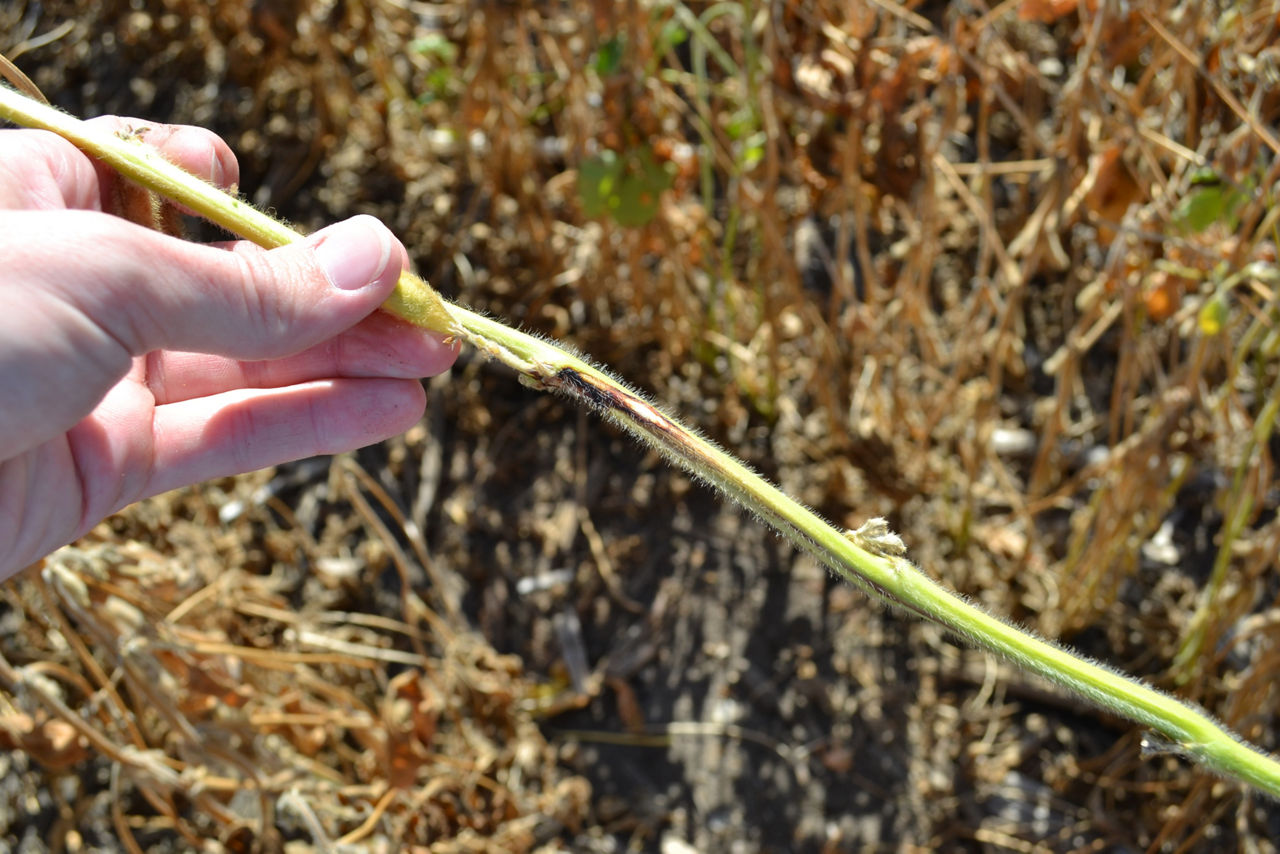
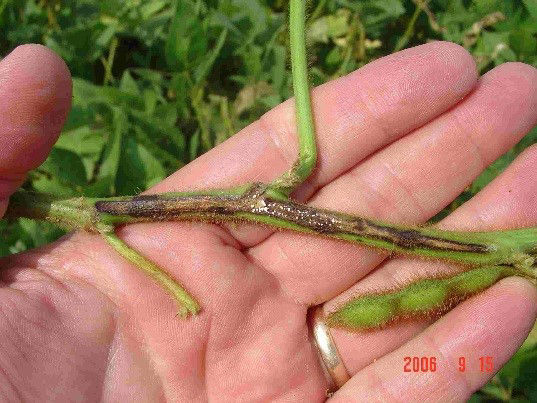
Northern (Diaporthe caulivora) and southern stem canker (Diaporthe aspalathi) can be found throughout US soybean growing areas. Both diseases have similar symptomology. Early symptoms include reddish-brown lesions that appear at the base of branches or leaf petioles. These small lesions can develop into elongated, sunken, dark brown cankers that spread up and down the stem (Figures 5 and 6). Tiny black dots called perithecia (spore producing fungal structures) may appear on the stem singly or in clustered groups on plants killed by stem canker. Plant parts above the lesions may die. Reddish-brown discoloration may also occur inside the stem, and pods can abort. Cankers can also look similar to the lesions produced by Phytophthora root rot. However, Phytophthora root rot will also cause root rot with a continuous lesion that extends from root through the stem, while stem cankers do not impact the root. Leaves may also develop necrosis and chlorosis between the veins and may remain attached after death.7 One distinction between the two is that Southern stem canker lesions are likely to have distinct purplish borders and slightly visible concentric rings (Figure 6).9
Diaporthe Soybean Disease Management
- Cultural Management – Rotating with corn or other non-legume crops is a primary means for managing Diaporthe diseases. This allows for the fungi, which persists in soybean residue, to decay. Seed selection is a viable option, as soybean products vary in their tolerance or resistance to each disease. Major gene resistance is available for southern stem canker, although resistance to southern stem canker does not provide resistance to northern stem canker. If tolerance ratings are not provided for a favorite seed product, your seed supplier may have additional information.4 Timely harvest can also reduce the occurrence of seed decay.
- Fungicidal Management
- Pod and Stem Blight – Labeled fungicides applied at R6 growth stage can help maintain seed quality in the presence of pod and stem blight, especially when late-season growing conditions are warm and wet.5
- Diaporthe Seed Decay – A labeled fungicide applied from pod set (R3) through late pod stages (R6) is recommended for seed production fields to help decrease seed infection.4
- Northern and Southern Stem Canker – Labeled fungicides applied at V3 growth stage before infection occurs may be considered for management.9
Sources
1Mueller, D., Bradley, C., Chilvers, M., Giesler, L., Mathew, F., Smith, D., Tenuta, A., and Wise, K. 2015. An overview of pod and stem blight and Diaporthe seed decay. Crop Protection Network, A Product of Land Grant Universities. CPN-1007. https://cropprotectionnetwork.org/publications/an-overview-of-pod-and-stem-blight-and-phomopsis-seed-decay
2Petrović, K., Skaltsas, D., Castlebury, L.A., et al. 2021. Diaporthe seed decay of soybean [Glycine max (L.) Merr.] is endemic in the United States, but new fungi are involved. Plant Disease. The American Phytopathological Society. Online APS Publications.
3Joyce, A. and Thiessen, L. 2020. Seed decay and pod blight. NC State Extension, North Carolina State University. https://content.ces.ncsu.edu/seed-decay-and-pod-blight
4Mangel, D. Pod and stem blight. CROPWATCH, Nebraska Institute of Agriculture and Natural Resources. University of Nebraska-Lincoln. https://cropwatch.unl.edu/plant-disease/soybean/pod-and-stem-blight/
5Pod and stem blight. OSU Extension. Oklahoma State University. https://extension.okstate.edu/programs/digital-diagnostics/plant-diseases/pod-and-stem-blight.html
6Bish, M., Faske, T., Langston, D., Lopez-Nicora, H., Malvick, D., Mueller, J., Sikora, E., Telenko, D. and Webster, W. 2025. Soybean stem zone lines: Fact and fiction. Crop Protection Network, A Product of Land Grant Universities. CPN-1015. https://cropprotectionnetwork.org/publications/soybean-stem-zone-lines-fact-and-fiction
7Olson, T.R., Gebreil, A., Micijevic, A., Bradley, C.A., Wise, K.A., Mueller, D.S., Chilvers, M.I., and Mathew, F.M. 2015. Association of Diaporthe longicolla with black zone lines on mature soybean plants. Plant Health Progress. 16(3): 188-122. https://doi.org/10.1094/PHP-RS-15-0020
8Malvick, D. 2018. Stem canker on soybean. University of Minnesota Extension. https://extension.umn.edu/soybean-pest-management/stem-canker-soybean
9Hershman, D.E. 2013. Stem canker of soybean. Plant Pathology Fact Sheet. UK Cooperative Extension Service, University of Kentucky. PPFS-AG-S-07. https://plantpathology.mgcafe.uky.edu/files/ppfs-ag-s-07.pdf
Web sources verified 12/22/25. 1311_143421
Disclaimer
ALWAYS READ AND FOLLOW GRAIN MARKETING AND ALL OTHER STEWARDSHIP PRACTICES AND PESTICIDE LABEL DIRECTIONS.