5 MIN READ
Sidewall Compaction in Corn: Causes, Effects, and Prevention
July 27, 2026
Key Takeaways
- Sidewall compaction can restrict early root growth and limit seedling development.
- Wet soil conditions at planting increase the risk of smeared seed furrow sidewalls.
- Restricted roots reduce nutrient and water uptake and can increase susceptibility to stress.
- Yield potential may be impacted when early root development is limited.
Why Worry about Sidewall Compaction in Corn?
To help maximize corn yield potential, seedlings must become established without early-season root restrictions. Nodal roots emerging from the germinating seed require favorable soil conditions to grow freely. However, when planting occurs in soils that are too wet, seed furrow sidewalls can become smeared and dense. These compacted sidewalls create a physical barrier that can limit root penetration into surrounding soil, restricting early seedling development (Figure 1). This condition is referred to as sidewall compaction.
Sidewall compaction can lead to several issues, including poorly closed seed slots (Figure 2), reduced germination and stand establishment, uneven emergence, restricted root growth, stunted seedlings, and decreased uptake of water and nutrients.1,2
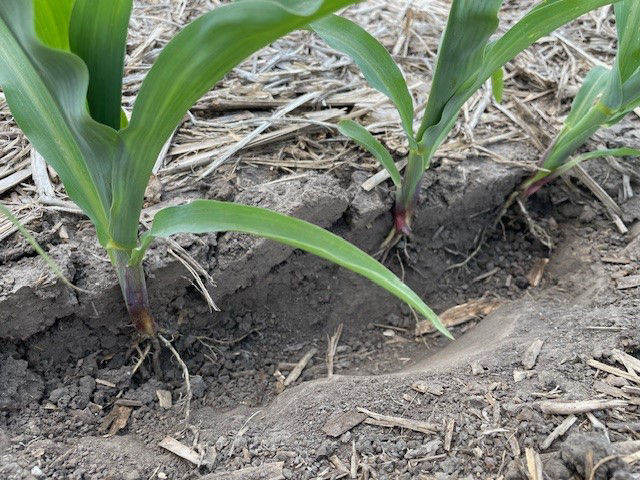
Figure 1. Compacted seed furrow sidewalls resulting from soil being too wet during planting.
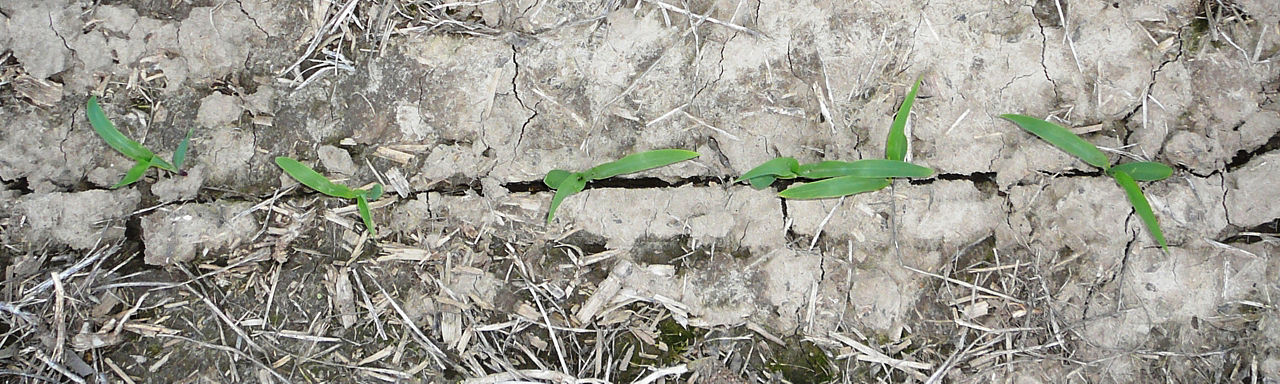
Figure 2. Sidewall compaction of the seed furrow and later field drying can cause the seed furrow to split open.
What Causes Sidewall Compaction?
Sidewall compaction most often occurs when planting in soils that are too wet. As seed furrow openers move through moist soil, they can smear the furrow sidewalls, preventing soil from fracturing and properly closing around the seed.1,2,3 When the seed slot is properly closed, the sidewalls should be fractured around the seed, providing good seed-to-soil contact.3
Key contributing factors to sidewall compaction include: 1,2,3,4,5
- Planting in wet or plastic soil conditions
- Excessive down pressure on closing wheels
- Improper planter setup or leveling
- Shallow planting depth relative to closing wheel pressure
- Limited residue cover, leading to rapid drying and crusting
Identifying Soils Fit for Planting Corn
Soil is generally considered fit for field planting when it breaks apart easily rather than forming a dense structure. To see if your soil is too wet to plant you can conduct these simple field tests:
- Ball test: Form a ball with soil taken from a 3- to 4-inch depth. If it can be formed into a ball that does not fracture easily when dropped it is too wet to plant and sidewall compaction risk is high.
- Ribbon test: Press soil between your thumb and fingers to form a soil ribbon (Figure 3). If the soil ribbon extends longer than 3 inches is likely too wet for planting.4,5
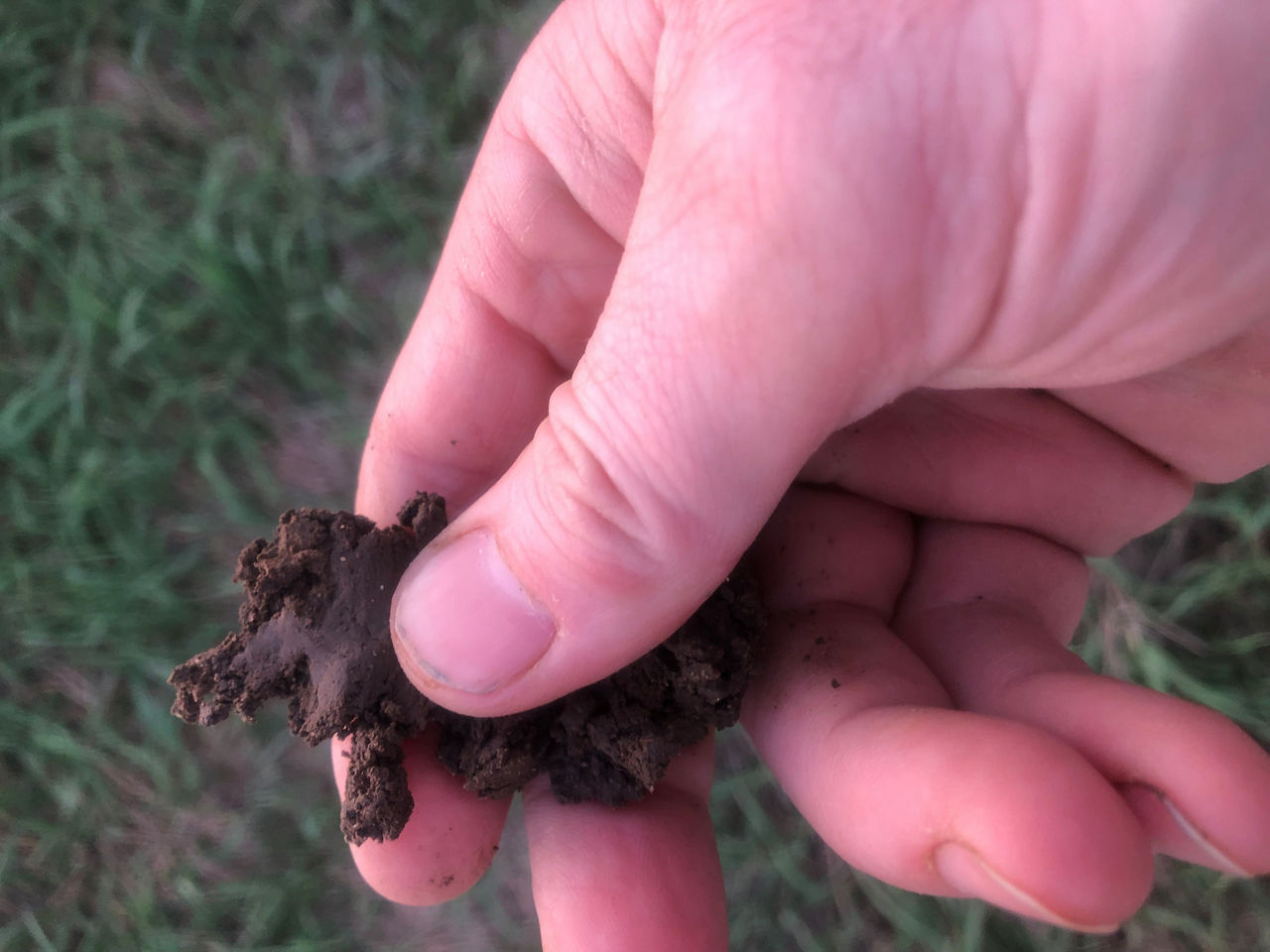
Figure 3. Test soil moisture by squeezing a ribbon of soil between your fingers. Fields are too wet when a ribbon of soil reaches a length of 3 inches or more before breaking.4,5
Effects of Sidewall Compaction on Corn Seedlings During the Growing Season
Sidewall compaction can impact corn from emergence through early vegetative growth. Plants with restricted root growth often show symptoms of nutrient or water deficiencies and greater susceptibility to stress all contributing to a potential impact on yield.1
Nutrient deficiencies
Can present in soils with adequate soil test values, as the roots cannot absorb enough nutrients due to poor seed to soil contact.2 By the V3 growth stage, nutrient deficiencies can become more pronounced as kernel reserves are depleted and the plant begins to rely on its nodal root system.6
One primary nutrient deficiency occurs when seedling roots are restricted is phosphorus (P) deficiency, which is characterized by plant purpling along the leaf tips and margins (Figure 4). Additionally, early nitrogen deficiency may also occur and can be characterized by yellow or pale green plants.2
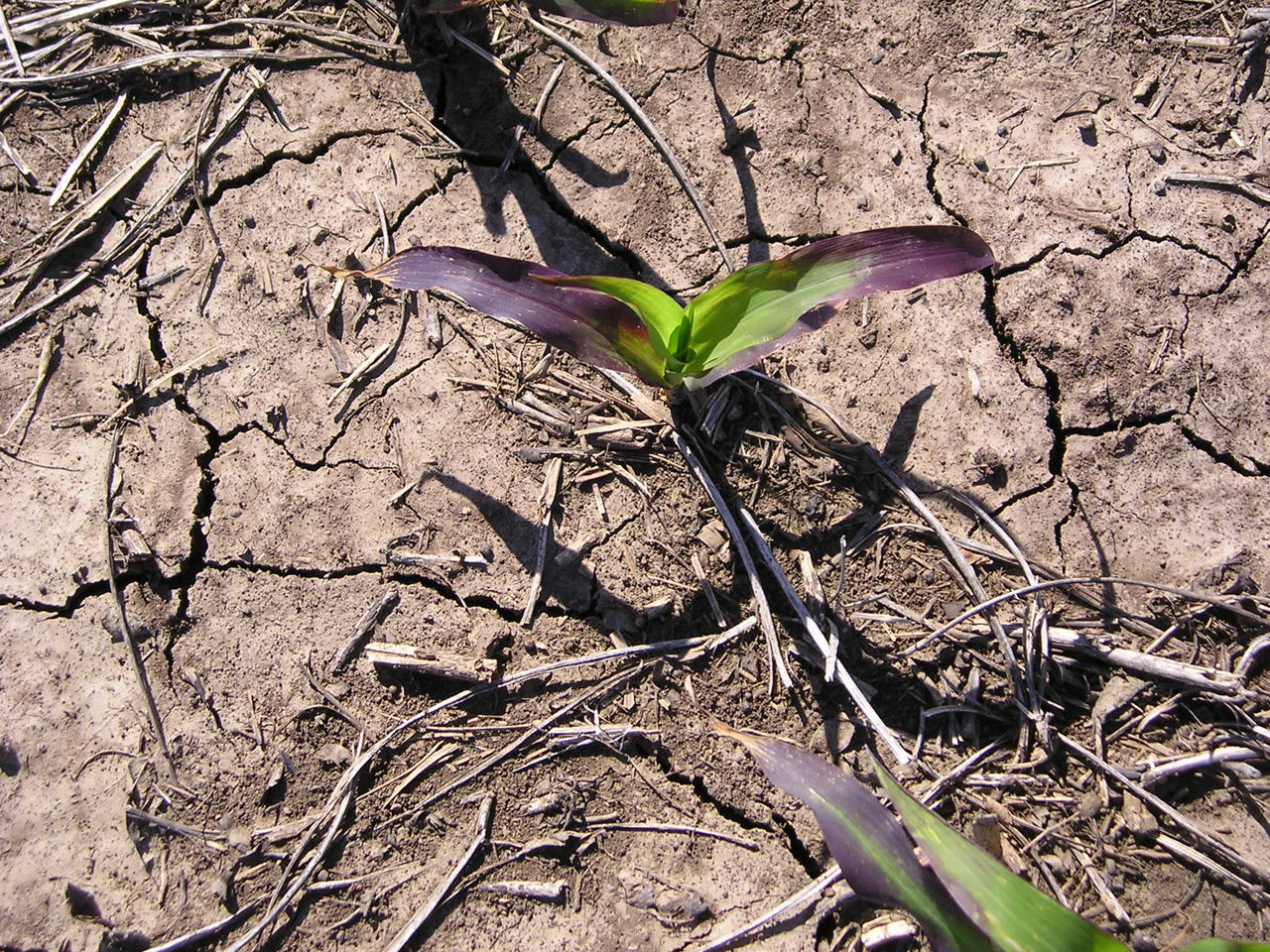
Figure 4. Characteristic corn seed purpling resulting from insufficient phosphorus uptake because of restricted roots.
Floppy Corn syndrome
May be evident after a wind event before the V5 to V6 growth stage.7 Sidewall compaction and shallow planting can lead to a shallow root system that is unable to grow deep and wide enough to anchor plants (Figures 5 and 6).
Examine root development to see if initial nodal roots have died or become shriveled and discolored from seedling diseases before they could penetrate the furrow sidewalls.6 In severe situations, root growth is restricted to only downward growth which results in roots having a flattened or ‘tomahawk’ appearance (Figure 7).1 Note floppy corn can also result from roots that were damaged by anhydrous ammonia, certain herbicides, and drought conditions.
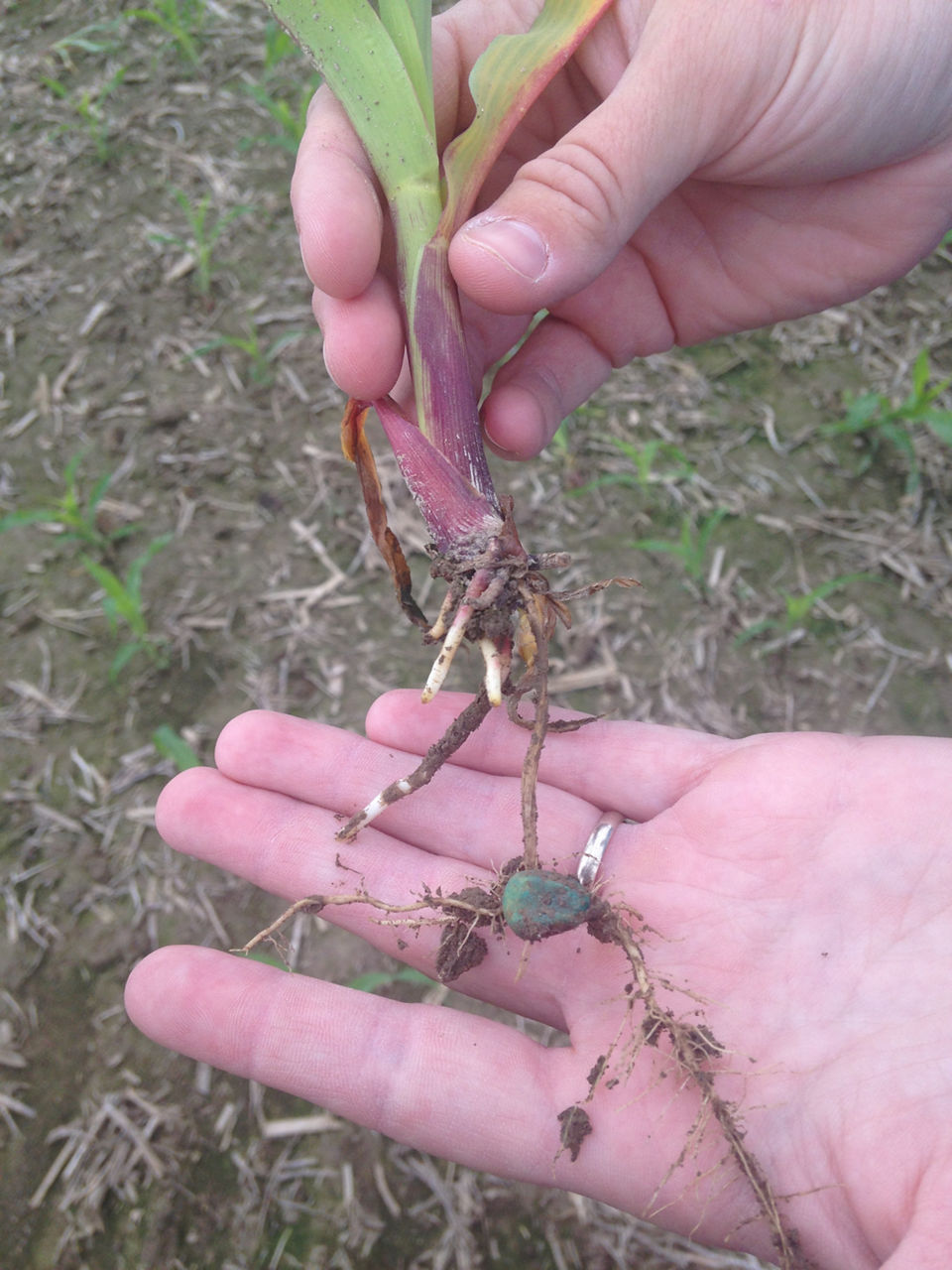
Figure 5. Restricted seedling roots can result in floppy corn syndrome when seedlings lay over in wind events because of poor root development.
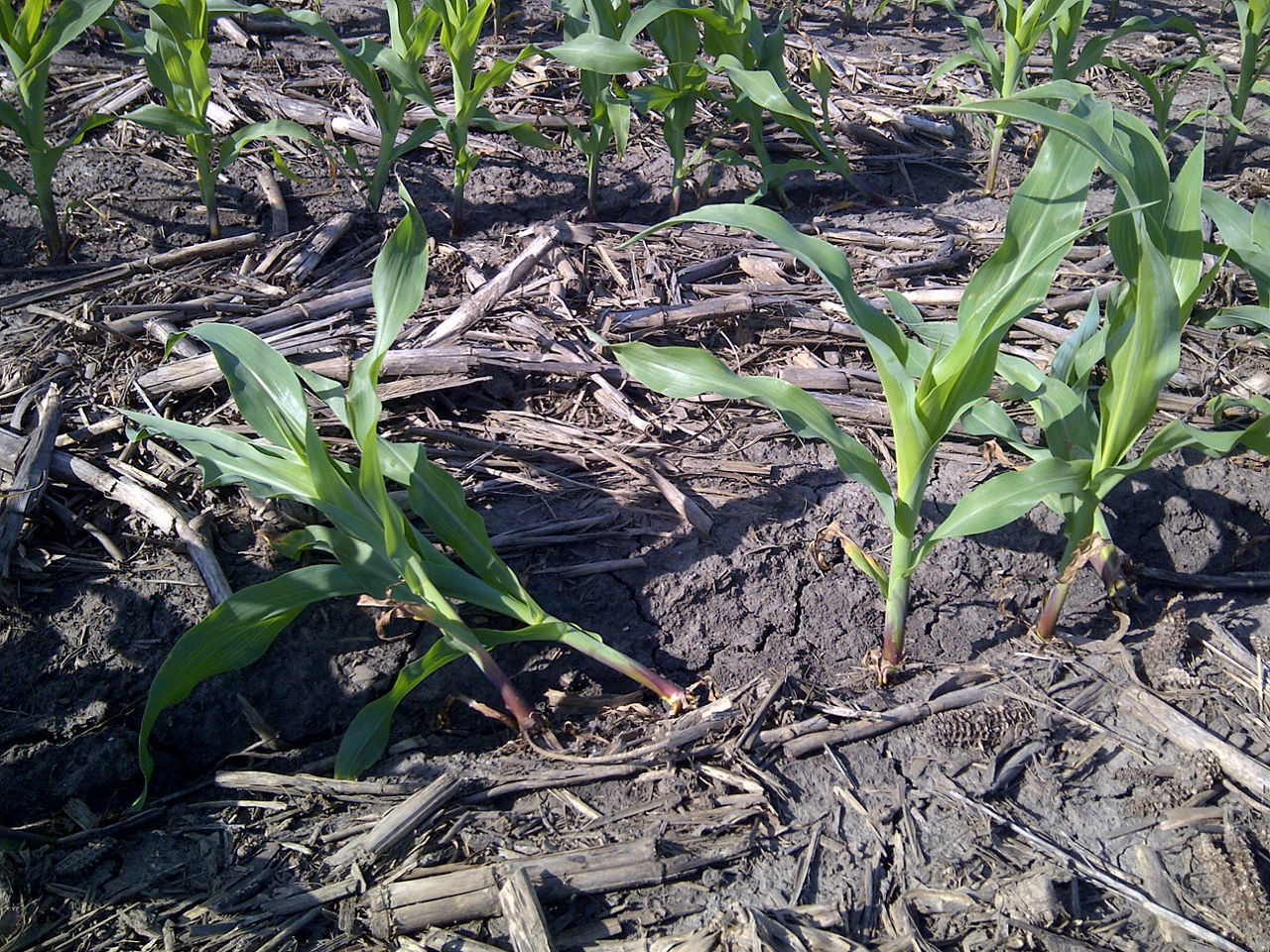
Figure 6. Floppy root syndrome resulting poorly developed roots in compacted soil.
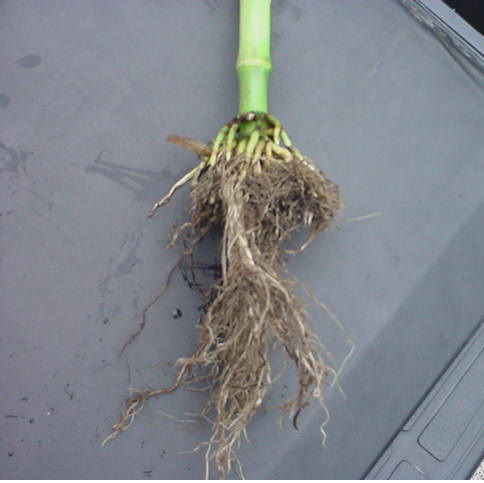
Figure 7. When roots only have downward growth, roots develop a flattened or tomahawk appearance.
How to Help Prevent Sidewall Compaction in Corn
There are no rescue treatments for seed furrow sidewall compaction; therefore, proactive preventative measures should be considered. Waiting for soil moisture to be favorable for planting is always a good option but becomes questionable when the calendar and emotions indicate it is time or past time to plant corn. Paul Jasa, retired Extension Engineer at the University of Nebraska offers the following management practices to consider:3,4,5
- Reduce down pressure on gauge and closing wheels.
- Ensure the planter is leveled from front to rear or operated slightly tail down to help improve seed-to-soil contact and seed furrow closing. The closing wheel arm must be level for angled closing wheels to operate properly.
- Utilize seed firmers and a drag chain to help improve seed-to-soil contact when using two spiked closing wheels per row to breakup sidewall compaction.
- Aggressive closing wheels, typically with long, straight tines, tend to dry the soil. Consider using closing wheels with short or curved tines.
- Adding one spiked closing wheel per row can help break up sidewall compaction on one furrow side and close the seed furrow more effectively in many conditions.
- Stagger closing wheels to help reduce the potential for the seed furrow opening as the soil dries. A spiked wheel should be placed in front of a rubber wheel.
- Maintain some crop residue over the row to help delay soil drying and reduce crusting.
For additional early-season corn information, please read:
Planting Row Crops: Determining Planter Down Force Settings
Uneven Corn Stands-Causes and Recommendations
What is Killing My Corn Seedlings?
Corn Diseases Associated with Early Planting
Corn Injury from Anhydrous Ammonia Fertilizer
Sources
1Quinn, D. 2022. Sidewall compaction: Why is it important and how to avoid it at planting? The Kernel. Purdue University. https://ag.purdue.edu/news/department/agry/kernel-news/2022/01/sidewall-compaction.html
2Licht, M. and Rieck-Hinz, A. 2026. Soil crusting and sidewall compaction: Hidden barriers to crop establishment and early root growth. Integrated Crop Management. Iowa State University Extension and Outreach. https://crops.extension.iastate.edu/post/soil-crusting-and-sidewall-compaction-hidden-barriers-crop-establishment-and-early-root-growth
3Jasa, P. 2019. Avoiding sidewall compaction at planting. CROPWATCH. Institute of Agriculture and Natural Resources. University of Nebraska – Lincoln. https://cropwatch.unl.edu/2019/avoiding-sidewall-compaction-planting.
4Anderson, E. (original, Staton, M.) 2022. Reducing sidewall compaction in field crops. MSU Extension Field Crops. Michigan State University. https://www.canr.msu.edu/news/preventing_sidewall_compaction_in_field_crops.
5Staton, M. 2016. Preventing sidewall compaction in field crops. Michigan Farm News. Michigan Farm Bureau. https://www.michiganfarmnews.com/preventing-sidewall-compaction-in-field-crops.
6Nielsen, R.L. 2020. Root development in young corn. Corny News Network. Purdue University. https://www.agry.purdue.edu/ext/corn/news/timeless/Roots.html.
7Nielsen, R.L. 2022. “Rootless” or “Floppy” corn syndrome. Corny News Network. Purdue University. https://www.agry.purdue.edu/ext/corn/news/timeless/FloppyCorn.html.
Web sources verified 5/29/26. 1217_118264
Disclaimer
ALWAYS READ AND FOLLOW GRAIN MARKETING AND ALL OTHER STEWARDSHIP PRACTICES AND PESTICIDE LABEL DIRECTIONS.