5 MIN READ
Checking Stored Soybean Quality
July 23, 2025
Soybean grain quality is highest at harvest. The goal for growers is to manage grain storage conditions to help preserve that quality. Soybeans that are stored under cool and dry conditions are relatively safe from fungi and insects, the primary causes of grain damage.
Poor management of stored grain can result in spoilage and loss of market grade. Storing grain at the proper moisture content, making routine grain observations during storage, and managing grain temperature are important to prevent grain storage problems. Monitoring stored soybean is particularly important during the late winter months as mild temperatures begin to warm grain masses.
Moisture
The length of the storage period influences the amount of spoilage in grain (Table 1). In general, the longer the storage period, the lower the moisture content should be to ensure safe storage.
Table 1. Approximate allowable storage time for soybean.1
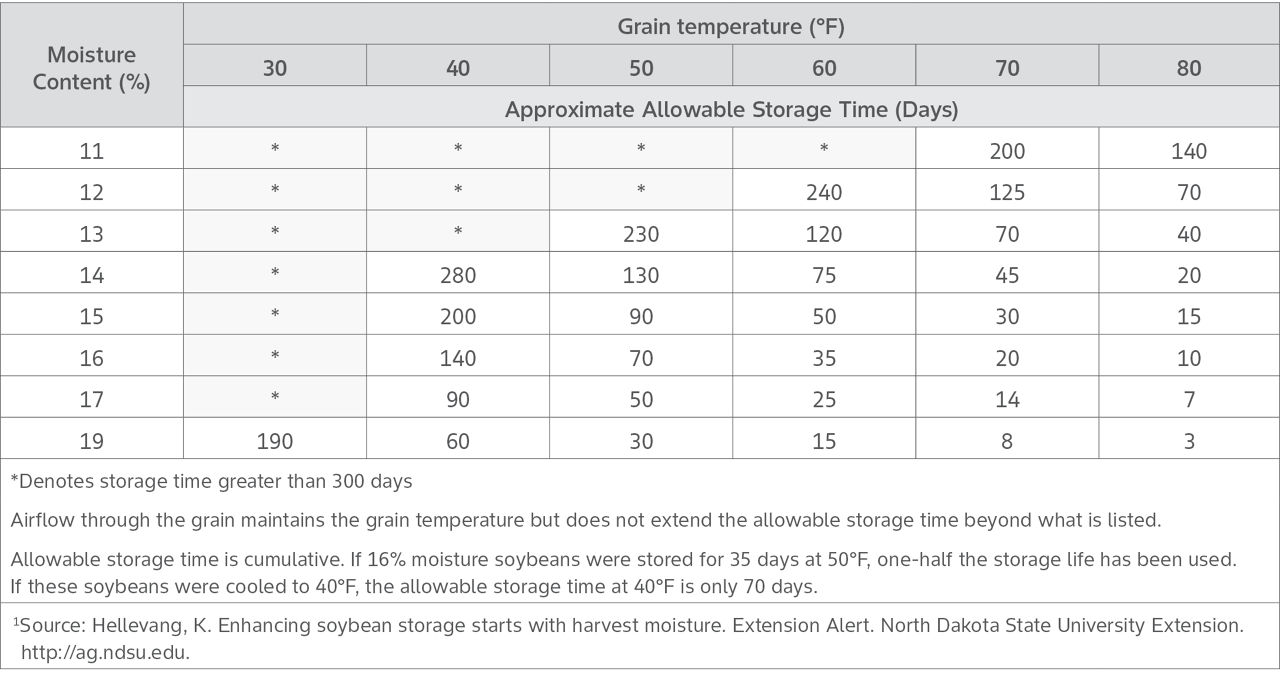
Soybean moisture level is critical for maintaining storage quality. Soybean grain should be stored at moisture levels of approximately 12% or less to mitigate mold growth.2 Access to an accurate moisture meter is highly recommended to regularly check moisture levels. Pay attention to the meter temperature compensation method because grain temperature can have a large effect on moisture readings. Cold grain generally causes low readings unless moisture has condensed on the surface. All moisture testers show some variability, meaning different readings may be obtained when the same sample is tested more than once. To limit this effect, test each sample at least three times and average the readings. Soybean that will be used as seed should be kept at lower moisture levels.
Temperature
Storage temperature plays an important role in the interaction of moisture content and grain quality in storage. Warmer temperatures require drier soybeans to maintain the same quality and allowable storage time. Controlling soybean temperature during storage is critical. Free fatty acid percentages, a negative characteristic that affects soybean oil quality, tend to increase with seed moisture, storage temperature, and time.1 Therefore, keeping soybean as cool as possible in the spring and summer can help maintain oil quality.
- Fall – Aerate continuously at any time when the equilibrium moisture content is acceptable and air temperature is 10 to 15 °F cooler than grain temperature until the grain is cooled to 40 °F.
- Winter – Aerate about every two weeks when air temperature is within 10 °F of grain temperature. Store soybeans during the winter near 30 °F in northern states and 40 °F or lower in southern states.
- Spring and Summer – When mean daily temperatures show steady increase, aerate continuously whenever air temperature is 10 to 15 °F warmer than grain temperature until grain temperature reaches 60 to 65 °F. These temperatures enhance the storage life of soybeans and reduce mold and insect activity.
Improved technology can help manage stored grain, but visual inspection of the grain should continue at regular intervals. Temperature cables allow for easy monitoring of the stored grain temperature at several locations, and fan controllers can operate fans according to desired air conditions. Monitor and verify that fans are operating as desired.
Aeration
Aerate stored soybean to maintain grain temperatures between 35 and 40 °F in the winter and 40 to 60 °F in the summer. These temperatures reduce mold and insect activity and moisture movement within the bin.3
Accumulated moisture can be easily managed if the grain is aerated every couple of weeks. Probe the bin periodically to check for insect infestation and grain temperature increases. An increase in grain temperature is usually associated with moisture migration. Aerate the grain to control heating or other early storage problems. If that fails, move, re-dry, or sell the beans.
Fungi and Insects
Fungi are the most important cause of soybean damage in storage. Insects are more likely to attack damaged beans. Fungi and insects are fueled by high moisture levels and are more likely to occur in grain with many damaged kernels or trash. High temperatures and high humidity set up excellent conditions for fungi. Once grain is cooled to 40 °F, the likelihood of fungal growth is greatly reduced.
Soybean Storage Recommendations4
- Cool the grain as soon as possible in the fall. Initially, target temperatures should be around 60 °F.
- Continue to aerate and uniformly cool grain to between 30 to 40 °F if possible. This will help avoid internal moisture migration and insect activity.
- Monitor the soybean at least once every two weeks during winter storage and weekly during the fall until the grain has been cooled to winter storage temperatures.
- Keep the grain cool for as long as possible into early spring.
- Monitor the soybean weekly during the spring and summer. Measure the grain temperature and watch for indications of problems such as condensation, insect activity, and increasing grain temperatures. Record temperature values and grain conditions to help track any changes.
- Cover fans and openings when not in use to help avoid air, moisture, and potential insect movement. Ventilate the top of the bin to reduce the effect of solar heat on beans at the top of the bin.
- Monitor carefully and fumigate if needed.
- Inspect the soybean surface at least once a week throughout the storage period.
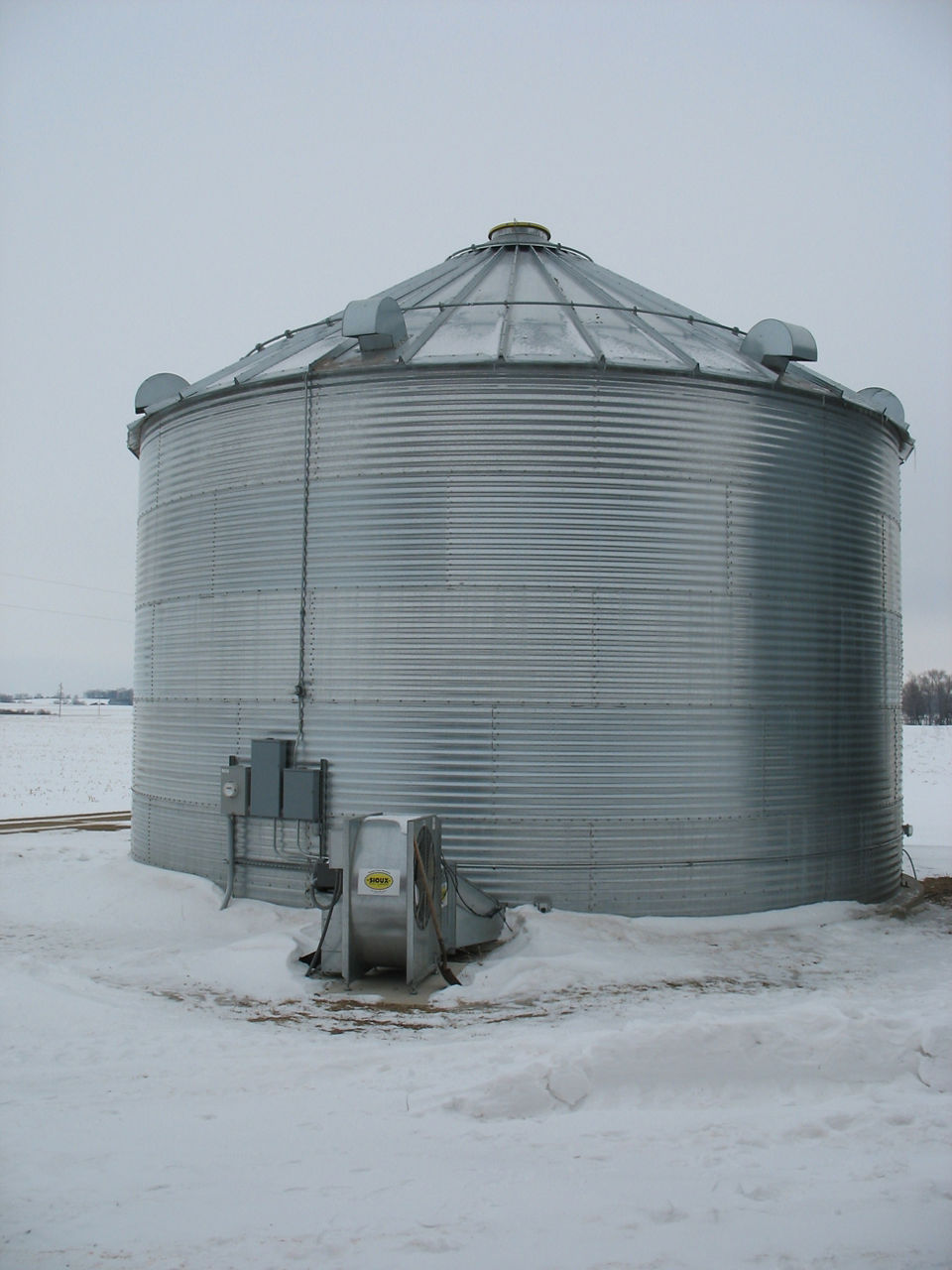
For additional information on managing stored grain, please visit Managing Stored Grain during Fluctuating Temperatures in the late Fall and Winter | Crop Science US
Sources
1Enhancing soybean storage starts with harvest moisture. North Dakota State University Extension. https://www.ndsu.edu/agriculture/ag-hub/enhancing-soybean-storage-starts-harvest-moisture
2Licht, M. Storing soybean. Iowa State University Extension and Outreach, Integrated Crop Management. https://crops.extension.iastate.edu/encyclopedia/storing-soybean
3Hurburgh, C.R., Jr. 2008. Soybean drying and storage. Iowa State University Extension. Pm-1636. https://isuaamncus122stg.blob.core.windows.net/shop/PM1636.pdf
4Sadaka, S. Updated 2014. On-farm drying and storage of soybeans. Arkansas Soybean Production Handbook – MP197, Chapter 15. University of Arkansas Extension. https://www.uaex.uada.edu/publications/pdf/mp197/chapter15.pdf
Web sources verified 07/16/25. 1314_154107
Disclaimer
ALWAYS READ AND FOLLOW GRAIN MARKETING AND ALL OTHER STEWARDSHIP PRACTICES AND PESTICIDE LABEL DIRECTIONS.