10 MIN READ
Corn Silage Quality and Inventory Management
February 10, 2026
How to Improve Silage Quality
To ensure a high-quality silage feed source it is important to correctly follow all the critical steps during silage harvest and silo fill. The five Cs of quality corn silage are:
- Content of dry matter (DM): 35% DM, which can vary by storage type
- Chop length: three quarters of an inch for kernel processed silage
- Compaction of the silage: density of 14 to 16 pounds DM per cubic foot
- Covering silage: an oxygen barrier and cover or oxygen limiting structure
- Care and management at feeding: firm feeding face and feed all loose silage1
Once the silage is in the silo and ensiled there are no products, activities or strategies that can correct mismanagement that occurred at silo fill. Only after the correct steps are taken at harvest can silage coming out of the silo provide a quality feed with high-quality fiber and a good source of energy.
Silage Storage
Each silo type has advantages and disadvantages as a storage structure. It is very important to select a silo structure that matches the size of the ration requirements. Silo structures that are too large for the size of the feeding operation can cause potential excessive silage losses due to large surface area and/or large feeding face. Silos that are too small will limit the size of the feeding operation or the amount of silage that can be used in the ration.
All silage structures are designed to provide an oxygen limiting environment that is critical to completing the ensiling process. Bacteria causes fermentation that turns the forage into silage. Once harvested and packed to help to help create an anaerobic environment, the naturally occurring anaerobic bacteria in the green chop produce lactic acid that lowers the pH to around 4.0.
Silage Storage Structures
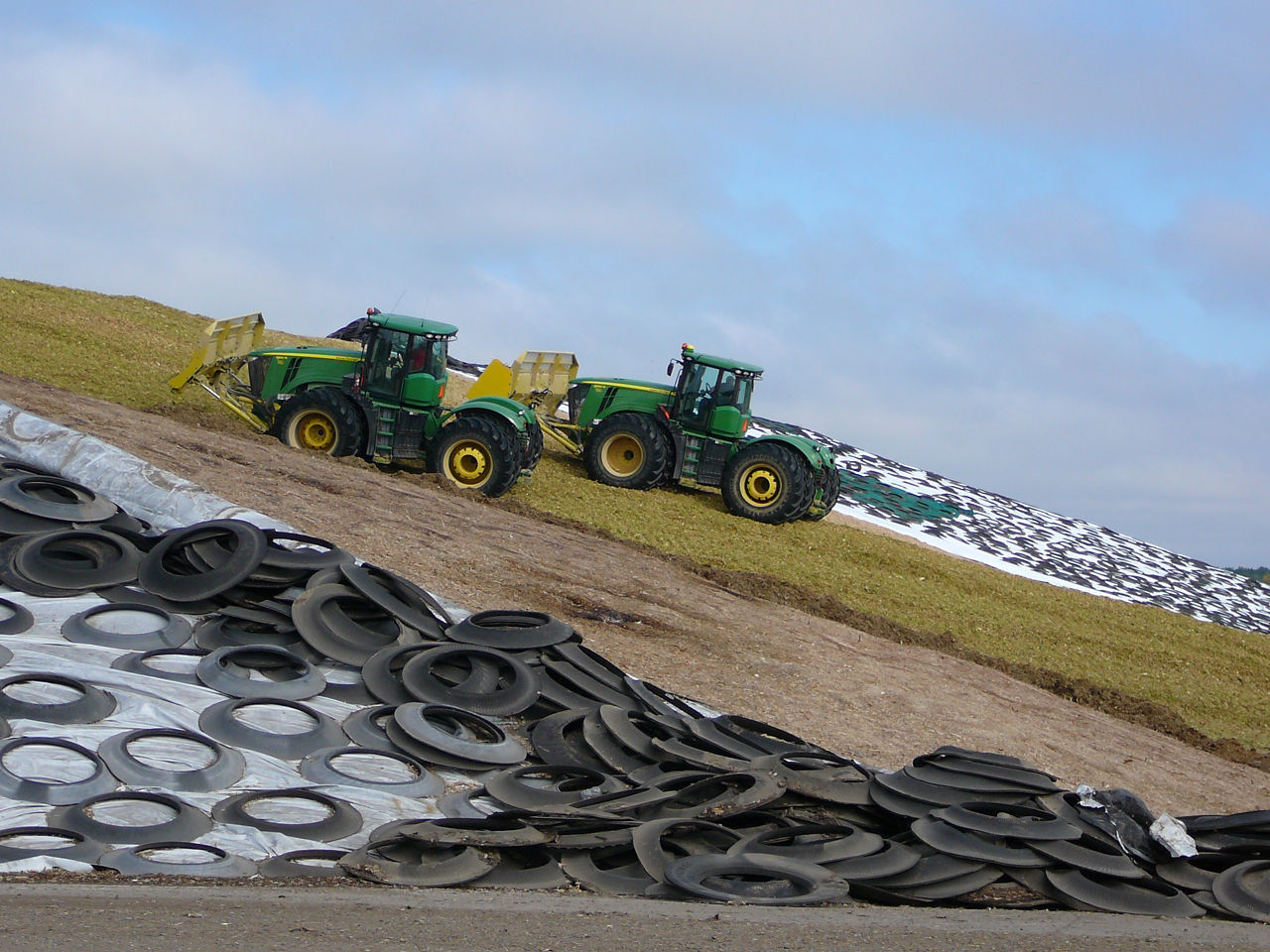
Drive Over Silage Piles
Immediately after harvest, the silage pile should be properly packed and is often covered with an oxygen barrier as well as a cover to make the surface is airtight to help reduce spoilage. Target harvest DM of 33 to 37 percent.
Advantages
- Inexpensive
- Segregate forages
- Flexibility
- Hold large capacities
Disadvantages
- Danger from silage falling from the face of the pile and hitting employees feeding silage
- More difficult to pack
- Large footprint
- Packing weight and labor requirements to achieve adequate density
- Runoff collection and Concentrated Animal Feeding Operations (CAFO) regulations
- Exposed face
- A large surface area can cause high spoilage losses, which is more of a concern when the pile is small.
Silage Bunker
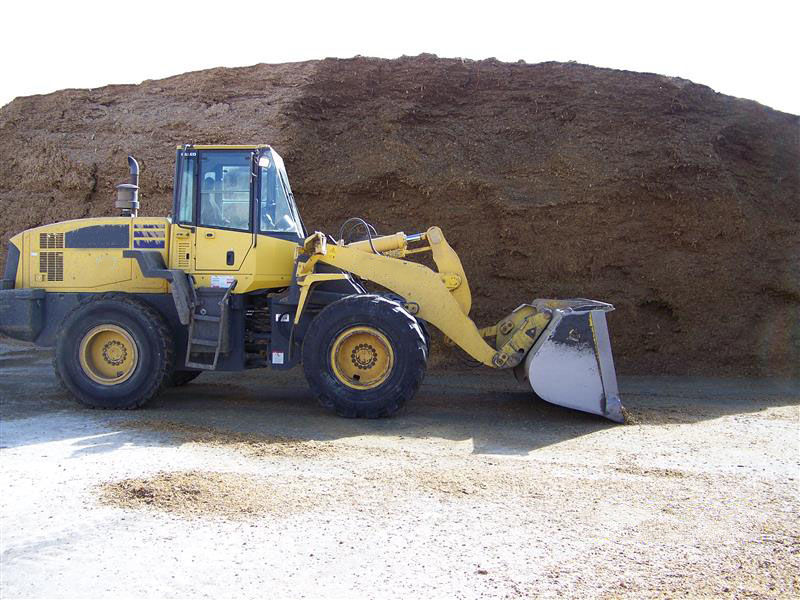
Bunker silos can be built above ground or as underground trenches, usually with concrete walls. These structures are filled and packed with tractors and loaders. Immediately after harvest the bunker is properly packed, covered with an oxygen barrier and an additional cover to make sure the surface is airtight to limit spoilage. Target harvest DM of 33 to 37 percent.2
Advantages
- Contained footprint
- Segregate forages
- Control face size
- Hold large capacities
Disadvantages
- Bury older silage behind new crop
- Cost of walls
- Matching space between walls and tractors needed for packing weight
- Runoff collection and Concentrated Animal Feeding Operations (CAFO) regulations
- Danger from silage falling from the face of the pile hitting employees feeding silage
- Packing weight and labor requirements to achieve adequate density
- Inflexible if repurposing of space is needed
- Exposed face
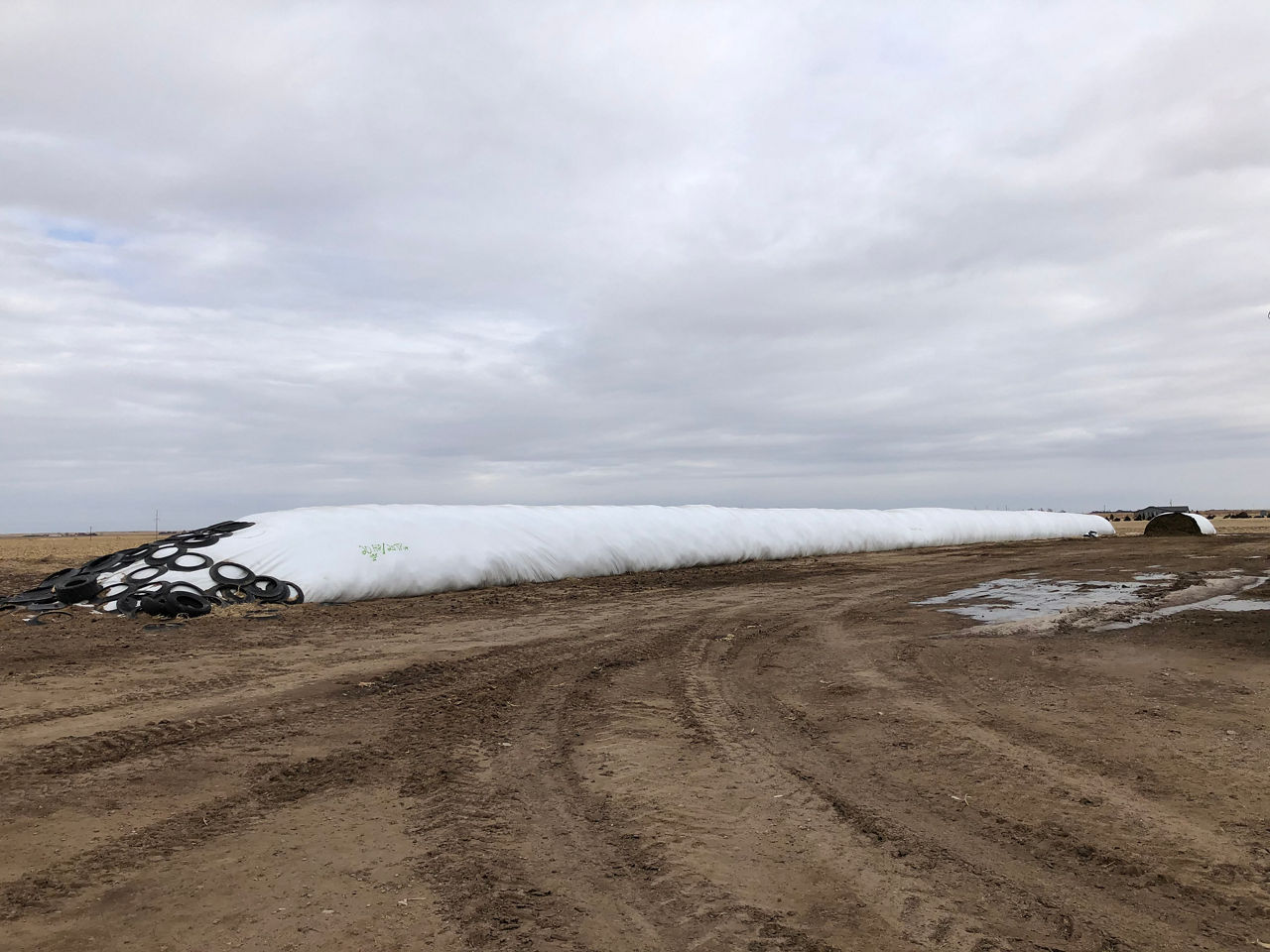
Corn Silage Bags
The typical life of silage stored in bags is around 12 months due to plastic integrity issues. Target harvest DM of 33 to 37 percent.2
Advantages
- Inexpensive start up storage structure
- Flexible space to store different qualities and quantities of silage
- Minimal runoff concerns
- Good quality can be achieved even with limited equipment and labor
- Offers a rapid rate of feedout
- Lower loss of DM during storage
Disadvantages
- Storage expense every year, cannot reuse bags
- Can result in significant losses of DM if bags are not routinely monitored for holes and tears
- Site selection
- Recycling of plastic or properly disposing after use
- Ensiling forage with large variations in DM from load to load can result in variability in silage DM at feedout
Silage Tower Silos
Storage silos are cylindrical structures, typically 10 to 90 feet (3 to 27 meters) in diameter and 30 to 275 feet (10 to 90 meters) in height. They can be made of many materials such as wood staves, concrete staves, cast concrete, and steel panels. Target harvest DM of 37 to 50 percent for an oxygen-limiting structure. Conventional concrete and stave structure under 60 feet has a target DM of 33 to 37 percent and 37 to 50 percent for structures above 60 feet.3
Advantages
- Small footprint
- Requires less ground space per ton ensiled
- Works for direct feeding in the barn
- Offers good packing density and low oxygen permeability
Disadvantages
- Silage availability limited by the size of the structure
- Requires higher initial investment per ton ensiled
- Elevated safety risks due to potential for dangerous gases at feedout
Silage Storage Losses and Inventory Management
Carefully monitoring feed inventory can help livestock producers control feed costs (one of their largest expenses) and maximize profitability. The feed inventory can be a valuable tool for determining available feed supply, estimating total feed needs for the planned herd size, and adjusting herd numbers or planning feed purchases when prices are favorable. The inventory should be adjusted as needed to account for storage and feeding losses. Silage storage losses can be high if crops are not harvested at the proper dry matter content, facilities are inadequate, the crop is not chopped correctly or packed well, and/or silos are not sealed properly. Dry matter loss during ensiling is an important factor to consider when selecting a storage system. The capacity of a silo significantly affects dry matter loss during feedout due to the amount of exposed surface area—the smaller the silo, the higher the loss. Average losses of dry matter associated with harvest, storage, and feeding also vary depending on the corn silage dry matter content. Silage must be fed soon after removal from storage to avoid spoilage due to oxygen exposure. Storage facilities with an exposed silage surface must be sized to match the feeding rate to prevent spoilage. Loose silage is more porous and allows greater air infiltration which increases the rate of aerobic growth making the silage susceptible to spoilage. Maintaining a firm face and cleaning up loose silage that has fallen to the floor during feedout can help minimize aerobic losses. If silage feeding stops for a long period, resealing is ideal to avoid greater storage losses and spoilage problems.
Mycotoxins in Corn Silage
Mycotoxins are toxic substances produced by molds growing on grain or feed. Many molds that grow on silage are harmless, but a few species can produce mycotoxins. Mycotoxins can be present in the field and in storage with potential adverse effects to herd health and production. The most common mycotoxins in silage are aflatoxins, trichothecenes, ochratoxin A, fumonisins, zearalenone, and many other fungal secondary metabolites.4 Problems associated with mycotoxins in silage can be minimized by preventing fungal growth before and after ensiling. Proper silage management is essential to reduce mycotoxin contamination of feeds. Contaminated feed is rarely fatal, but can reduce growth rate, lower feed conversion, lower reproductive rate, impair disease resistance, and reduce vaccination efficacy.
Conducive microclimates for mold proliferation and mycotoxin production include:
- Delayed harvests
- Slow silo fill rate
- Inadequate packing and sealing of silo
- No silo cover
- Bridging in silage bag
- Damaged plastic wrap, bags, or silo covers
- Slow feedout rate
- Not feeding all silage removed from surface
Some molds can survive even in extreme conditions and still produce mycotoxins. Toxins that are present prior to ensiling will be present even after proper ensiling. If mold or mycotoxins are suspected, testing is recommended to confirm the potential level and feeding restrictions.
Forage Analysis
Forage analysis is essential for any cattle feeding program. Testing is important before silage feeding starts but after ensiling is complete (usually three weeks after harvest) to formulate a balanced ration. It is also important to periodically test during the feeding cycle. As analysis changes, so does the need to adjust the ration. Nutritionists use silage testing to determine the dry matter, energy, fiber, mineral, and protein along with other factors to formulate a balanced, cost effective ration. For more information about silage analysis contact your local nutritionist or veterinarian.
Sources
1Bauder, S. 2024. Best management practices for corn silage harvest. South Dakota State University. https://extension.sdstate.edu/best-management-practices-corn-silage-harvest/.
2Most, M. 2019. Should you be considering silage bags? Bagged silage vs. silage bunkers & piles. University of Nebraska. https://beef.unl.edu/beefwatch/should-you-be-considering-silage-bags-bagged-silage-vs-silage-bunkers-piles/.
3Cowbrough, M. 2025. Silage Storage Types. Ontario Ministry of Agriculture, Food and Rural Affairs. https://fieldcropnews.com/2025/09/silage-storage-types/.
4Ogunade, I. M., Martinez-Tuppia, C., Queiroz, O.C.M., Jiang, Y., Drouin, P., Wu, F., Vyas, D., Adesogan, A.T. 2018. Silage review: Mycotoxins in silage: Occurrence, effects, prevention, and mitigation, Journal of Dairy Science. https://www.sciencedirect.com/science/article/pii/S0022030218303254
1210_91012
Disclaimer
ALWAYS READ AND FOLLOW GRAIN MARKETING AND ALL OTHER STEWARDSHIP PRACTICES AND PESTICIDE LABEL DIRECTIONS.