5 MIN READ
Management of Fungal, Viral, and Bacterial Diseases Corn Diseases
October 9, 2025
- Corn diseases have the potential to greatly reduce the genetic yield potential of your corn products.
- Awareness of common corn diseases in your area is important for management.
- Corn disease management requires various Integrated Pest Management approaches.
During the growing season and depending on regional locations, corn seeds and plants may be subjected to fungal, viral, and bacterial pathogens that can reduce corn yield potential. Corn seeds are safe in the seed bag or tote, but when placed in the soil, they become subject to soil borne pathogens that can infect the seed itself and emerging seedling tissue. Upon emergence, the plants are subject to the future presence of foliar diseases, stalk rots, and ear rots. Managing these various pathogens requires an Integrated Pest Management (IPM) approach that includes awareness of local diseases and characteristics, corn seed selection, crop rotation, residue management, tillage, seed treatments, scouting, and return of investment in potential fungicide applications.1
Field Scouting and Foliar Fungicide Applications
Foliar corn diseases are a concern when they develop early and continue to overtake leaf tissue with lesion growth. Photosynthetic processes are reduced when lesions replace green leaf tissue. Secondary effects of lost green leaf tissue include potential loss of stress tolerance, standability issues as sugars are robbed from the stalk to supply grain development, and loss of grain quality.
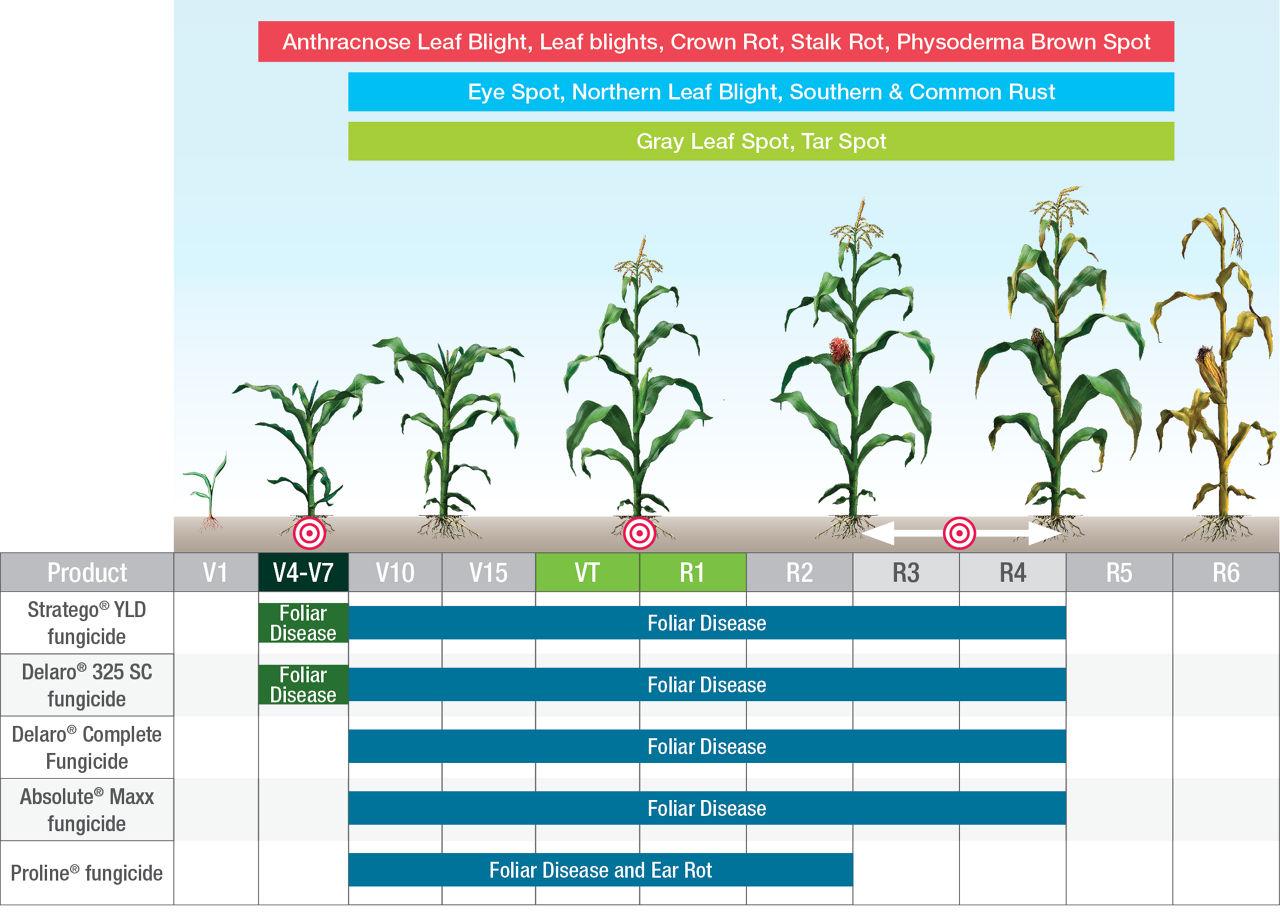
Weekly scouting of corn fields should be a standard practice to monitor disease, insect feeding, and weed growth. However, disease symptoms (lesions) may not be visible for several weeks after infection. Therefore, being aware of favorable fungal infection conditions for a particular disease such as target spot is an important function of disease management. Temperature, humidity levels, and morning dews are conditions to acknowledge. As an example, the favorable temperature range for target spot is 60 to 70° F while the range is 70 to 90° F for gray leaf spot.2 If favorable conditions exist for a targeted disease, a properly timed foliar fungicide ahead of lesion appearance is an approach to consider (Figure 1).
Depending on the fungicide applied, harvest restrictions for field corn harvested for grain can vary from 7 to 45 days or the R3 (milk) growth stage. Restrictions may also vary for other types of corn (sweet, seed or popcorn, etc.), and corn for other uses such as forage or fodder.3 Always read and follow the product label instructions.
Disease identification is important for managing foliar fungal diseases and fungicide selection. Bacterial and viral diseases are not controlled with fungicides.
Awareness of Historically Common Corn Diseases
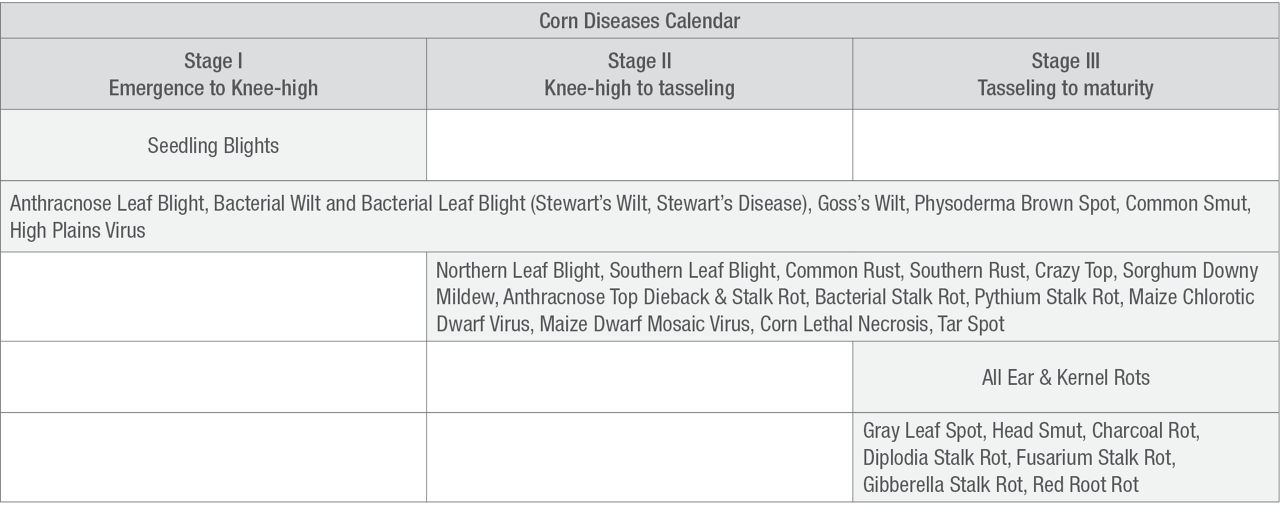
Keeping abreast of the corn diseases common to your area can help determine management courses of action. Many fungal disease pathogens overwinter on crop residue or in the soil and with favorable environmental conditions can flare up and become a potential problem. Most fungal pathogens that cause foliar and stalk rot diseases such as gray leaf spot, northern and southern corn leaf blight, common corn rust, tar spot, charcoal stalk rot, and diplodia stalk rot are in this category. A few foliar diseases, like southern corn rust, do not overwinter; therefore, their occurrence is subject to annual weather patterns that move the pathogen (spores) via the wind into northern areas. A corn disease calendar that shows when various corn disease pathogens may be present can help determine when scouting for disease symptoms should be underway (Table 1).
Viral corn diseases require an insect vector for disease transmission. Maize dwarf mosaic potyvirus (MDMV) can develop when the plants are fed upon by infected aphids. There is no post infection treatment for viral diseases. Management may include the control of other host plants that the aphids feed upon.
Bacterial diseases such as Holcus leaf spot and Goss’s Wilt may develop after the bacteria enters plant wounds caused by hail, blowing sand or soil, or wind injury. The bacterial disease Stewart’s wilt is dependent on the feeding of infected flea beetles on the plants.
The Crop Protection Network tracks corn disease (using filters for crop and disease issues) development throughout the United States https://cropprotectionnetwork.org/crop-lookout.4 Additionally, Land Grant Agricultural Universities usually provide growing season updates on disease activity within their states.
Table 1. Corn Disease Calendar.
Corn Seed Selection
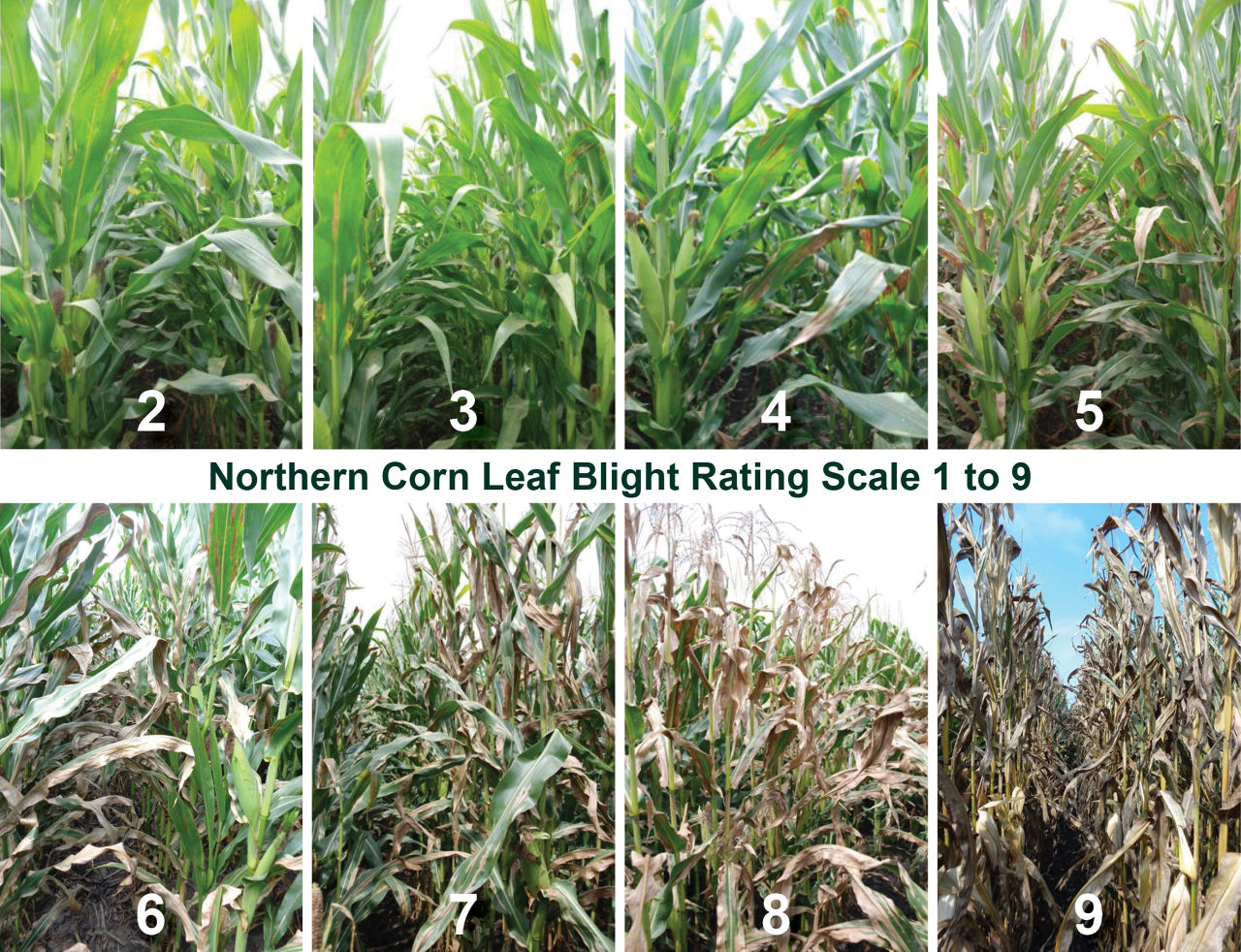
Historical disease awareness for your fields can help with corn product selection as corn products are rated for their tolerance to various corn diseases.1 If a disease is common in the area, a tolerant corn product should be considered. Bayer Crop Science corn brands use a 1 to 9 scale for tolerance with 1 being excellent and 9 being poor for a particular disease (Figure 2). It is important to note that corn diseases may be more specific to geographic location; therefore, tolerance ratings may not appear for some diseases based on the relative maturity (RM) of the corn product. As an example, ratings for southern corn rust are likely missing for RM corn products below a 105 RM because its occurrence is rare in the northern Corn Belt and breeding efforts are focused on relevant diseases for the area. Your Bayer Crop Science seed representative can help with selecting a product with appropriate levels of tolerance or resistance to specific diseases.
Knowing the disease rating can also help with corn product placement. Planting a corn product rated low for gray leaf spot (GLS) in a river bottom would not be recommended because the environment is conducive for GLS development. A fungicide application should reduce the potential for yield loss but placing the product in a high-risk environment is not prudent. However, the same product could be planted on higher fields where GLS development may be lower and with a plan to apply a timely fungicide. In continuous corn operations, corn products with high disease tolerance ratings are recommended.
Crop Rotation and Residue Management
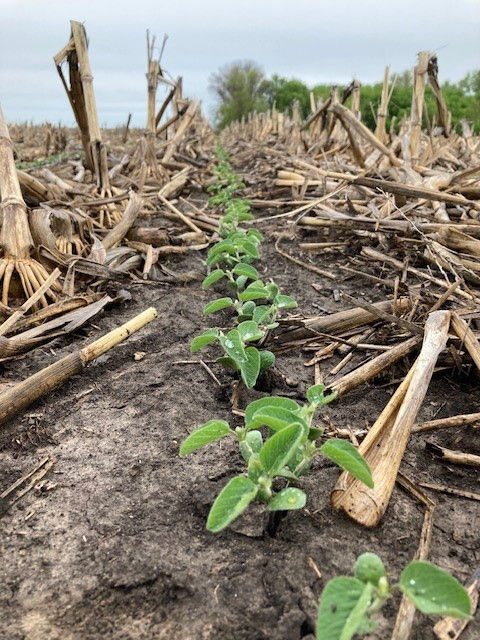
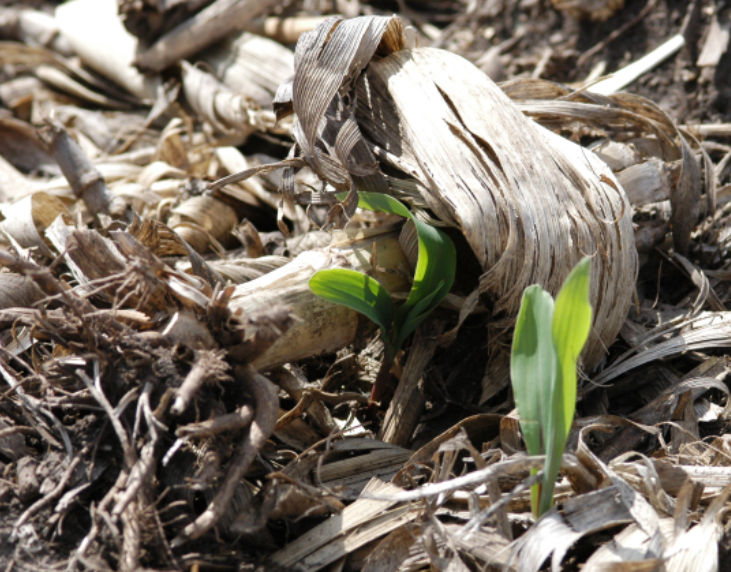
Because disease pathogens can survive on infected residue, rotating crops in each of your fields annually can help reduce the potential for the incidence of many fungal caused diseases specific to that crop.1 Within the Corn Belt, soybean (a legume) is a good rotational crop for corn (a grass) because only a few pathogens affect both crops (Figure 3).
If crop rotation is impractical for an operation, residue management through shredding and tillage can help reduce pathogen survival. For back-to-back corn, select corn products with higher disease tolerance for the common diseases in the geographic area and build a fungicide application into the budget (Figure 4).
Fungicidal Corn Seed Treatments
Fungicidal seed treatments are a critical component of an integrated corn disease management strategy.1 When corn is between germination and seedling establishment, protection against fungi that cause seed decay, seedling blight, and damping-off may be needed. Seed treatment fungicides help provide protection from these issues, particularly in soils with heavy residue, or are cold, wet and/or compacted, or that are excessively dry. These environmental conditions can slow germination and emergence, leaving seeds and seedlings more susceptible to infection. Common seed and seedling diseases include Fusarium, Pythium, Rhizoctonia solani, and Colletotrichum graminicola.
Seed treatments can also include insecticides that help protect seeds and seedlings from early season insect activity. Seed feeding insect larvae may include wireworm, grape colaspis, and seedcorn maggot and adult seedcorn beetles. Seedlings may be injured by wireworms, cutworms, and root feeding white grubs. Wounds from insect activity can be entry points for fungal spores and bacteria, such as the transmission of Stewart’s bacterial wilt by the feeding of infected corn flea beetles.
Sources
1Management of Corn Diseases in New York. Cornell College of Agriculture and Life Sciences (CALS). Corn disease management. https://cals.cornell.edu/field-crops/corn/diseases-corn/management#:~:text=Integrated%20corn%20disease%20management%20involves,when%20warranted%20by%20disease%20risk
2Robertson, A. and Vittetoe, R. 2025. Before you pull the trigger: 2025 fungicide smarts for corn. Integrated Crop Management. Iowa State University Extension and Outreach. Iowa State University. https://crops.extension.iastate.edu/post/you-pull-trigger-2025-fungicide-smarts-corn
3Fungicide efficacy for control of corn foliar diseases. Management of Corn Diseases. CPN-2011-W. 2025. Crop Protection Network. https://cropprotectionnetwork.s3.amazonaws.com/corn-foliar-efficacy-2025.pdf
4Crop Protection Network. 2025. Crop Lookout Map Online Tool. https://cropprotectionnetwork.org/crop-lookout
Web sources verified 10/3/25. 1211_70259
Disclaimer
ALWAYS READ AND FOLLOW GRAIN MARKETING AND ALL OTHER STEWARDSHIP PRACTICES AND PESTICIDE LABEL DIRECTIONS.