Purple Sorghum Seedlings – Identification and Potential Causes
March 30, 2026
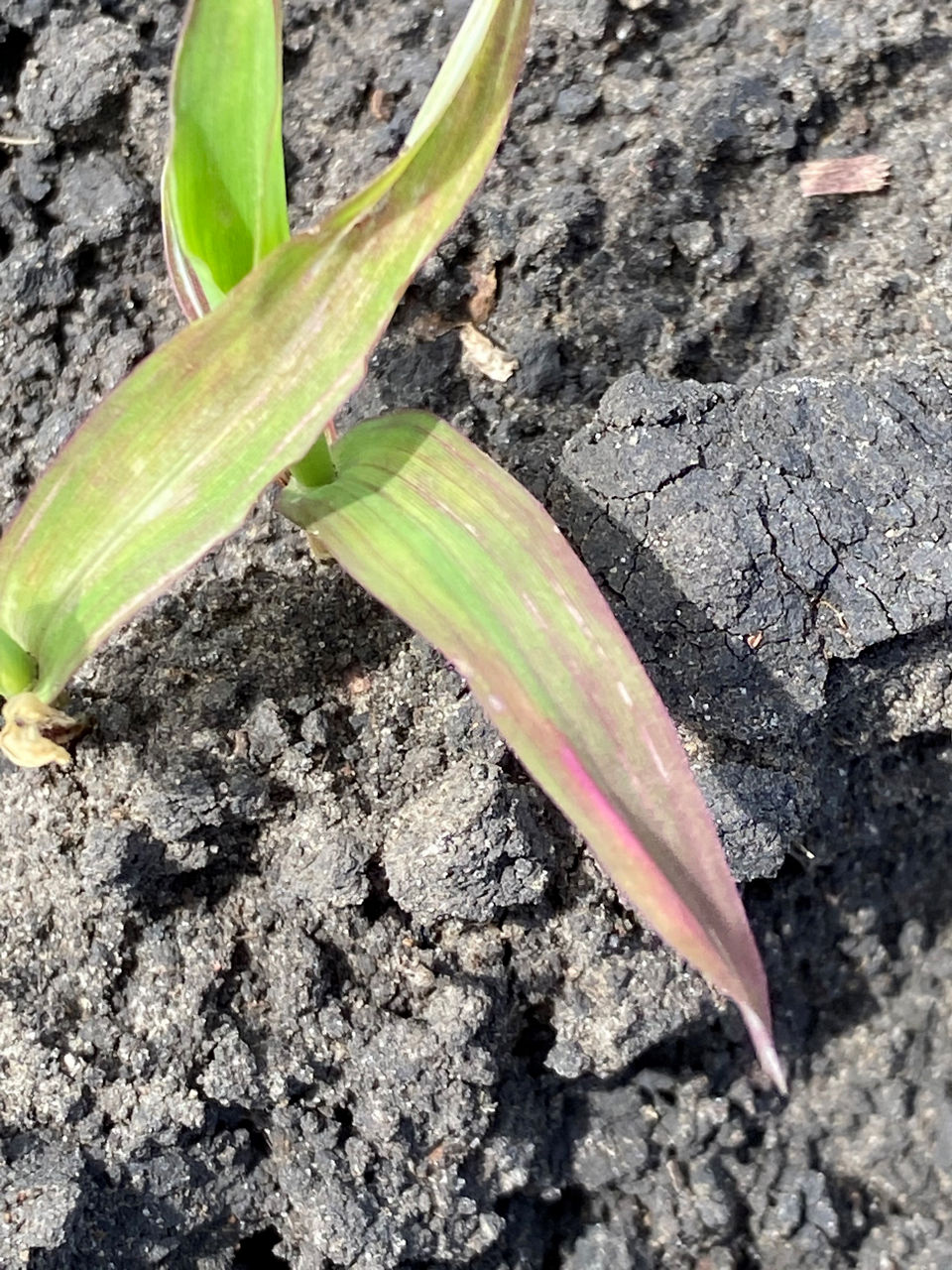
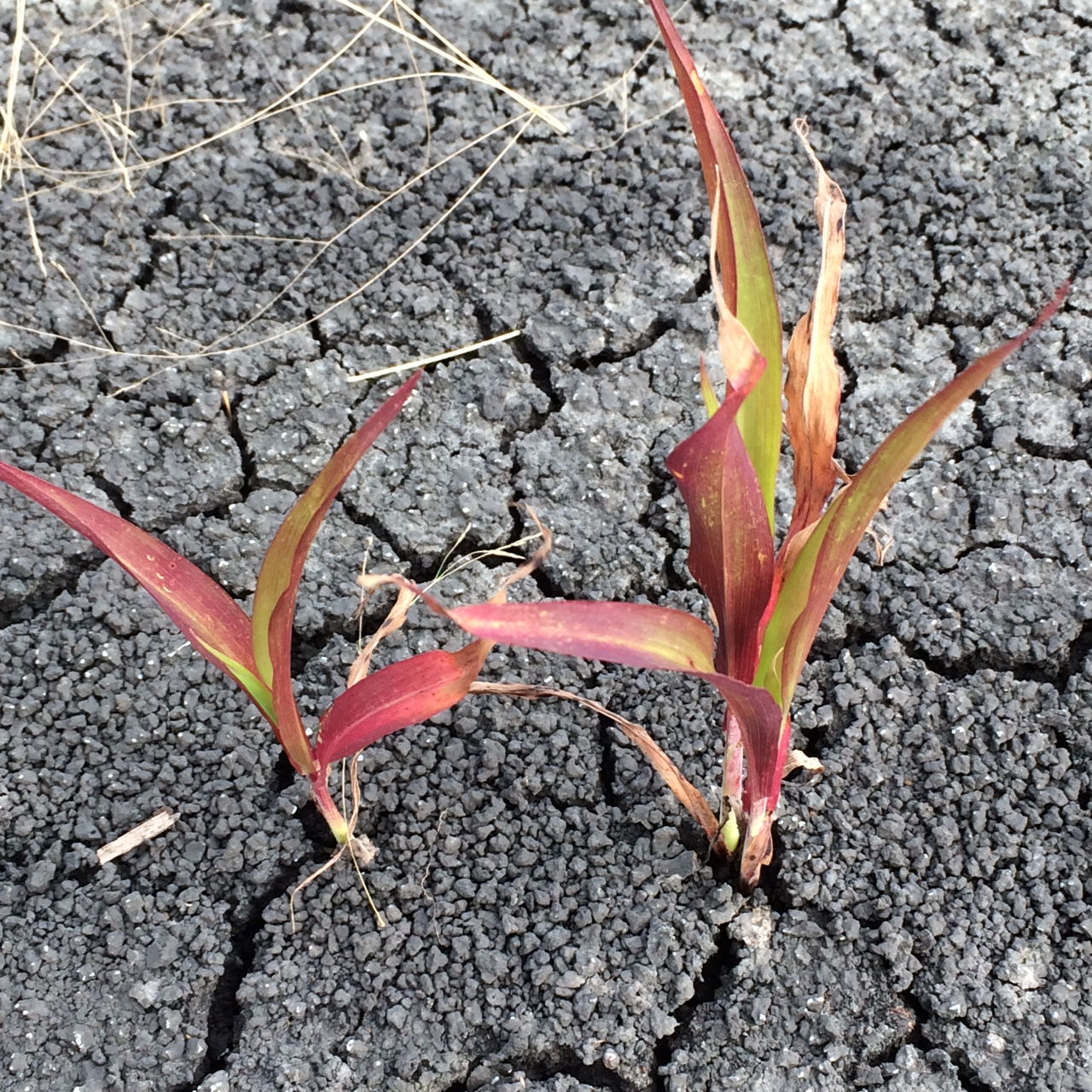
Grain sorghum seedlings can exhibit a purple or magenta coloration of the leaf sheath, leaf tips, or blades when exposed to extended cool conditions early in the season (Figure 1). The coloration may be more pronounced when low temperatures are coupled with prolonged cloudy weather (Figure 2). The purpling is the result of anthocyanins—pigments produced by the plant—accumulating in the leaf tissue. This usually occurs when the plant is unable to use the photosynthates made in its leaves, or when there is insufficient phosphorous (P) uptake.1
What is anthocyanin?
Anthocyanin is a water-soluble pigment produced by plants.2 It is the same pigment that causes a reddish-purple coloration in red grapes, red cabbage, autumn leaves, and some flowers.
The sorghum seedlings looked normal when they emerged. Why are they purple now?
Multiple factors could cause sorghum seedlings to accumulate anthocyanin and thus turn purple, and some sorghum products are more genetically predisposed to purpling. Some anthocyanin-producing genes are activated by a combination of cool temperatures and diminishing phosphorus levels within the plant.
Low phosphorus can be caused by root stress, which could arise from conditions that restrict root growth, soil compaction, wet and cool soil conditions, or herbicide injury.
How long can purple sorghum seedling coloration last?
If the cause of the coloration is cool temperatures, then the color should fade as temperatures increase and the plants begin to process the anthocyanin. If the purple coloration has been caused by other stresses, then the purpling is likely to remain even as temperatures warm. If weather conditions have been cool, scout fields for purple or magenta seedlings and check the fields every few days as the temperatures warm up. Look for newly emerged leaves that have a normal green color. Purple leaves that do not return to a normal green color may indicate a longer-term problem, such as P deficiency.1,2
Will the purple coloration impact sorghum yield potential?
It depends. If the coloration is a result of restricted root growth, P deficiency, or herbicide injury, then yield potential may be reduced. If the coloration is due to temporary cool and cloudy weather conditions in the early seedling stages, yield potential should not be impacted and the result is only cosmetic. However, if the cold snap lasts more than a week, the plant may not be able to access the nutrients required to generate enough energy for good root growth, leading to a potential yield loss. It is important to note that the purple coloration itself does not impact yield potential; it is the underlying cause of the coloration that may limit yield potential.2
Could the underlying cause of the purple sorghum be something other than a temporary P deficiency?
If a chloroacetamide pre-emergent herbicide (herbicide group 15) has moved into the root zone and was applied under cool and wet conditions, the sorghum plants may take up more active ingredient than normal, which can cause leaf purpling. If this is the cause of the purple discoloration, the symptoms should disappear when favorable weather returns.
Could a real P deficiency be the cause of purple sorghum?
Sorghum plants that are phosphorus deficient are stunted, spindly, and dark green, with overtones of dark red on the leaves. The deep red color appears first on older leaves and characteristically progresses upward toward younger leaves. Interveinal tissue can become dark red, separated by green veins.1,3 In later growth stages, as the sorghum plant nears the reproductive phase, collecting the first or second leaf below the flag leaf for nutrient analysis may help to determine if the plant is in fact deficient in P.
How do I tell if the purple coloration of sorghum seedlings is cold induced?
A key indicator of cold-induced magenta or purple coloring is uniform discoloration across the field. Other causes usually result in more variable discoloration, as fields typically vary in soil types, elevations, and drainage. If there are isolated patches of a magenta or purple color, it is likely an indication of a yield potential–limiting stress.
Sources
1Trostle, C.T. 2013. Purple color in grain sorghum seedings. Texas A&M AgriLife Extension. https://texassorghum.org/purple-color-in-grain-sorghum-seedings.html
2Nielsen, B. 2022. Prevalent purple plants perennially puzzle producers. Purdue University Extension Entomology, Pest & Crop Newsletter. https://extension.entm.purdue.edu/newsletters/pestandcrop/article/prevalent-purple-plants-perennially-puzzle-producers/
3Ruiz Diaz, D.A., Martin, K.L. and Mengel, D.B. 2011. Diagnosing nutrient deficiencies in the field. MF3028. Kansas State University Extension. https://bookstore.ksre.ksu.edu/pubs/diagnosing-nutrient-deficiencies-in-the-field_MF3028.pdf
Web sources verified 03/25/2026. 2114_94403
Disclaimer
ALWAYS READ AND FOLLOW GRAIN MARKETING AND ALL OTHER STEWARDSHIP PRACTICES AND PESTICIDE LABEL DIRECTIONS.