5 MIN READ
Corn Tillers
February 14, 2026
- Tillers are vegetative or reproductive shoots that grow from the base of grass plants.
- Corn tillers are a normal physiological process like those in small grains.
- Although tillers can be perceived to be less desirable in corn, the overall effect of tillers is usually neutral.
- Tillers may have some benefit if corn is produced for silage because more dry matter can be produced.
What Are Corn Tillers?
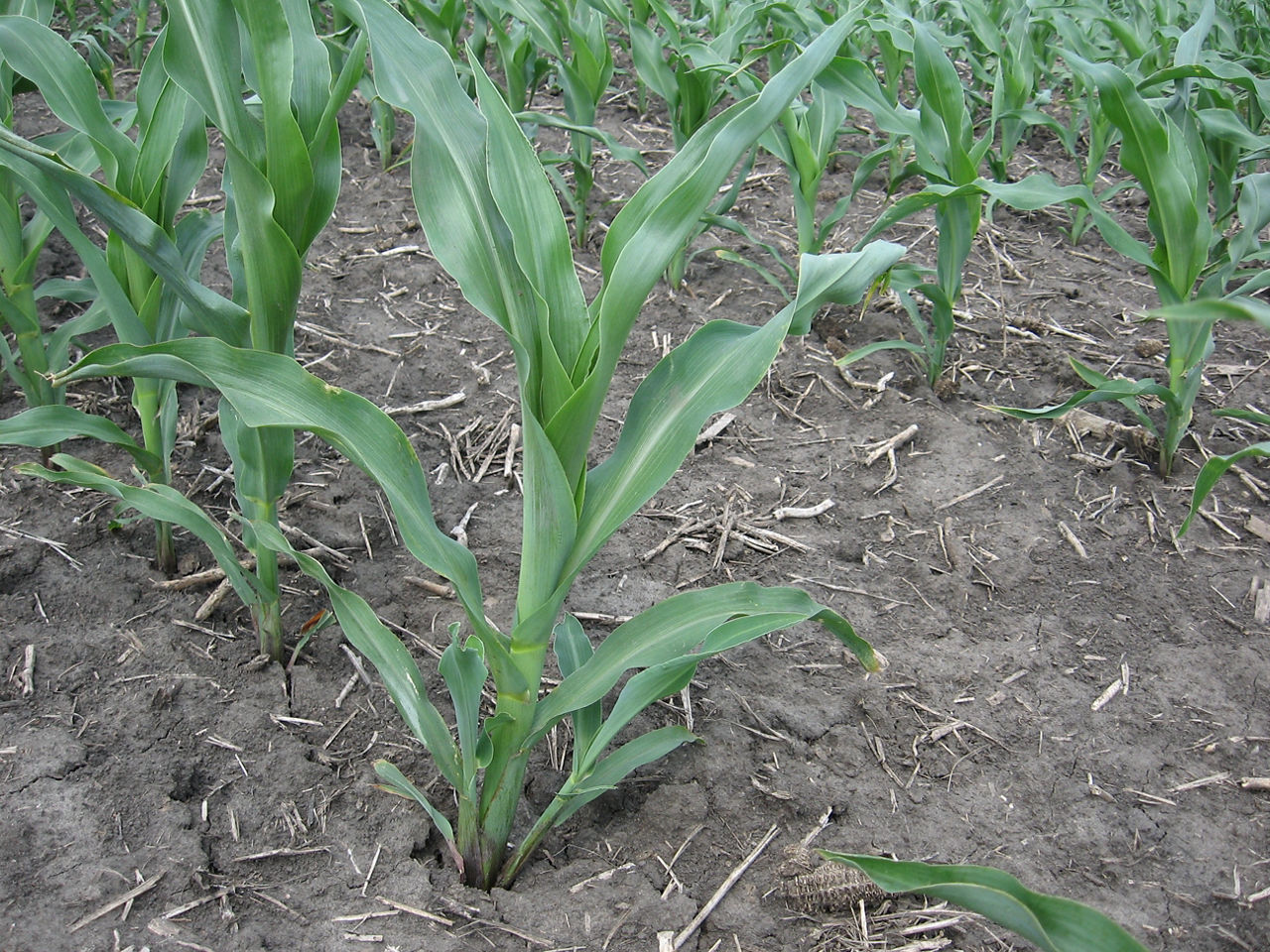
Tillers are shoots that develop from buds on the lower five to seven nodes of a corn plant (Figure 1). Tillering is common in grass species including corn which is a highly specialized grass plant. Tillers are genetically identical to the main stem and can develop their own roots, nodes, leaves, tassels, and ears if there is sufficient time in the season.1 While tillers are an essential part of wheat, barley, and oat production, they are perceived to be far less desirable in corn. They are commonly referred to as “suckers” on corn because of a misconception that they “suck” the nutrients from the main stem. However, research has shown that this is not the case, and that the overall effect of tillers on corn is usually neutral.2
Occasionally a tiller may produce a “tassel ear” which is more of an oddity than it is a yield factor and typically occurs along the edges of a field or in low plant density situations. Crazy top is sometimes confused with tassel ears but instead is a disease that is caused by a soil borne fungus infecting young corn plants during temporary ponding.3
What Influences Tiller Production in Corn?
The number of tillers a corn plant produces is generally in response to low plant population, plant spacing within the row, soil fertility, early season growing conditions, and the genetic background of the corn seed product.2 A two-year research study in Florida found that the number of tillers produced decreased as plant population increased.4 Tillers are more likely to be present on plants that are in thin areas of the stand or near field edges. High fertility and available moisture also favor tiller development. The genetic background of some seed products may be more prone to tillering than others. Research has indicated that very little movement of photosynthate occurs between the main stem and tillers before tasseling. However, after silking and during the grain fill period, it was found that plant sugars may move from earless tillers to ears on the main stem. When there are ears on both the tiller and the main stem, very little movement of plant sugars occurs. The main stem and tillers act independently, and each receives sugars from their own leaves.2
Should You Change Corn Seed Products Because of Tillering?
A corn product with excellent yield potential that produces tillers under normal growing conditions should not cause concern for a corn grower. However, excessive tillering may indicate problems with stand density and plant distribution.2 Less than optimal plant populations or gaps within the row are factors that should be corrected the following year, if possible, to help obtain optimal yield potential.
Sources
1Nielsen, R.L. 2003. Tillers or “suckers” in corn: good or bad? Corny News Network Articles. Purdue University Extension. https://www.agry.purdue.edu/ext/corn/news/articles.03/Tillers-0623.html
2Thomison, P.R. 2017. Does tillering impact corn yield? AGF-121.The Ohio State University Extension. https://agcrops.osu.edu/newsletter/corn-newsletter/2017-24/does-tillering-impact-corn-yield
3Nielsen, R. L. 2019. Tassel ears in corn. Corny News Network. Purdue University. https://www.agry.purdue.edu/ext/corn/news/timeless/TasselEars.html
4Peltier, A. June 26, 2020. Tillering in small grains yes, but in corn? Cropping Issues in Northwest Minnesota. University of Minnesota Extension. https://blog-nwcrops.extension.umn.edu/2020/06/tillering-in-small-grains-yes-but-in.html
Web sites verified 01/06/2026. 1214_33001
Disclaimer
ALWAYS READ AND FOLLOW GRAIN MARKETING AND ALL OTHER STEWARDSHIP PRACTICES AND PESTICIDE LABEL DIRECTIONS.