5 MIN READ
No-Till Farming–A Conservation Tillage Method
January 28, 2026
In the United States in 2022, approximately 105.2 million acres were managed under a no-till (NT) system1, an increase from 96.5 million acres reported in the 2012 Census of Agriculture.2
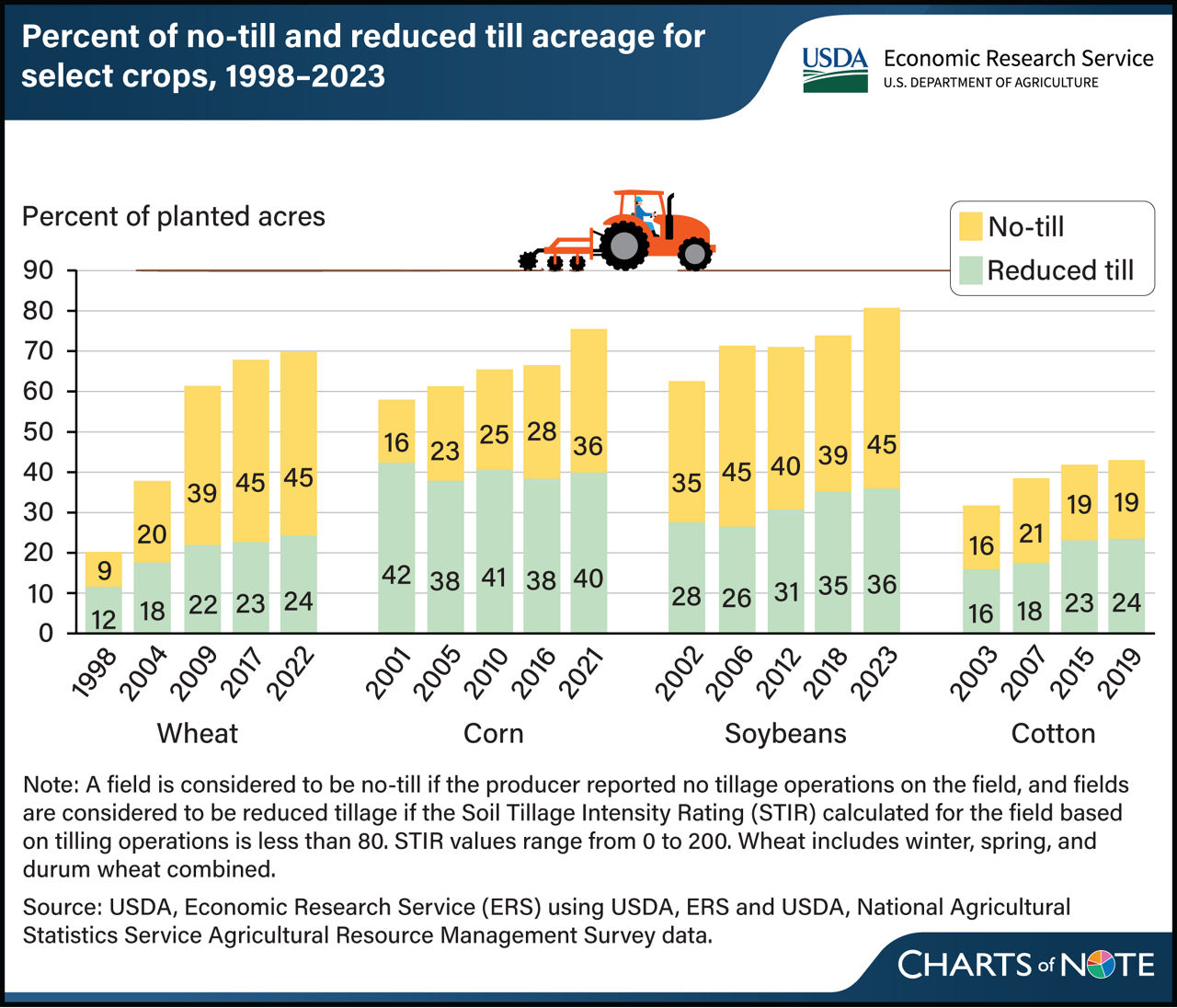
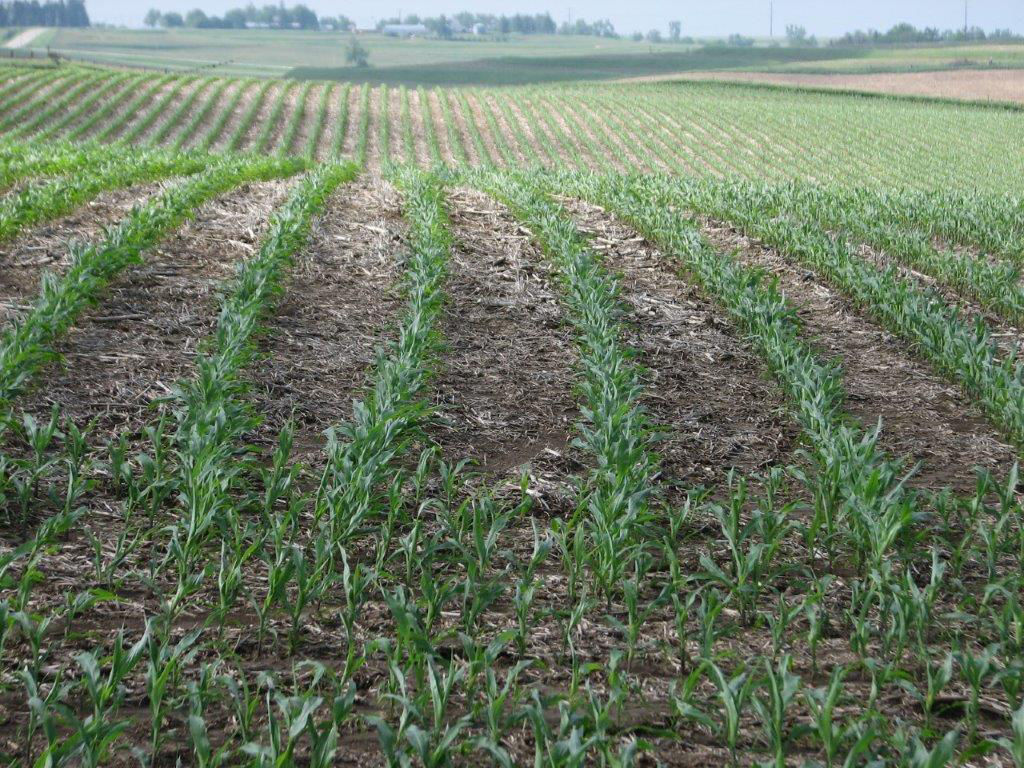
No-till cropping systems help protect fields from excessive soil erosion, reduce soil aeration from tillage, increase organic matter in the soil by decreasing decomposition, and improve the overall health of the soil. No-till systems can also help reduce input costs, which can help increase profitability.
What are some of the benefits of no-till farming?
No-till cropping systems can provide many benefits to help enhance crop production, including:
- Reduced soil compaction: Multiple passes over a field in a conventional tillage system can lead to soil compaction. Additionally, leaving soil bare increases vulnerability to soil compaction due to rainfall. Soil aggregates are broken down in conventionally tilled fields, weakening the soil structure and increasing susceptibility to compaction.
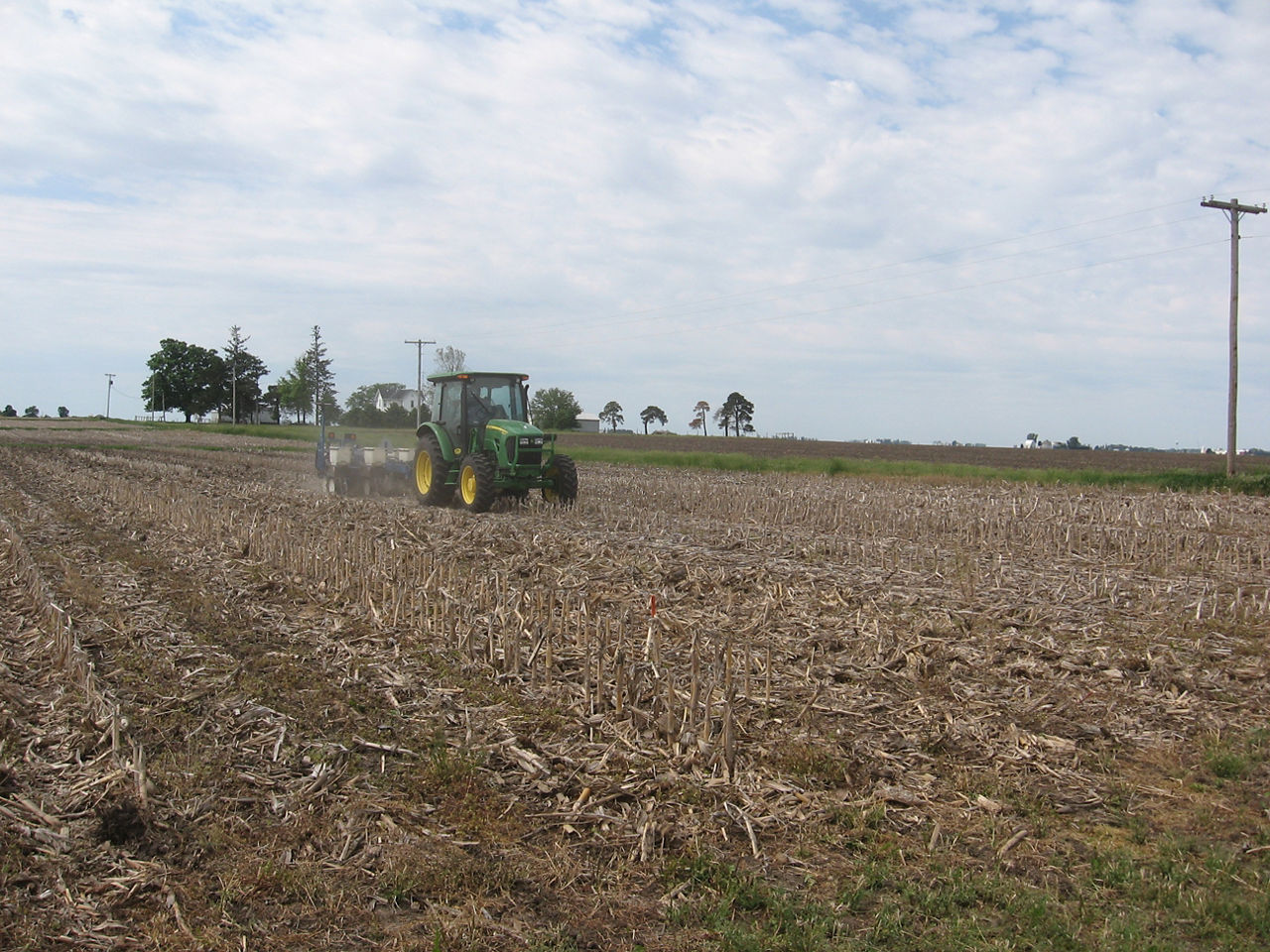
- Reduced soil erosion: NT systems reduce the amount of bare soil exposed to environmental conditions. The crop residue cover that’s left behind in NT planting helps control the loss of topsoil on slopes from water and helps prevent wind erosion.
- Less evaporation: Plant residues that are left behind in NT systems help capture water (rain and snow), keep the soil moist, and minimize the evaporative effects of the wind and sun.
- Fertility improvement: Phosphorus (P) fertilizers remain effective longer in NT systems because the more P is disturbed, the more they react chemically with the soil particles and become fixed into forms that are not available to the plant.
- Lower costs: In NT systems only one trip across the field is needed to establish the crop, which drastically reduces fuel and labor costs. Additionally, there is less equipment needed.
- Yield: Crop yields in NT systems should equal or exceed those of conventional tillage. A 30-year study from Michigan State University indicated superior yields with NT systems.3 A large international review of NT systems found that yields for corn, wheat, and rice were lower in NT systems than conventional tillage systems. However, when partnered with crop rotation and cover crops, yields in NT systems increased. Yield benefits from NT cropping systems can be higher in drier growing conditions compared to years with more moisture.4
What are some of the disadvantages of a no-till system?
- Equipment cost: The initial investment in NT equipment can be one of the major deterrents to switching from conventional tillage to a NT system.
- Herbicide use: While NT systems can help curb fast growing weeds, most types of NT still require the use of herbicides. However, NT can help reduce the weed seed bank by leaving weed seeds on top of the soil surface where they are more prone to being eaten by insects, birds, and mice, or rotting away.
- Management of herbicide-resistant weeds: The main function of tillage is to control weeds and allow the crop to become established. Without tillage, the reliance on herbicides can result in the development of resistance to some active ingredients, in weeds that may otherwise have been controlled with a tillage operation.
- No incorporation of crop residue: May allow increased survival of foliar pathogens and other pests that thrive in high residue situations (e.g., slugs).
- Slows soil warm-up in the spring: Warm up in the spring could be delayed particularly on poorly drained soils.
Specifically, what gains in soil quality can be expected with no-till agriculture?
Quality gains include physical, chemical, and biological improvements.
- Physical improvements include enhanced soil aggregate size and strength. That can translate into improved soil structure, increased water infiltration, better permeability, lower bulk density, higher water holding capacity, decreased erosion, and improved water quality.
- Chemical improvements include higher cation exchange capacity (the total exchangeable cations that a soil can adsorb), which results in higher soil nutrient holding capacity and greater potential for mineralizable nitrogen (N) resulting in an increased soil N bank.
- Biological improvements include increased carbon which serves as a food source for soil microbes. Soil microbes are responsible for the decay of organic matter and cycling of both macro-and micro-nutrients back into forms that plants can use. Increasing the biological activity in the soil is the key to maintaining or increasing soil productivity.
What are other reasons to implement no-till?
Crops grown under NT systems can use water more efficiently: 1) more rainfall or irrigation water is captured in the soil, 2) the water-holding capacity of the soil increases, and 3) water losses from runoff and evaporation are reduced. Combined, these factors can translate into higher yields and more profits. No-till cropping systems usually require less time, labor, fuel, and machinery cost per acre which can result in better whole farm profitability and sustainability. Crops grown under NT systems often have less in-crop weed emergence and allow safer use of herbicide for weed control. No-till system crop yields are very similar to systems that include tillage.
What are some considerations if switching to no-till farming?
- Planter modifications: Attachments for row units that will most likely be needed include row cleaners and stronger down pressure springs.
- Surface drainage: In cold wet soils, internal drainage is extremely important; needs should be assessed on a field-by-field basis to determine if NT will be successful. If the field is tiled to lower water levels, ensure that field drains are operating correctly.
- Previous crop residue: The increase of crop residue on the soil surface may reduce soil warm up in the spring and can result in planting delays. In well-drained fields, this will be less of an issue.
- Soil texture variability: This can affect crop performance, especially in dry conditions where moisture shortage can result in a variable plant stand across the field. Soil texture is a key factor in influencing a soil's water-holding capacity and drainage of excess water.
- Nutrient management: A starter fertilizer may be more beneficial under a NT system as cooler spring soils may delay mineralization of soil nutrients. Plant requirements for N, P, and potassium (K) are essentially the same regardless of the tillage system, but timing is more critical and application method becomes more important.5
Sources
12022 Census of Agriculture. 2024. USDA National Agricultural Statistics Service. AC-22-A-51. https://www.nass.usda.gov/Publications/AgCensus/2022/index.php#full_report
22012 Census of Agriculture Highlights. United States Department of Agriculture. National Agricultural Statistics Service. ACH12-6. https://www.nass.usda.gov/AgCensus/archive/census_year/2012-census/.
3No-till agriculture increases crop yields, environmental gains over long haul. 2020. U.S. National Science Foundation. https://www.nsf.gov/news/no-till-agriculture-increases-crop-yields/.
4Su, Y., Gabrielle, B., and Makowski, D. 2021. A global dataset for crop production under conventional tillage and no tillage systems. Scientific Data. 8:33 https://www.nature.com/articles/s41597-021-00817-x#article-info/.
5Al-Kaisi, M. 2009. Moving to no-tillage: challenges and opportunities. Integrated Crop Management. Iowa State University Extension and Outreach. https://crops.extension.iastate.edu/cropnews/2009/03/moving-no-tillage-challenges-and-opportunities/.
Jasa, P. 2018. Tillage and no-till systems. CROPWATCH. University of Nebraska-Lincoln. https://cropwatch.unl.edu/tillage
1017_69063
Disclaimer
ALWAYS READ AND FOLLOW GRAIN MARKETING AND ALL OTHER STEWARDSHIP PRACTICES AND PESTICIDE LABEL DIRECTIONS.