
The Weeds on Your Farm
December 15, 2020
Introduction
Profitable crop production depends on effective weed control. Weeds can reduce crop yield potential by competing for water, nutrients, and light. Some weeds release toxins that inhibit crop growth, and others may harbor insects, diseases, or nematodes that attack crops. Weeds can also reduce harvest efficiency and produce seed that can impact future crops.
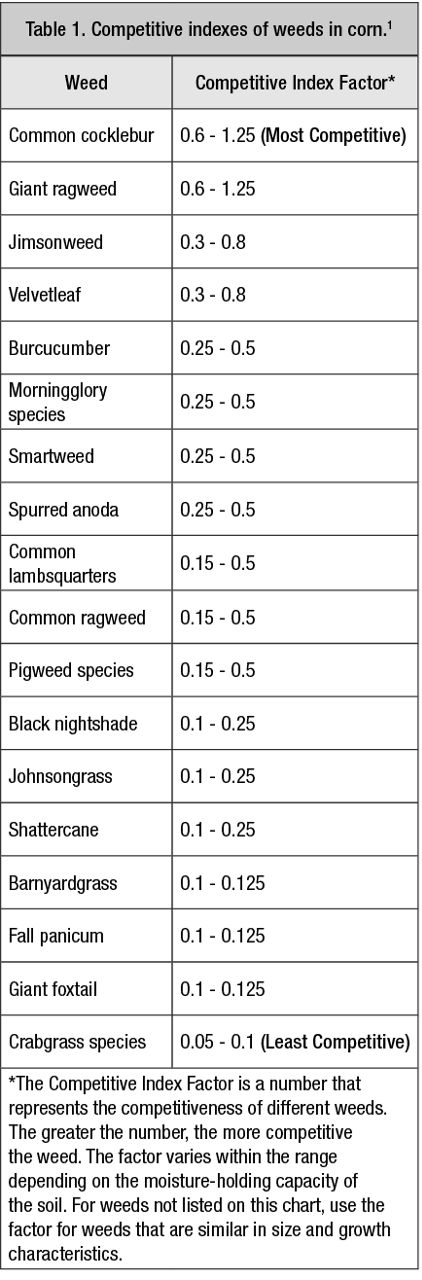
Not all weeds compete with crops equally (Table 1).1 Broadleaf weeds tend to be more competitive than grasses in corn. For example, the predicted weed densities per 40 feet of row required to cause a 10% yield loss in corn would be 80 foxtails compared to 40 pigweeds and only 10 cockleburs. Canopy closure of the crop can limit the competitive ability of weeds. However, broadleaf weeds are better able to avoid the shading effects of the canopy and compete longer into the growing season. Early-germinating weeds are generally more competitive than weeds that emerge later in the growing season. Fields that experience moisture stress are also at greater risk of yield losses from weed competition. Heavier soils that hold moisture better can tolerate higher populations of weeds that may impact crop yield potential.
Late-emerging weeds can include those that emerge after control tactics have been implemented. The impact of late-emerging weeds decreases rapidly if weeds emerge 3 weeks or more after crop emergence. The competitiveness of late-emerging weeds is strongly influenced by how quickly the crop canopy develops. Stress factors that reduce crop growth can increase the impact of late-emerging weeds. These weeds are at a competitive disadvantage to the crop due to their delayed emergence but are still capable of causing economic losses.
Late-emerging weeds should not be ignored because they are capable of producing significant quantities of seed. If weeds have not initiated seed set at the time of herbicide application, seed production should be eliminated or reduced. However, if the fruiting structures are visible, it is unlikely that the application will reduce weed seed production or viability of the seeds. The other benefit of late-season weed control is harvest efficiency, and there are situations where these applications may be worthwhile.
Effective weed control in field crops requires the use of multiple management techniques including cultural methods as well as herbicides. Growing the same crop year after year and utilizing the same weed control techniques encourages the development of problem weeds and potentially, herbicide resistance. Utilizing crop rotation, tillage, and a diversified herbicide portfolio helps reduce this problem.
Identifying weeds properly is an essential first step in a weed management plan. This guide provides photos and identifying characteristics of grass and broadleaf weeds common to the crop’s growing region.
Click below on Grasses, Sedges or Broadleaves to identify and learn about the weeds on your farm.
Common name: Annual bluegrass
Scientific name: Poa annua
Life Cycle: Winter or summer annual
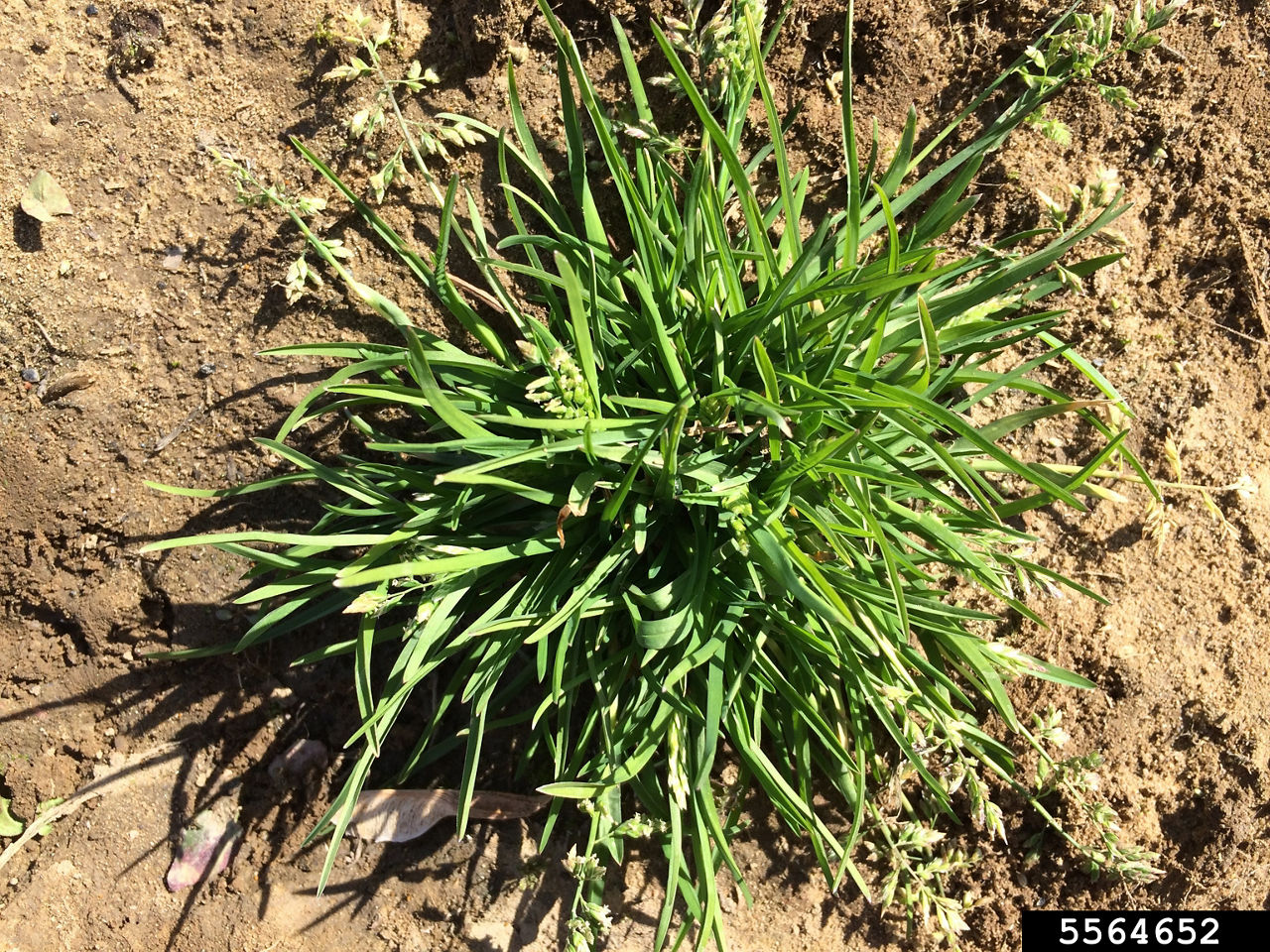
Identification: Annual bluegrass is a winter annual that germinates in the late summer/early fall once soil temperatures fall below 70° F. Seedlings grow in the fall, overwinter in a vegetative state, and flower and produce seed in late spring and early summer. Annual bluegrass is a prolific seed producer, and an individual plant is capable of producing more than 360 viable seeds. The seed may lie dormant in the soil for many years before germinating. Annual bluegrass grows well under short days and cool conditions.
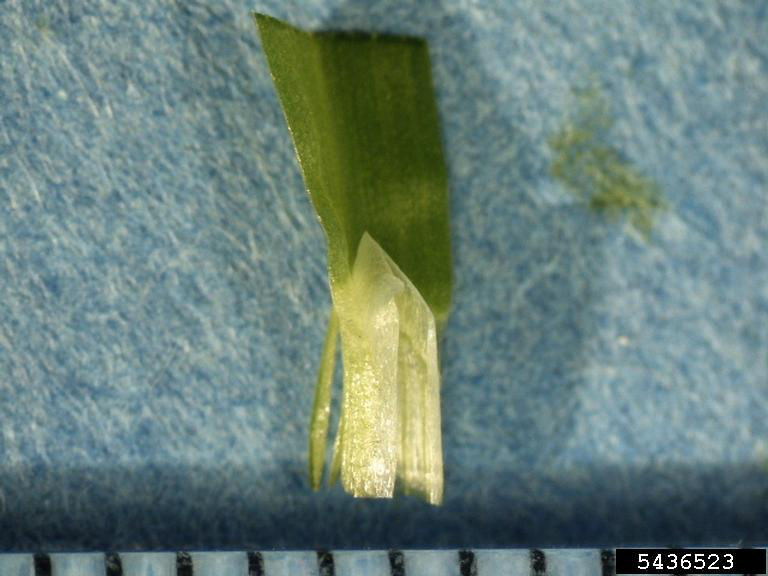
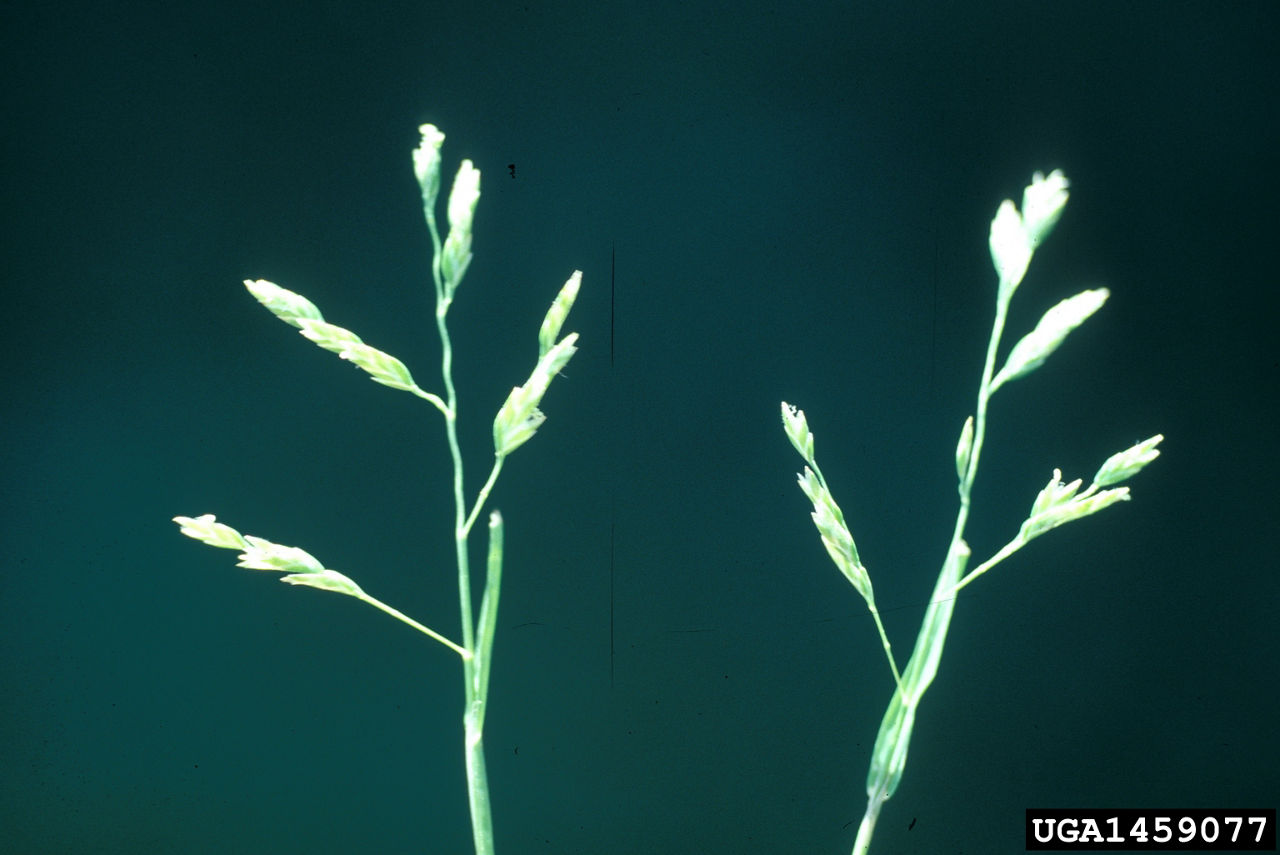
Annual bluegrass is a clump-forming grass that sometimes roots at its lower nodes and forms mats (Figure 3). Leaves are light green, folded in the bud, lack auricles, and have a slightly pointed membranous ligule (Figure 4). Leaves have linear margins (both sides are parallel) and distinctive boat-shaped tips. The seed head is an open, greenish white, pyramidal panicle (Figure 5). Each spikelet contains 2 to 6 flowers.
Management: Annual bluegrass is primarily a weed of turfgrass but can also be present in no-till production systems. Common burndown herbicides typically offer good control of annual bluegrass. However, there are biotypes of annual bluegrass with herbicide resistance including Group 5 (PSII inhibitors), Group 3 (microtubule inhibitors), Group 9 (EPSP synthase inhibitors), and Group 2 (ALS inhibitors) that have been reported across the southeast in the turfgrass industry with at least one biotype with multiple resistance to both ALS and PSII inhibitors.1 Utilizing a multifaceted approach including crop rotation, targeted herbicide applications with multiple sites of action, and tillage will help manage resistant populations and slow the development of resistance.
Sources:
1Elmore, M., Reynold, C., and Baumann, P. 2015. How to manage herbicide resistant annual bluegrass. ESC-036. Texas A & M AgriLifeExtension. http://agrilifeextension.tamu.edu
Common name: Downy brome
Scientific name: Bromus tectorum L.
Life Cycle: Winter annual (may also germinate in spring).
Also known as cheatgrass, cheatgrass brome, downy bromegrass, wild oats, and cheat.
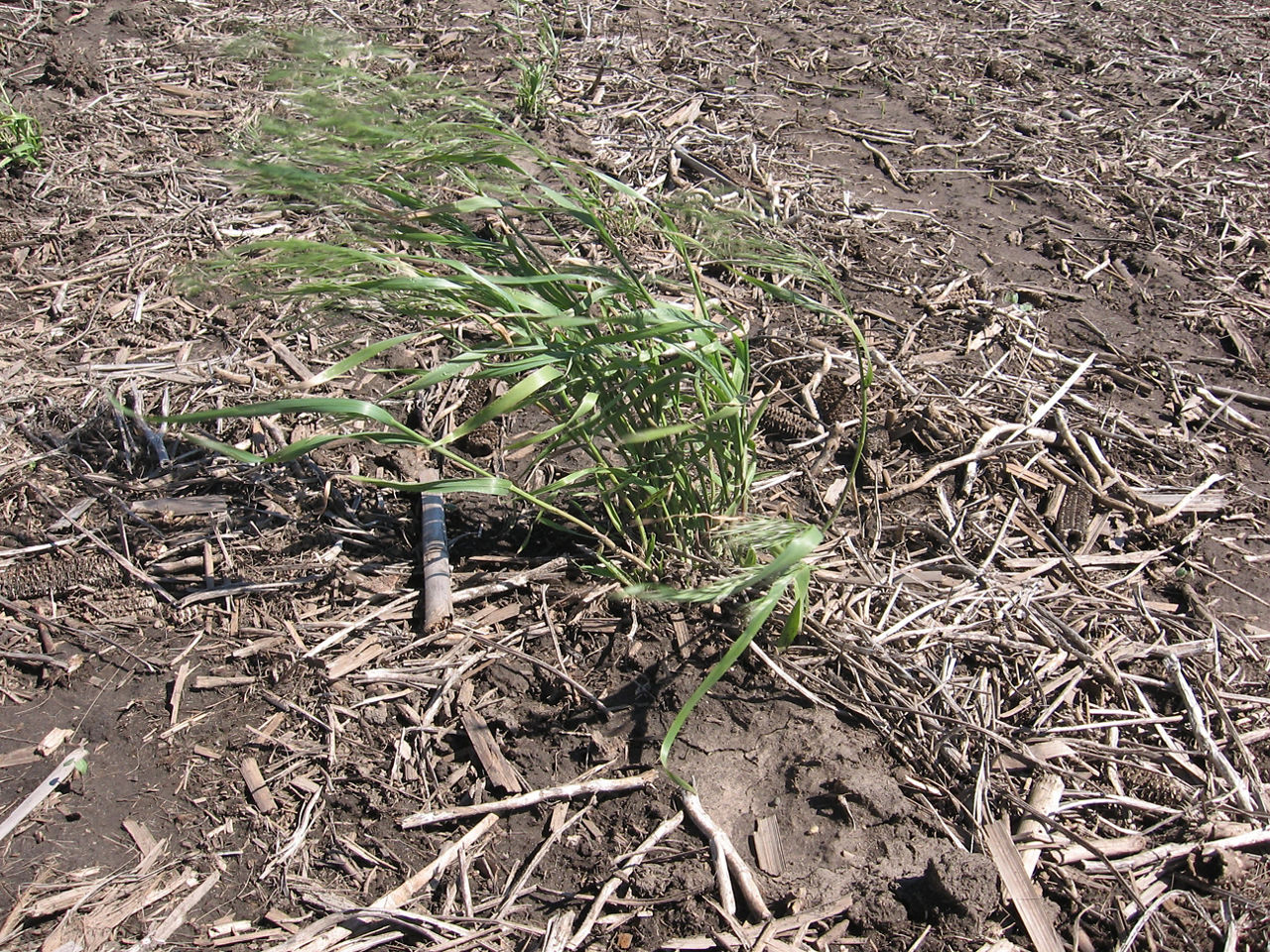
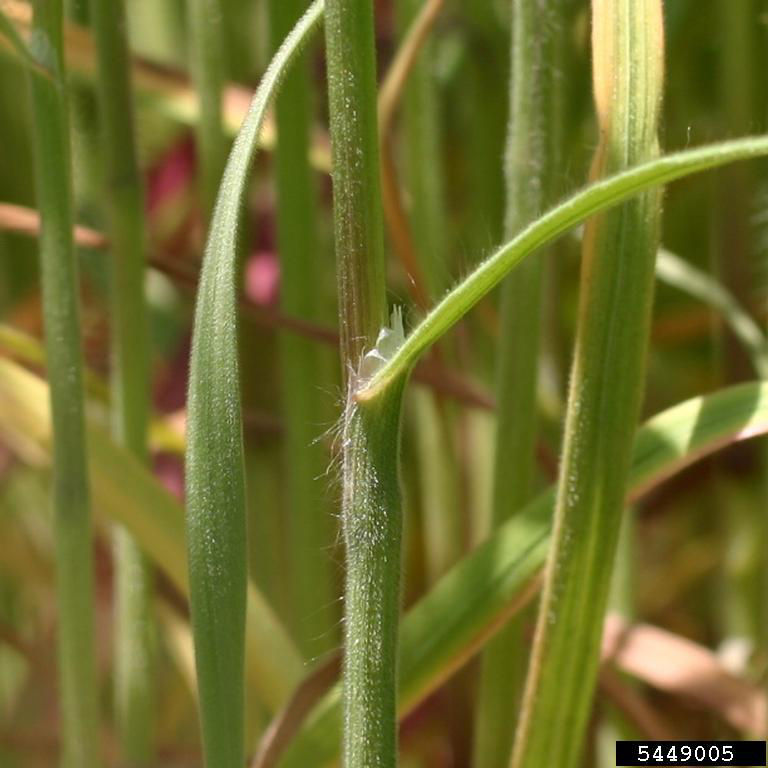
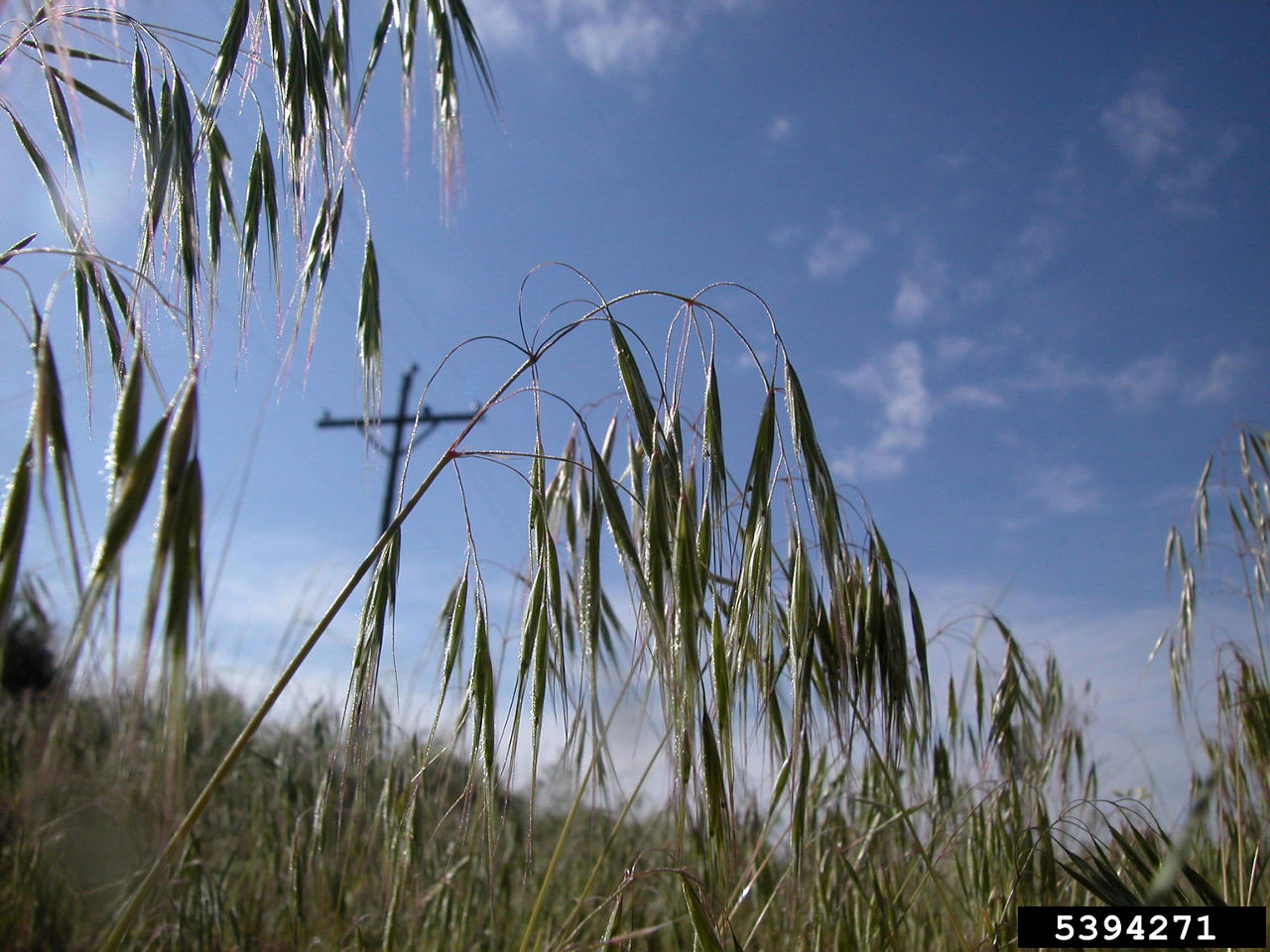
Identification: Downy brome is a tufted, erect, winter annual grass that can reach up to 2.5 feet in height with long, thin, twisted leaf blades from 1 to 9 inches in length (Figure 6). The ligule is a prominent membrane that may be toothed at the top. Stems are round and leaf blades are covered on both surfaces with dense, soft hairs (Figure 7). Leaf sheaths are also hairy. The seed head is a loose panicle with multiple, drooping, awned spikelets (Figure 8).
Similar Species: Downy brome is often confused with cheat (Bromus secalinus) but can be distinguished by the hairs on the leaf blades.
Management: Downy brome is best managed by integrating cultural and chemical control methods. Because downy brome is a prolific seed producer, minimizing seed sources can be an effective preventative control strategy. Crop rotation is one of the most effective control measures for downy brome because of the relatively short life span of seed in the soil (2 to 3 years). The key aspect of crop rotation for management of downy brome is to prevent any new seed production for at least 2 years between winter wheat crops. During this time, the seed bank will decline substantially as a result of germination, predation, and other forms of seed mortality.
Control of downy brome is relatively easy in corn and soybean with the use of tillage and/or preemergent burndown herbicide applications. However, downy brome is more difficult to manage in wheat, particularly winter wheat, and resistance to Group 2 (ALS inhibitors) herbicides has developed. Therefore, a multifaceted approach including crop rotation, enhanced crop competitiveness, and targeted herbicide applications should be used.
Sources:
Lane, T., Jha, P., Kittelman, E., Lewis, K., Roeder, B., Fulbright, J., and Good, A. 2018. Downy brome. MT201814AG. Montana State University Extension. http://msuextension.org
Common name: Barnyardgrass
Scientific name: Echinochloa crus-galli L.
Life Cycle: Summer annual
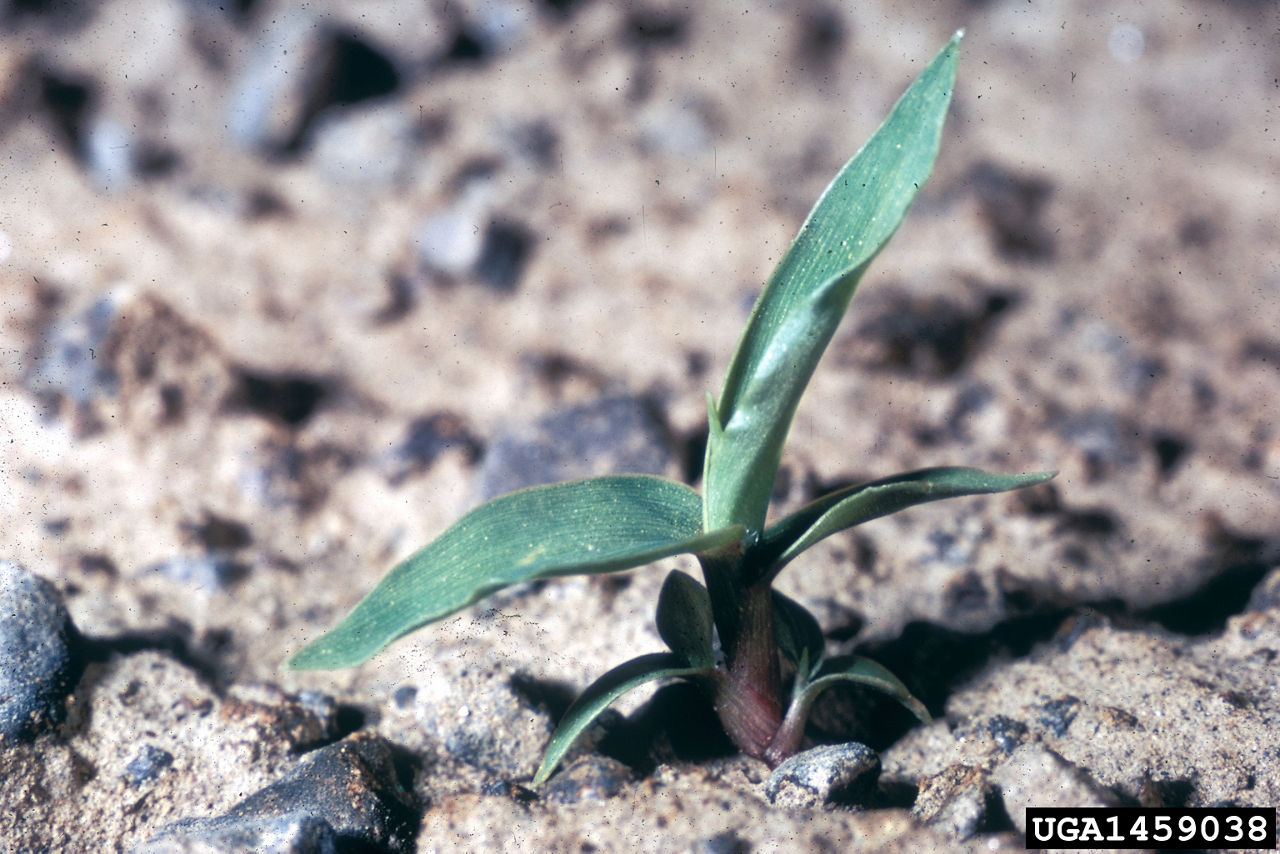
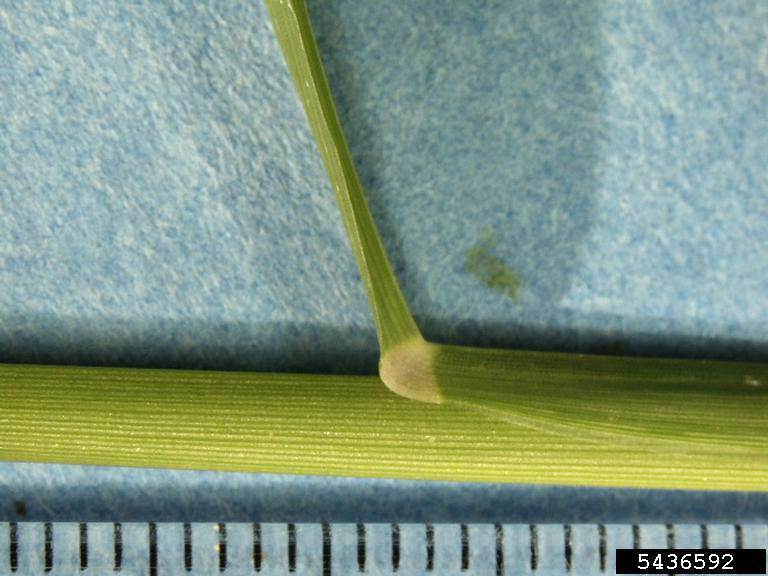
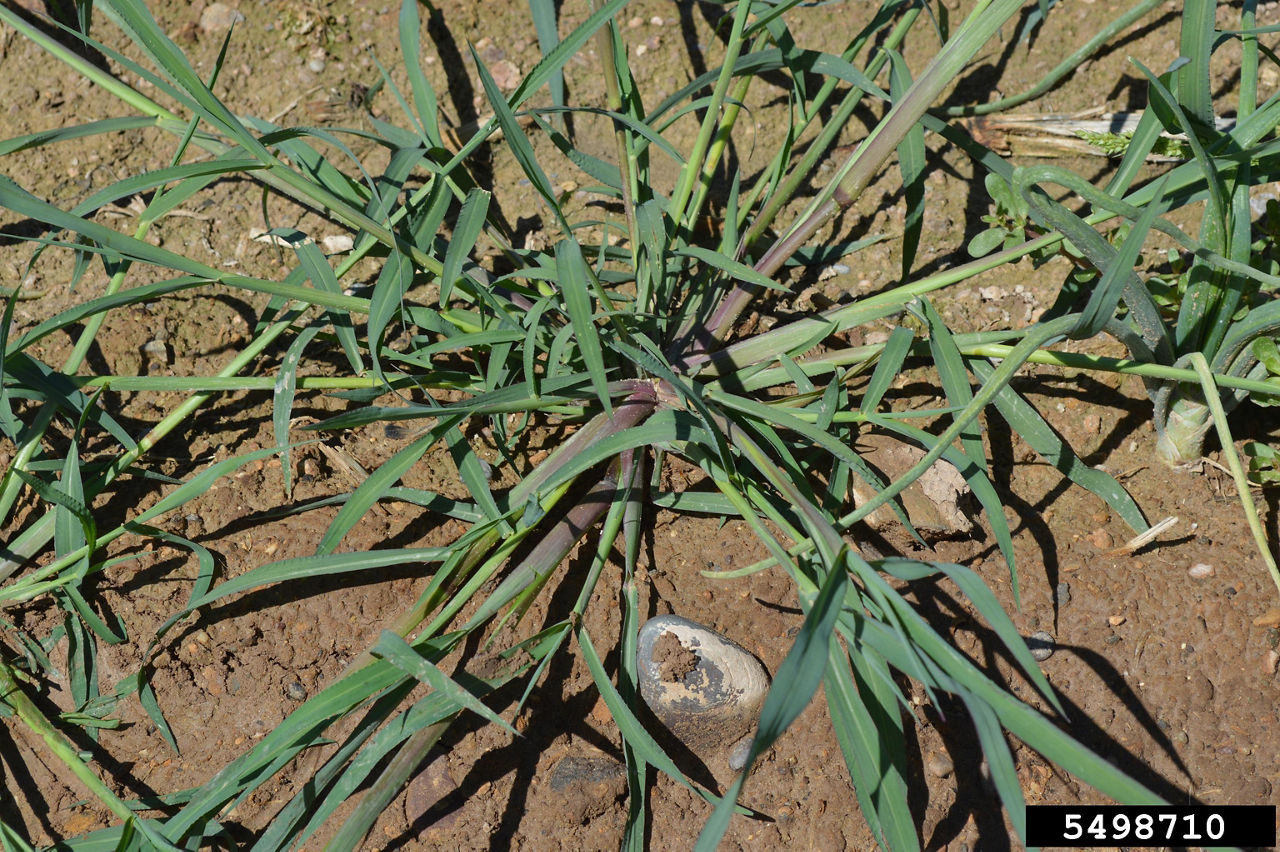
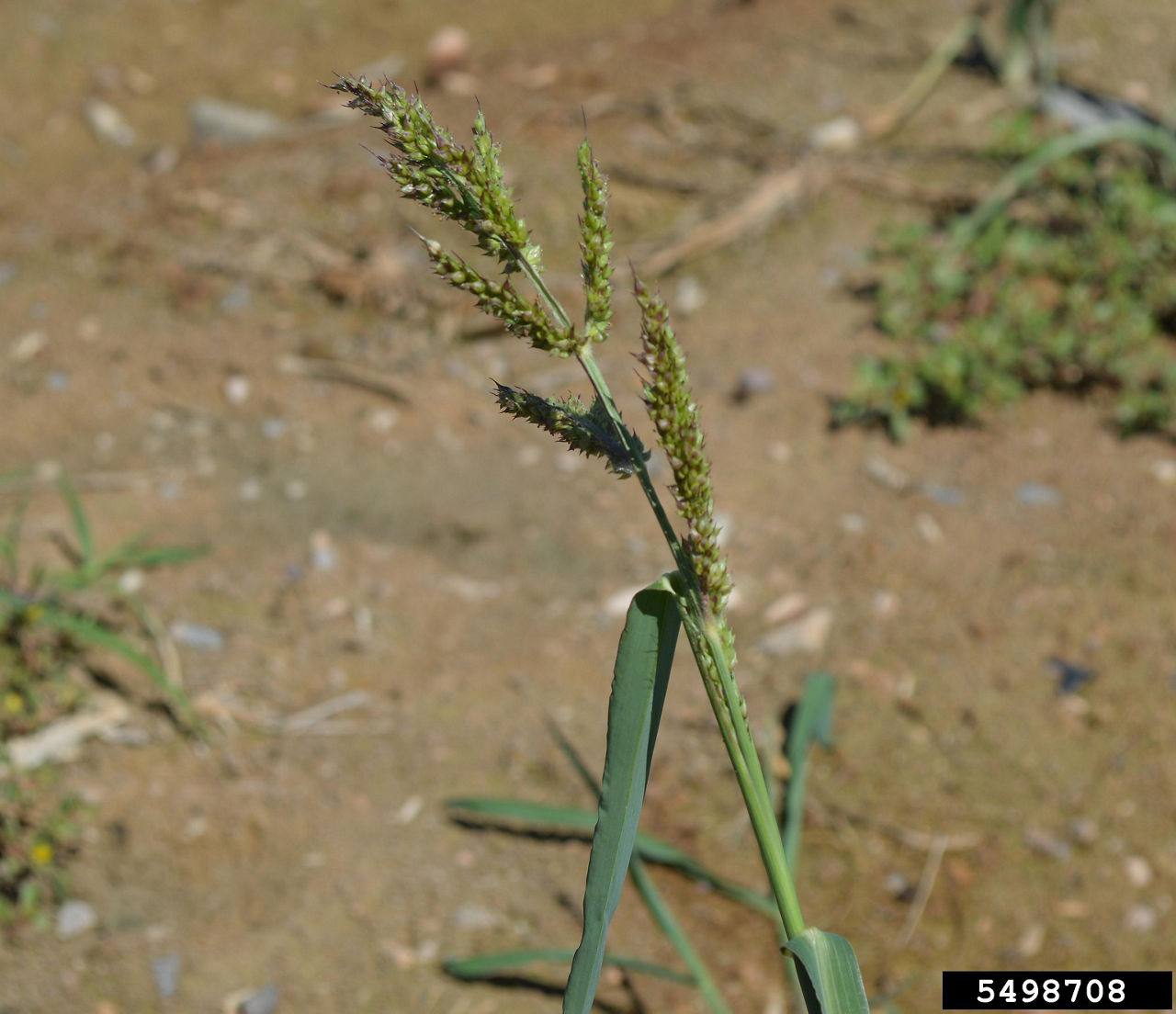
Identification: Barnyardgrass distribution ranges through much of the U.S. and is a weed of many agronomic crops, nurseries, landscape, and turf but is especially problematic in rice in the southern states. Barnyardgrass is a summer annual with thick stems that may reach 5 feet in height.
Seedlings are without hairs (glabrous), auricles, and ligules, and the leaf sheaths are often tinted red or maroon at the base (Figure 9). Leaves are rolled in the shoot, smooth and without ligules or auricles and have a distinct white midvein that becomes keeled toward the basal potions of the leaf (Figure 10) A few short hairs may occur at the leaf bases of mature plants. Stems are usually erect, thick, without hairs (glabrous), often branched at the lower nodes, and may be tinted red to maroon at the base (Figure 11). Seedheads are a terminal panicle ranging from 4 to 16 inches in length (Figure 12). Panicles may be green to purple in color and are comprised of individual spikelets that may develop a 2 to 10 mm long terminal awn.
Similar Species: Fall panicum (Panicum dichotomiflorum) and barnyardgrass are often confused prior to seedhead formation due to their similar growth habit and appearance. However, the characteristic absent ligule of barnyardgrass helps to distinguish this weed from most other grasses in both the seedling and mature stage of growth.
Management: Herbicide-resistant barnyardgrass is widespread in rice-growing regions. Resistance to Group 7 (Photosystem II inhibitors), Group 1 (ACCase inhibitors), and Group 4 (synthetic auxins) herbicides have been well documented in southern states. Many resistant populations are known to have multiple resistance.
Glyphosate reliably controls barnyardgrass. Furthermore, in areas where Palmer amaranth is a problem, barnyardgrass is often controlled as a result of chemistries utilized to manage glyphosate-resistant Palmer amaranth. Rotating crops and herbicide sites of action as well as utilizing residual herbicides are all excellent resistance management techniques.
Sources:
Bond, J. and Golden, B. March 29, 2016. Barnyardgrass management in Mississippi Delta. Mississippi Crop Situation. Mississippi State University Extension. http://mississippi-crops.com
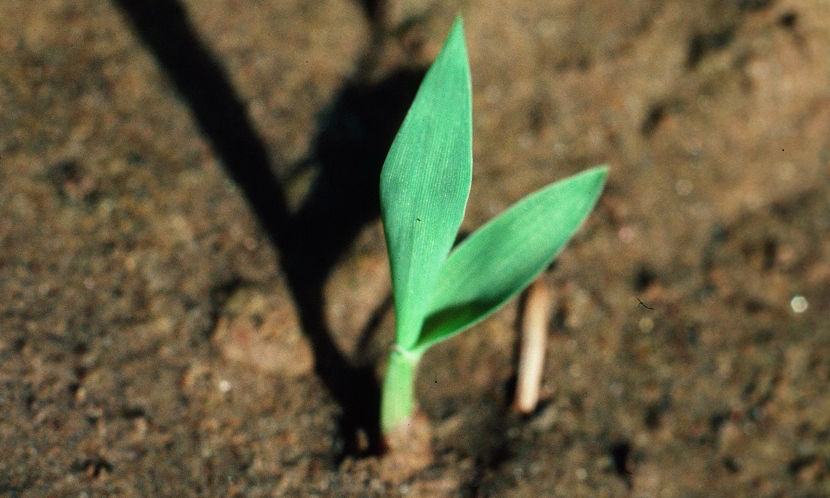
Identification: Large crabgrass is an annual weed with a prolific tillering or branching habit. It reproduces by seed and is problematic not only in row crops but also in pastures and home lawn environments.
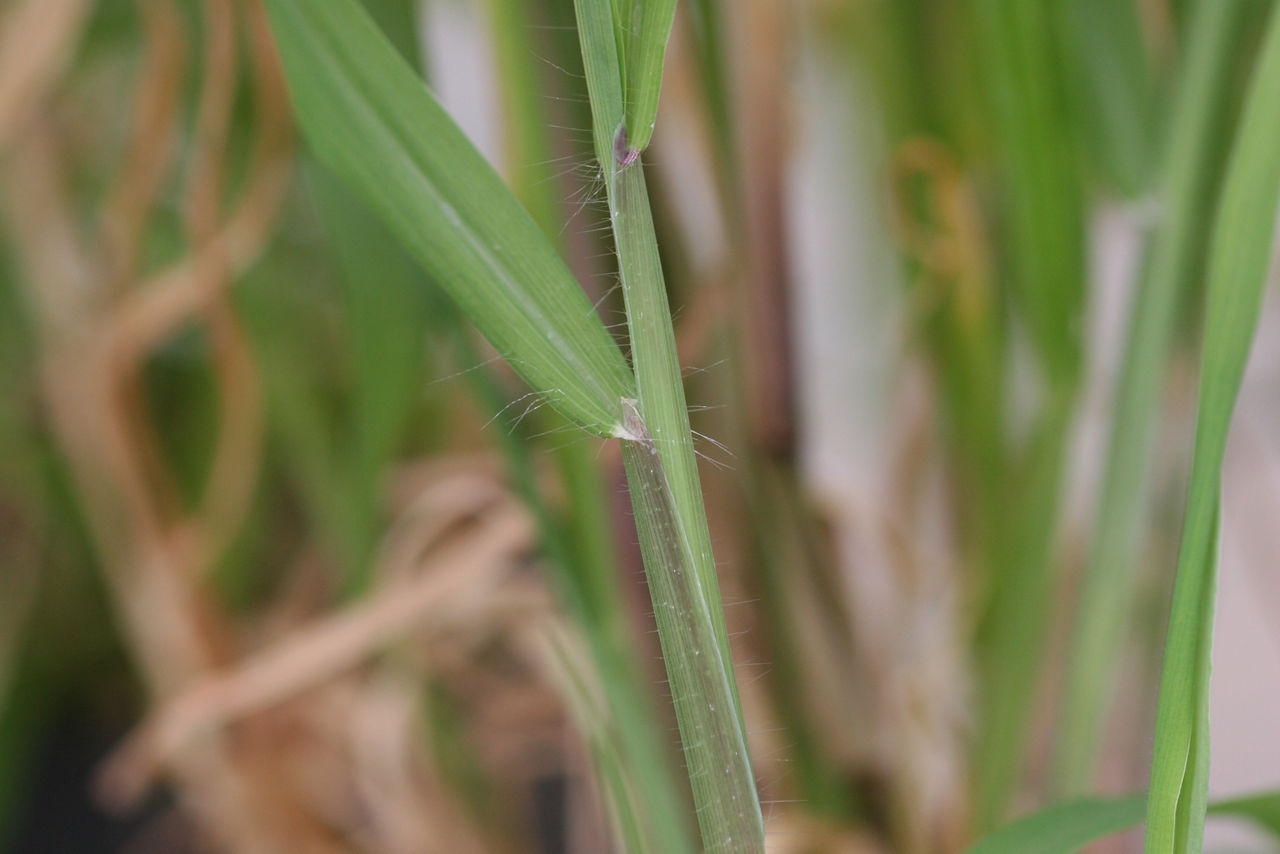
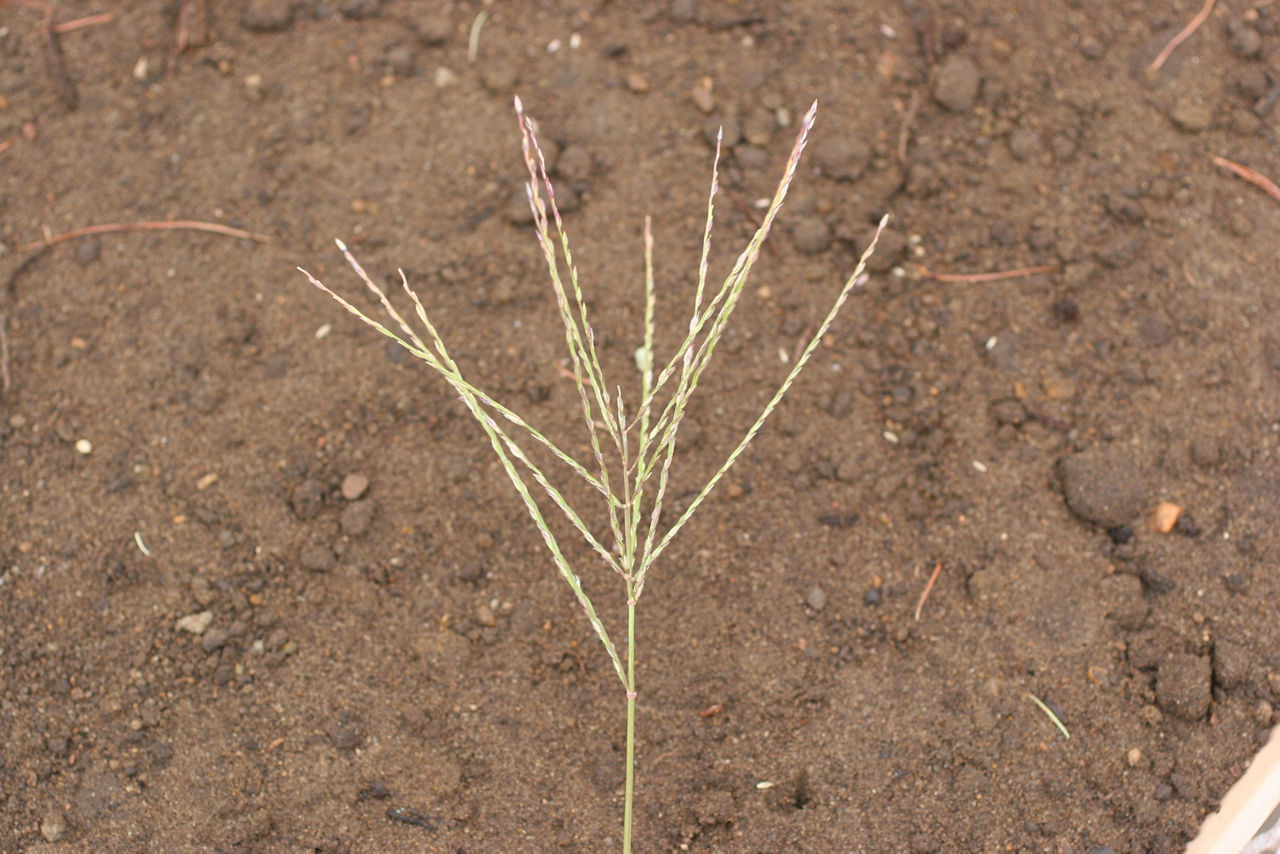
Large crabgrass emerges later than most annual grass weeds and grows well under hot, dry conditions (Figure 13). Large crabgrass has a prostrate to ascending growth habit and is capable of rooting at the nodes. Both leaf surfaces and leaf sheath are densely hairy (Figure 14) The ligule is jagged and membranous. The seed head is a terminal panicle that consists of slender, finger-like branches arranged in a whorl (Figure 15).
Similar Species: Smooth crabgrass (Digitaria ischaemum) is a similar species to large crabgrass but differs by having hairless to sparsely hairy leaves and sheath, a tuft of long hairs at the collar region, and stems that do not root at the nodes.
Management: Due to late emergence patterns, preemergence herbicides don’t always provide season-long control. In corn, emerged crabgrass can be difficult to control. Glyphosate provides excellent control in glyphosate-tolerant corn and soybean products. In soybean, postemergence products also include foliar grass herbicides. Resistance to Group 1 (ACCase inhibitors) herbicides have been identified in some populations.
Common name: Fall panicum
Scientific name: Panicum dichotomiflorum
Life cycle: Annual
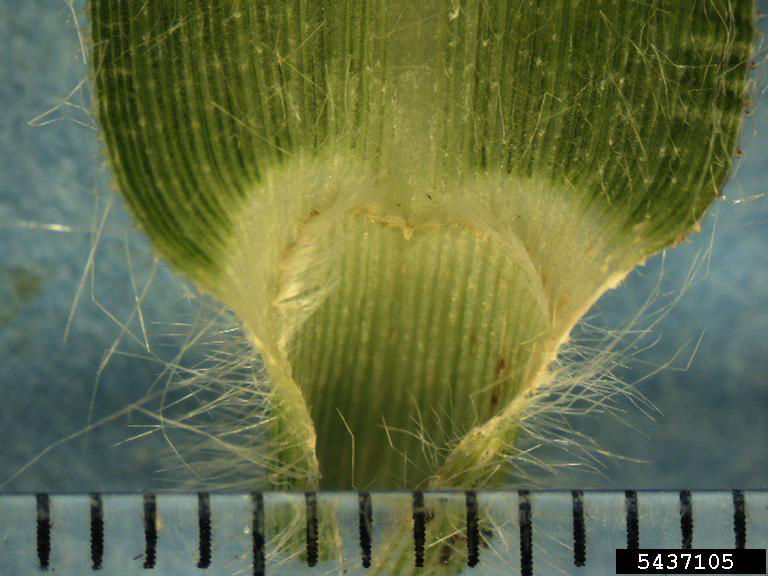
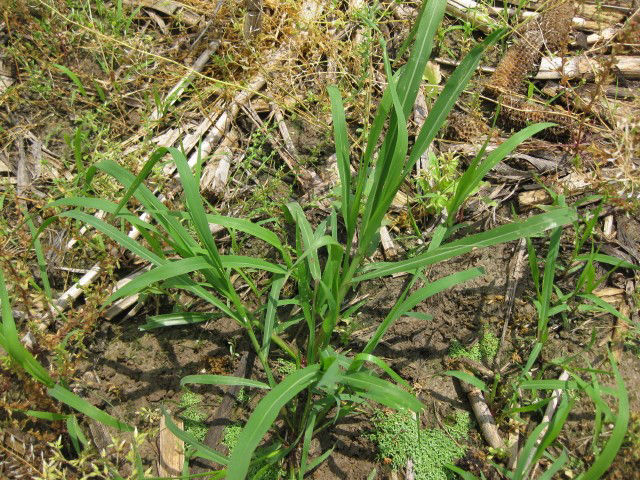
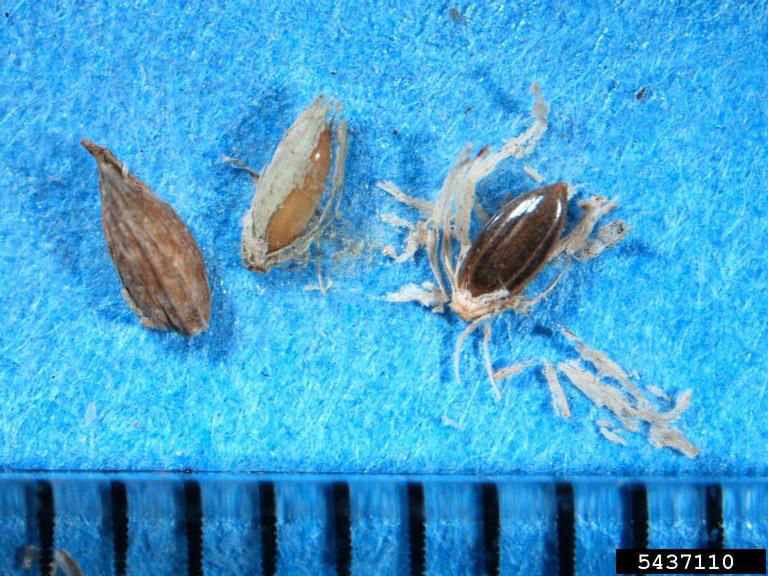
Identification: Fall panicum is a summer annual found throughout the United States. The seedling stage of fall panicum has hairs on lower leaf surfaces. Seedlings and mature plants have a hairy ligule that is up to ¼ inch long (Figure 16). As fall panicum matures, leaves become hairless or sparsely hairy with a prominent midvein (Figure 17). Fall panicum seed heads are wide, spreading panicles that develop a purplish tint when mature and yield small, straw-colored, oval seeds (Figure 18).
Similar Species: Fall panicum is most often mistaken for barnyardgrass and Johnsongrass prior to seedhead formation. Barnyardgrass also has a similar growth habit but it lacks a ligule. Johnsongrass has a similar growth habit but is a rhizomatous perennial, and its mature ligule is topped with a fringe of hair.
Management: Fall panicum is easily controlled in soybean. Earlier planting dates may improve crop canopy development to help suppress fall panicum infestations. Fall panicum seedlings are also readily controlled with tillage. Postemergence control of fall panicum in corn is difficult and must be timely; herbicide applications must be made to small plants to be effective.
Sources:
Spaunhorst, D. and Bradley, K. September 1, 2011. Weed of the month: fall panicum. Integrated Pest Management. University of Missouri. http://ipm.missouri.edu
Common name: Giant foxtail
Scientific name: Setaria faberi
Life cycle: Annual
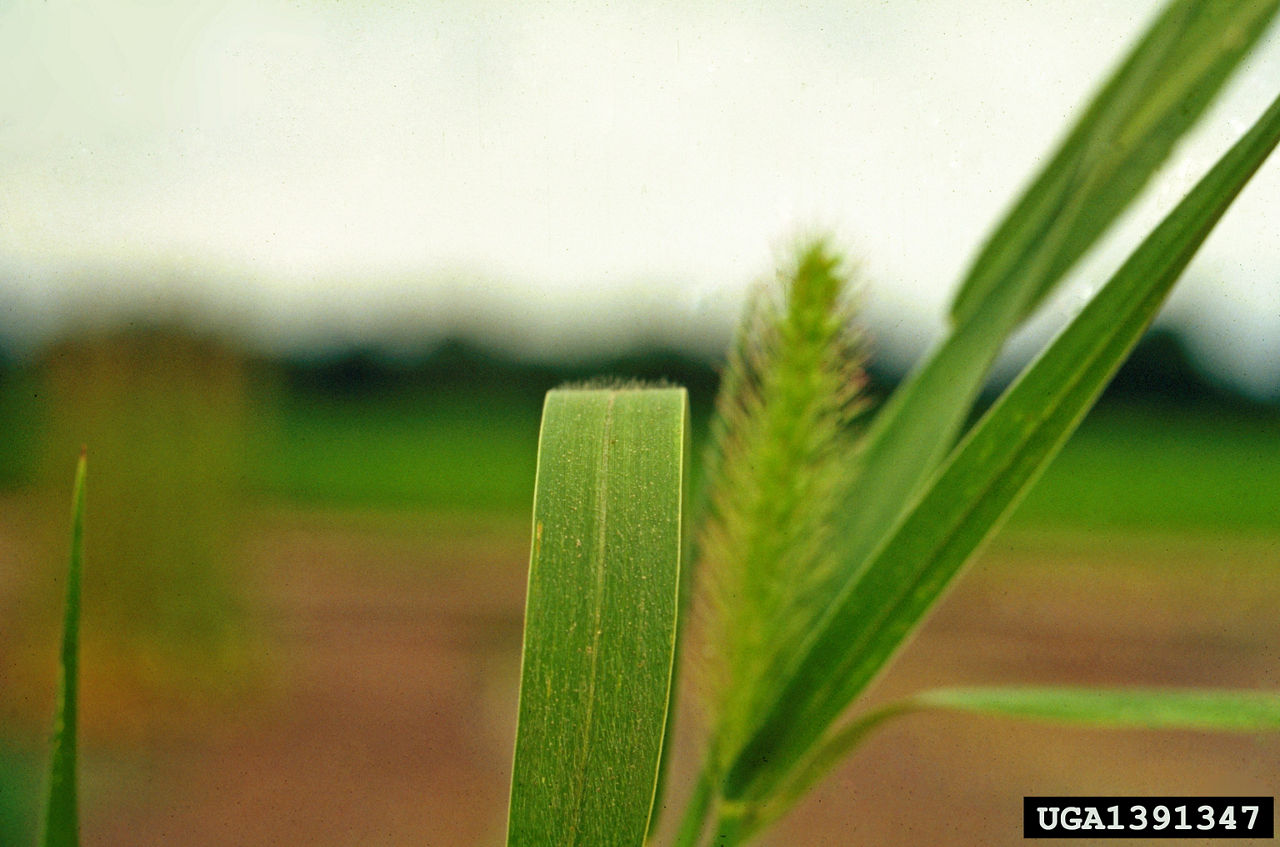
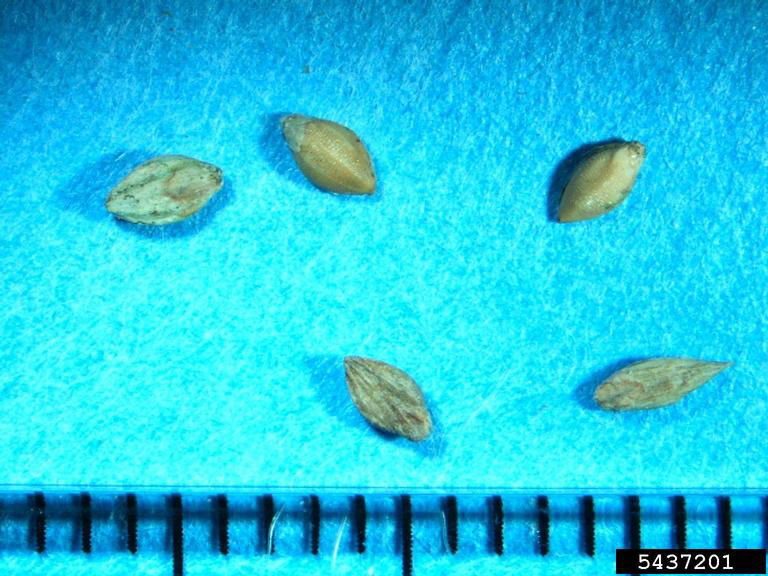
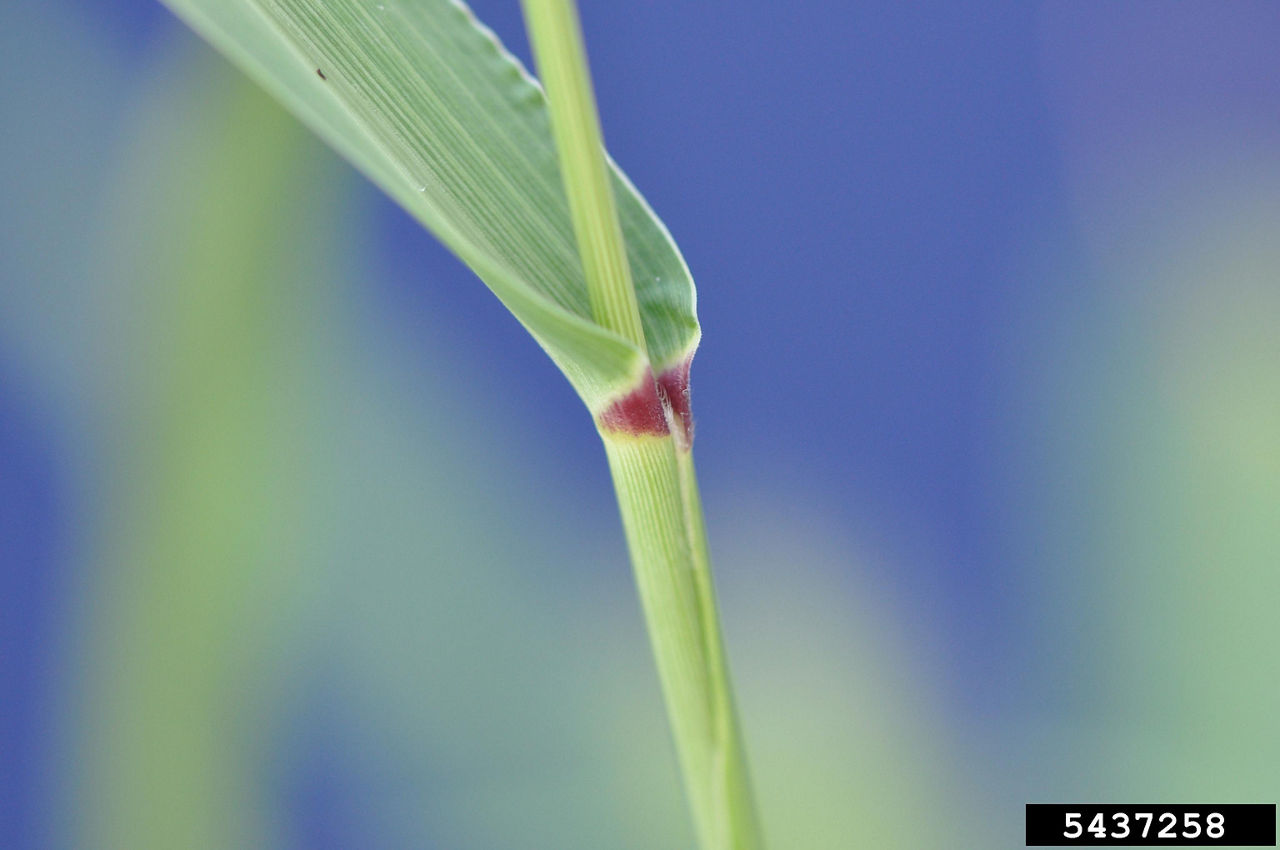
Identification: Giant foxtail is a summer annual that is problematic throughout most of the United States, especially in the northern and eastern corn growing region. It has a round stem, hairy ligule, and distinctive fuzzy seed head with a nodding appearance (Figure 19). Yellow foxtail and green foxtail closely resemble giant foxtail in general characteristics – ligule, growth habit, habitat, and reproductive characteristics. Giant foxtail is the largest of the three species and its seedlings and mature plants have numerous short hairs on the upper surface of the blades and on the margin of the sheaths.
Giant foxtail begins germinating in the spring. The emergence period for giant foxtail is lengthy and its seeds can emerge from shallow soils (Figure 20).
Management: Giant foxtail has developed resistance to Group 1 (ACCase inhibitors), Group 2 (ALS inhibitors), and Group 5 (PSII inhibitors) sites of action. Using cultural practices along with chemical control diversifies management and reduces the risk of developing herbicide resistance.
To manage giant foxtail, start with tillage or burndown herbicides. Apply postemergence herbicides early when plants are young (4 inches or less). Use multiple sites of action for both pre-and postemergence herbicide applications to help manage resistance development.
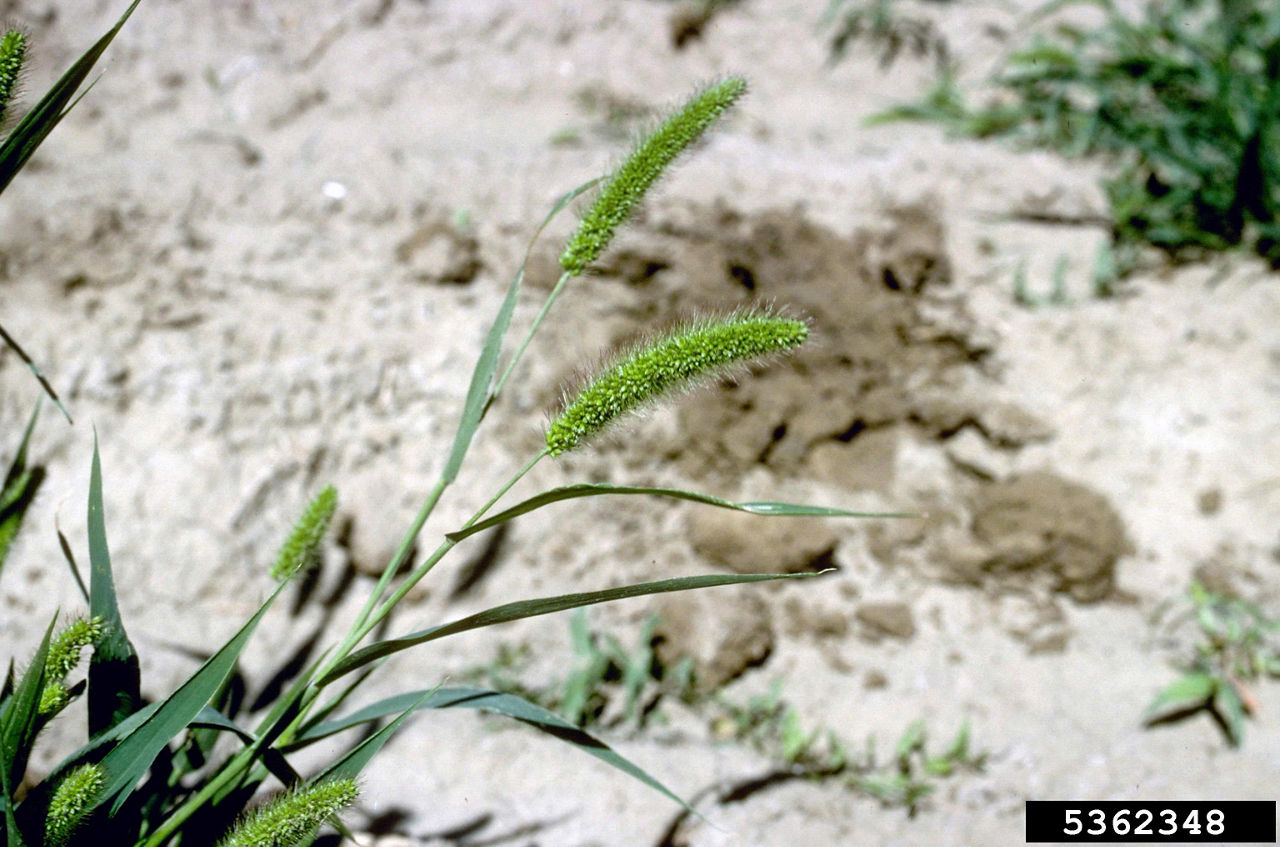
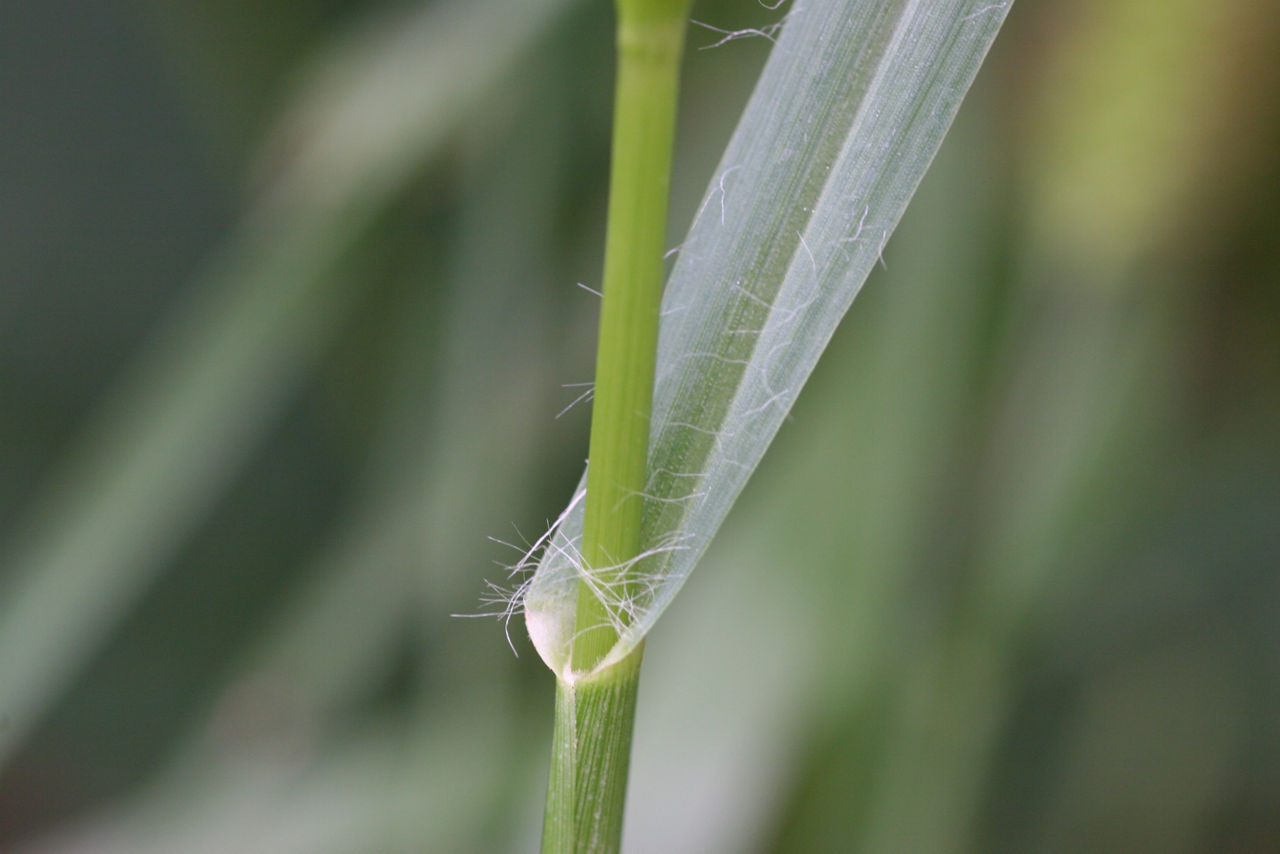
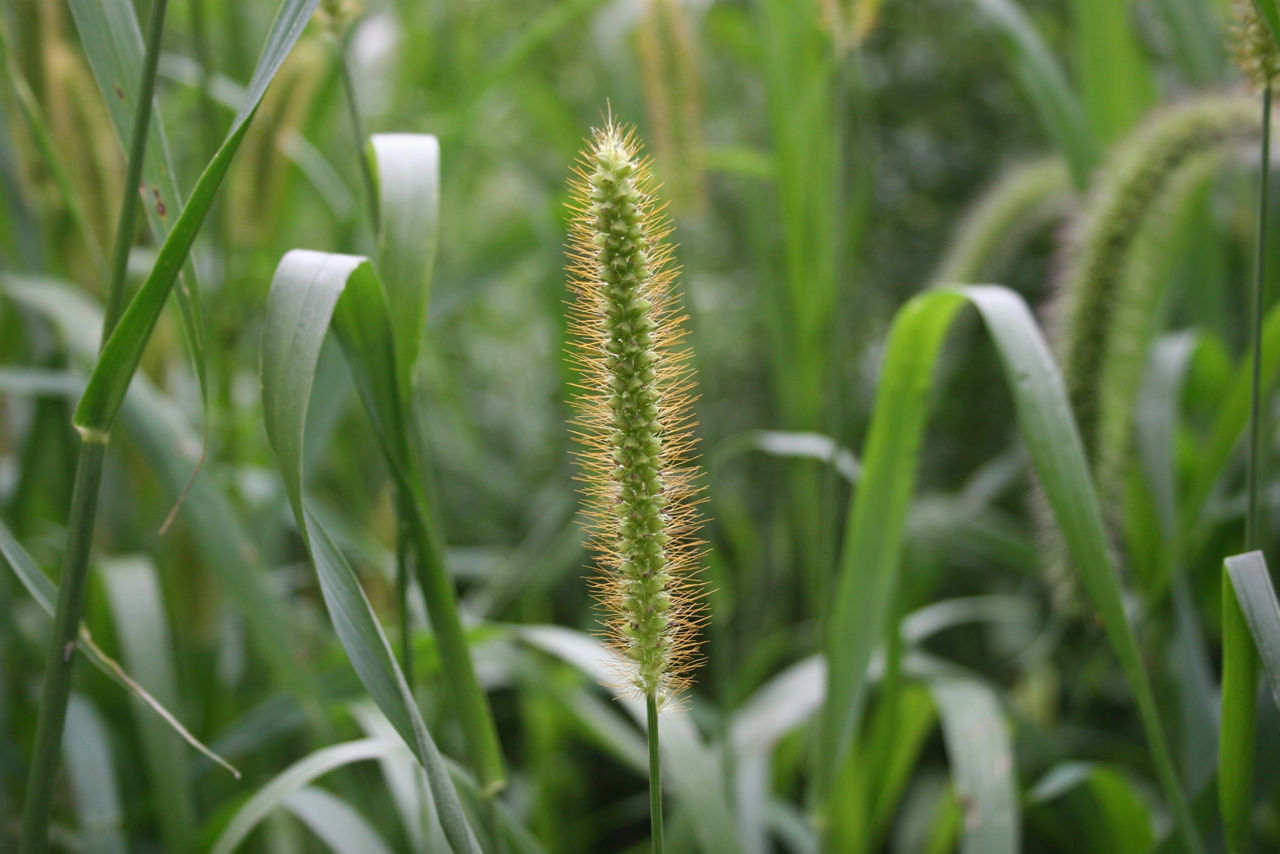
Similar species: green foxtail (Setaria viridis) and yellow foxtail (Setaria pumila) both have similar characteristics to giant foxtail. All are summer annuals and form the distinctive, fuzzy, foxtail seed head. Each grows upright and have a ligule that is a fringe of hairs. While it can be challenging to distinguish the foxtails, each species has unique characteristics that aid in identification.
Both green and yellow foxtail have narrower leaf blades compared to giant foxtail. Green foxtail has a smooth upper leaf surface (Figure 21), while yellow foxtail has a smooth upper leaf except for prominent, scattered, long hairs near the collar (Figure 23). Yellow foxtail has flat leaf sheaths with a reddish-purple tint at the base. Green and giant foxtail both have round leaf sheaths. The leaf sheath of green foxtail is lined with small hairs while that of giant foxtail is smooth.
One of the most distinguishing features is the color and size of the seed head. Yellow foxtail seed heads turn yellowish-brown at maturity and are more compact compared to green or giant foxtails. Green foxtail seed heads are green or purple-tinted and do not droop in the arch shape like giant foxtail (Figures 22 and 24).
Sources:
Bradly, K. May 19, 2014. Weed of the month: the foxtails, similar yet different. Integrated Pest Management. University of Missouri. http://ipm.missouri.edu.
Johnson, B. April 2019. Giant foxtail management in soybeans. Take Action Herbicide Resistance Management. http://iwilltakeaction.com
Common name: Johnsongrass
Scientific Name: Sorghum halepense
Life Cycle: Perennial
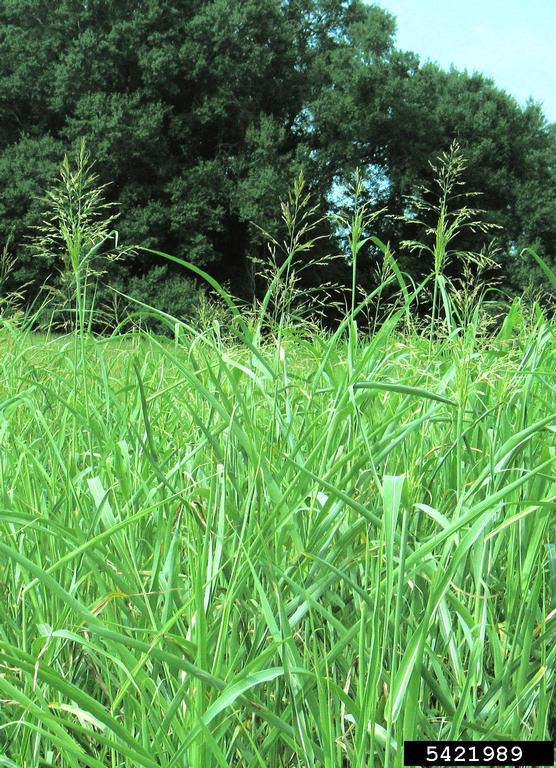
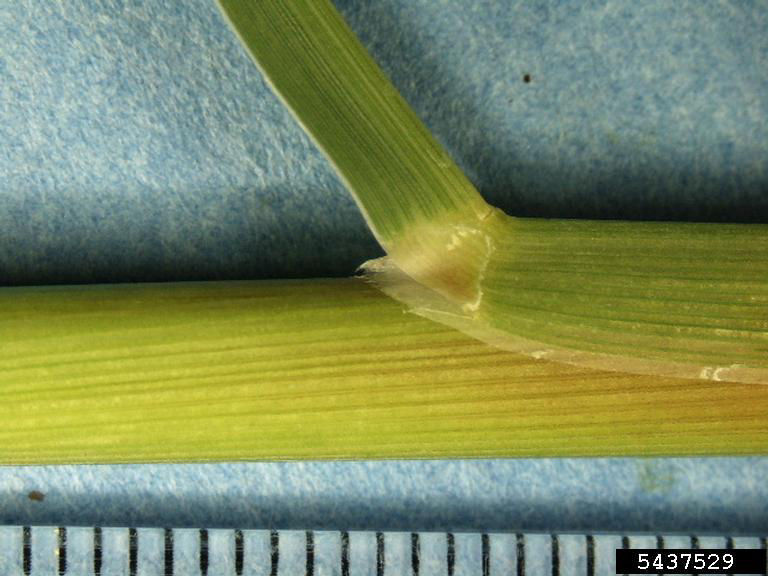
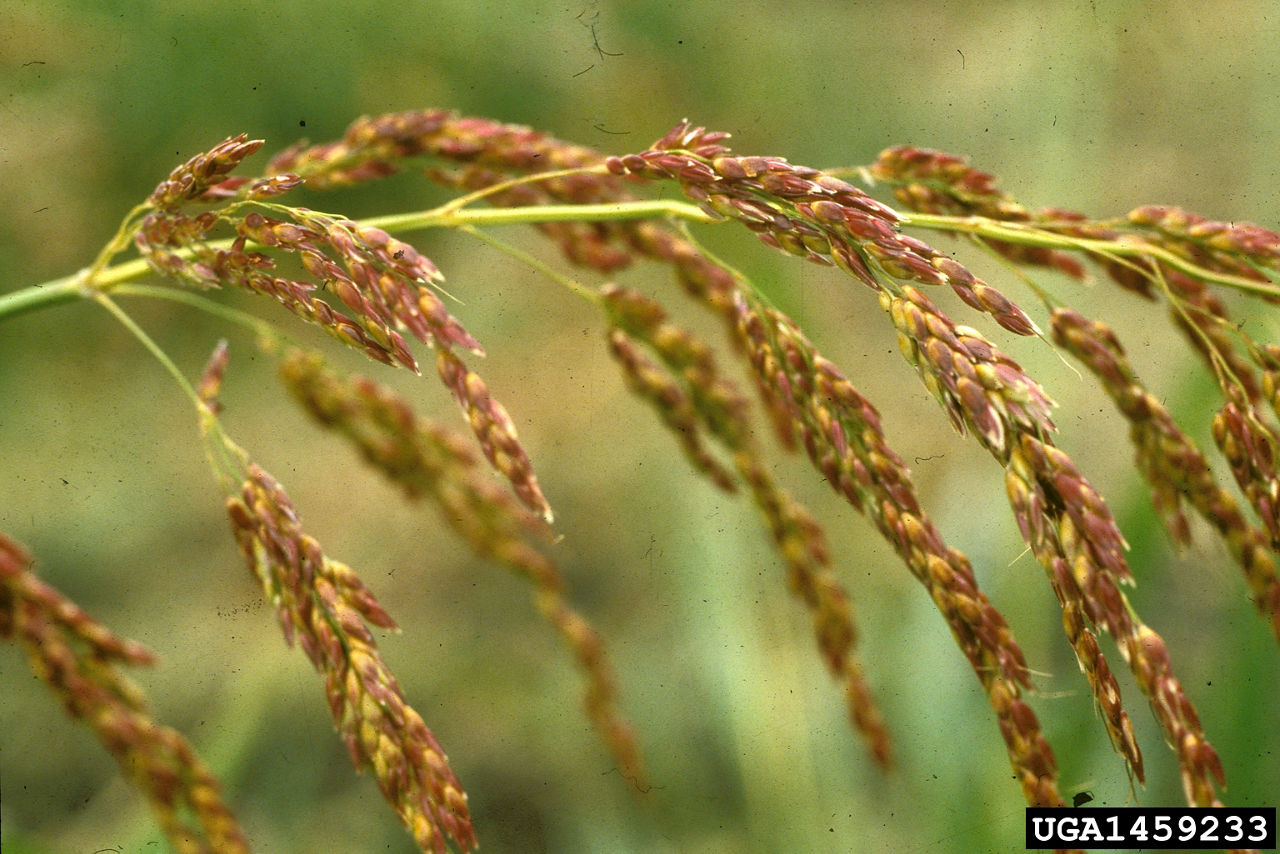
Identification: Johnsongrass is a noxious weed in many states and can be problematic in all Midsouth states. Johnsongrass is a perennial, warm-season grass that grows from seed and rhizomes. Leaves are bright green, hairless, with a prominent midvein (Figure 25). Leaf sheaths are also hairless. Johnsongrass has a very prominent, jagged, membranous ligule (Figure 26). Plants can reach 2 to 7 feet in height and have a loosely spreading or open, coarse, purplish panicle (Figure 27). Plants emerging from seed are capable of producing rhizomes in 3 to 4 weeks.
Management: Best management practices to control Johnsongrass require efforts to control plants that emerge from seed and rhizomes. Johnsongrass is generally more difficult to control in corn than soybean. Johnsongrass can emerge before planting and new plants are likely to emerge after planting. Those present at planting should be managed with a burndown herbicide application or tillage. Soil residual herbicides can help suppress Johnsongrass emerging from seed but will be ineffective on that emerging from rhizomes. An effective postemergence herbicide should also be applied. Some Johnsongrass populations have developed resistance to glyphosate and Group 1 (ACCase inhibitor) herbicides. To reduce the potential for resistance, it is important to rotate between herbicide sites of action. Crop rotation including corn will also allow the use of Group 2 (ALS inhibitor) site-of-action products.
Similar species: Shattercane (Sorghum bicolor) is a summer annual grass species that can resemble Johnsongrass and corn plants. It has smooth, waxy leaves, a membranous ligule, and reaches 4 to 8 feet in height at maturity. Being an annual species, it does not have rhizomes like Johnsongrass. Shattercane and Johnsongrass seeds are similar: football- to egg-shaped and dark reddish-brown to black. Some shattercane populations have confirmed resistance to Group 2 (ALS inhibitor) herbicides.
Sources:
2018. Shattercane. Sorghum bicolor. Weed ID Guide. Division of Plant Sciences. University of Missouri. http://weedid.missouri.edu.
Common name: Quackgrass
Scientific Name: Elymus repens
Life Cycle: Perennial
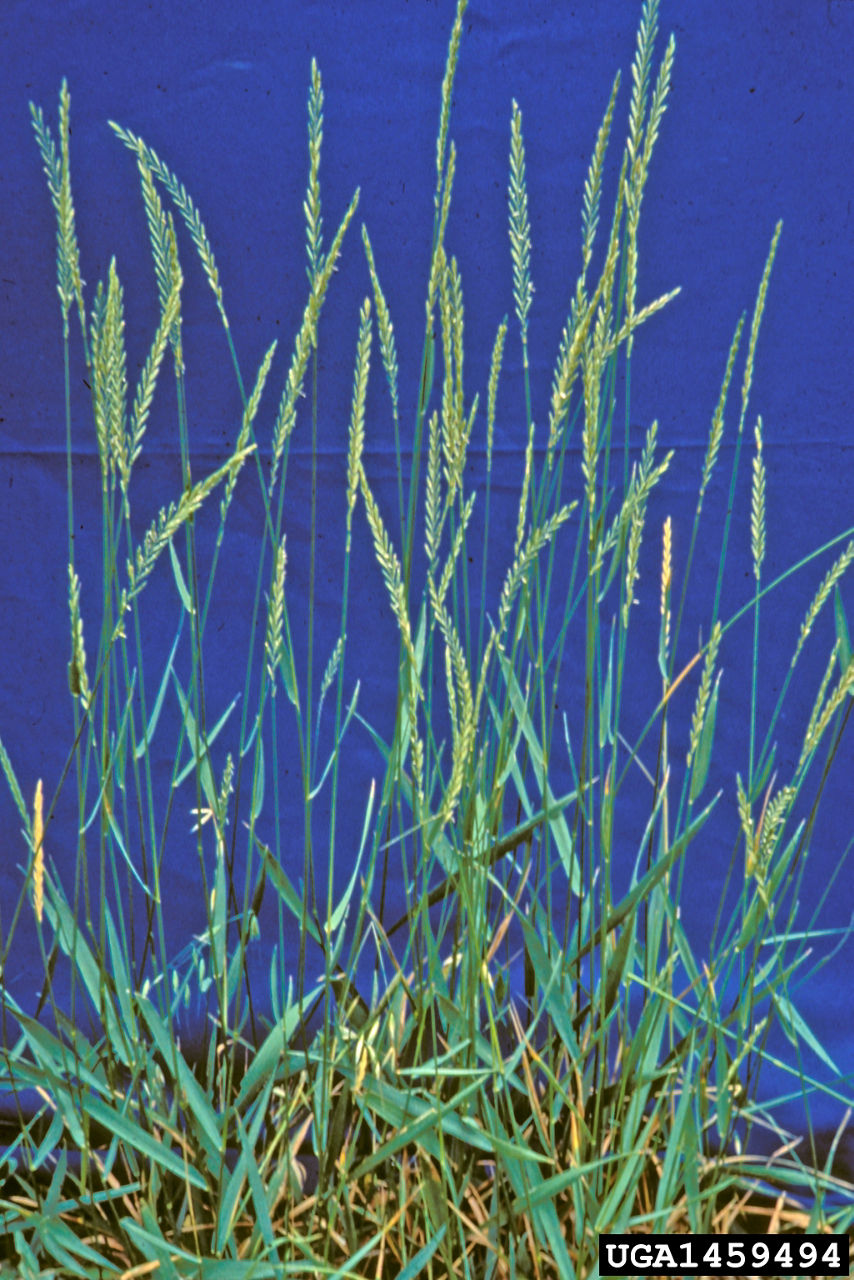
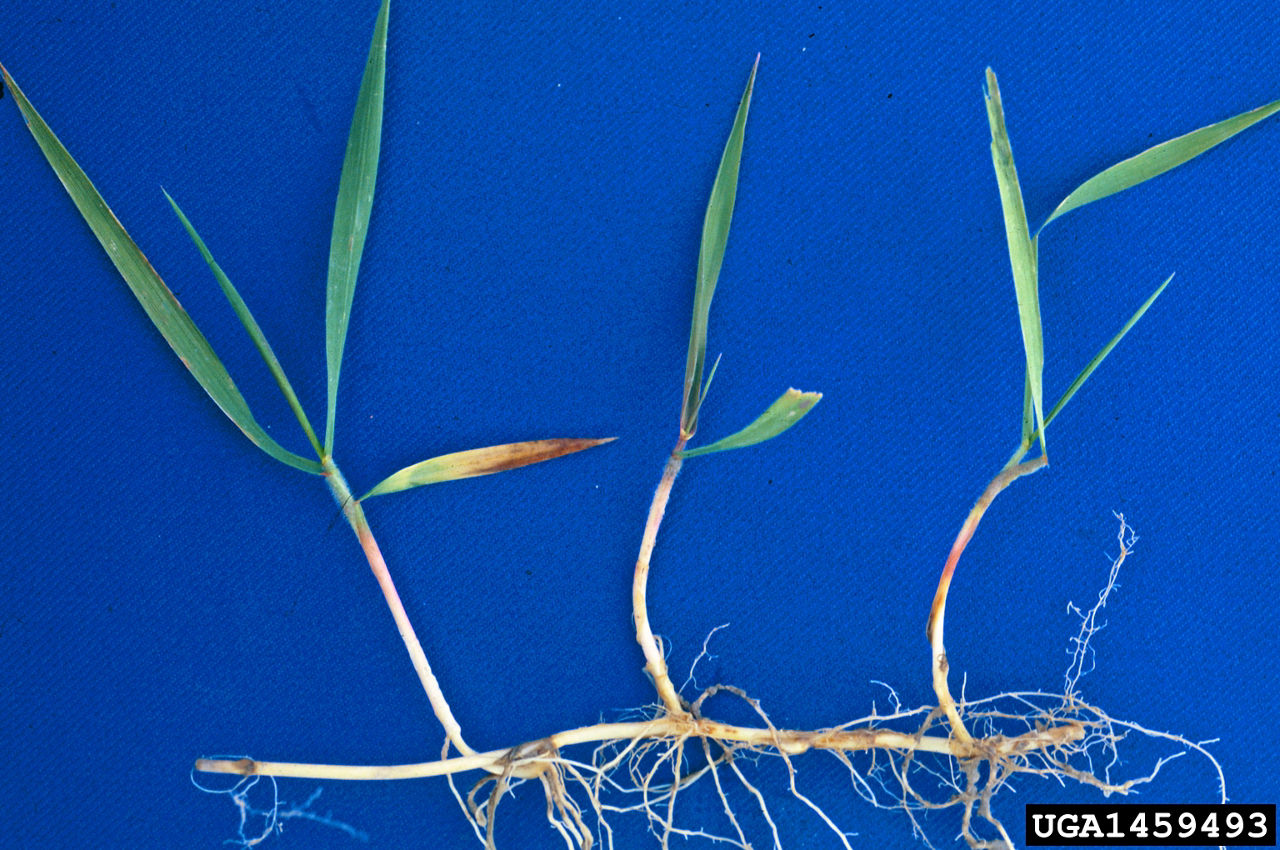
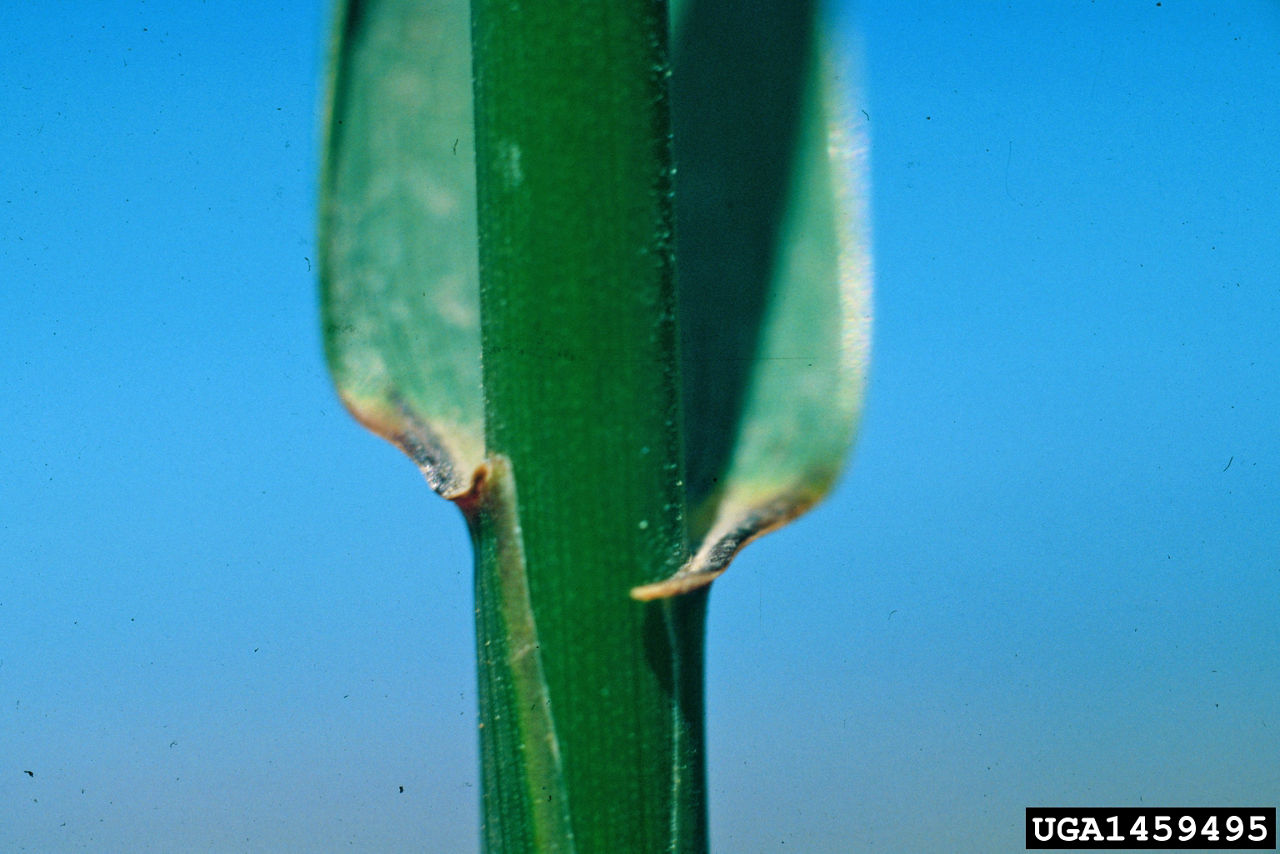
Identification: Quackgrass is a cool-season perennial with the potential to cause problems in several crops. Quackgrass stands erect up to 4 feet tall and can have many tillers (Figure. 28). Distinguishing features include pointed, yellowish-white rhizomes and a pair of clasping, claw-like auricles that are present at the collar region (Figures 29 and 30). The seedhead is a 2- to 10-inch long, slender, spike made up of several alternating spikelets arranged in two rows along the stem. Individual spikelets have prominent awns.
Management: The creeping rhizomes make quackgrass difficult to control. Severed rhizomes can produce new plants, so mowing or tillage does not prevent regrowth.
An integrated management plan combining preventative, cultural, and chemical control methods should be employed to control quackgrass competition with crops. Several different herbicides can be used for quackgrass control. A key to successful management is proper herbicide timing. Quackgrass is generally most vulnerable to an herbicide application when it is actively growing during late spring or early fall.
Sources:
Curran, W. and Ligenfelter, D. September 2, 2017. Quackgrass management: an integrated approach. Agronomy Facts 5. Penn State Extension. http://extension.psu.edu
Common name: Wirestem muhly
Scientific Name: Muhlenbergia frondosa
Life Cycle: Perennial
)
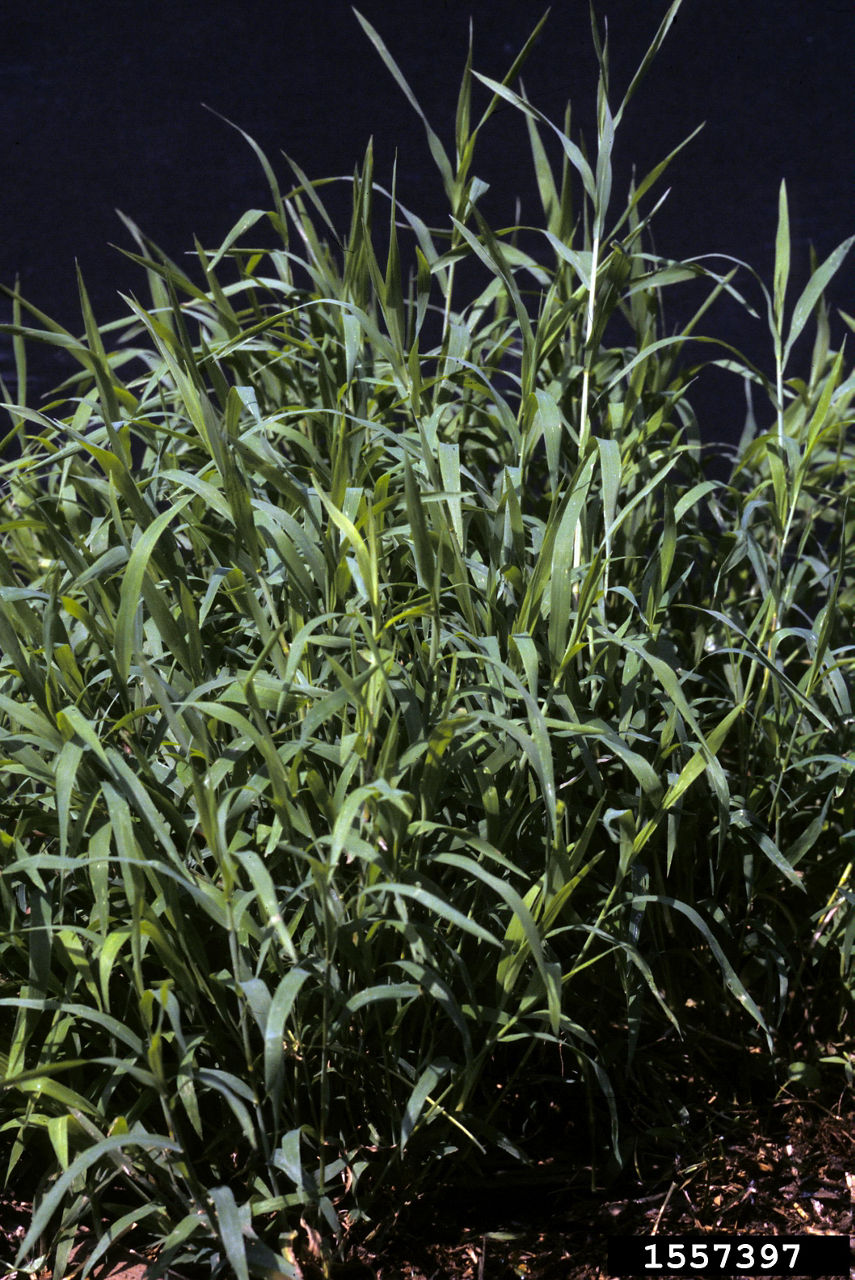
Identification: Wirestem muhly is a warm-season perennial grass that can be of concern in corn and soybean, especially in conservation tillage systems. Wirestem muhly has round stems with bushy growth up to 3 feet tall (Figure 31). Leaves are rolled in the bud and the leaf blade is relatively short, hairless, and usually rough. The leaf sheath is smooth and rounded with overlapping margins. The ligule is membranous, jagged, and short. The stems of wirestem muhly are branched and stiff, giving the plant a wiry appearance. Stems often form roots at the nodes when they contact soil. Narrow panicles are produced at the end of stems and also in leaf axils (Figure 32). Flowers change from soft green to brown purple as they mature.
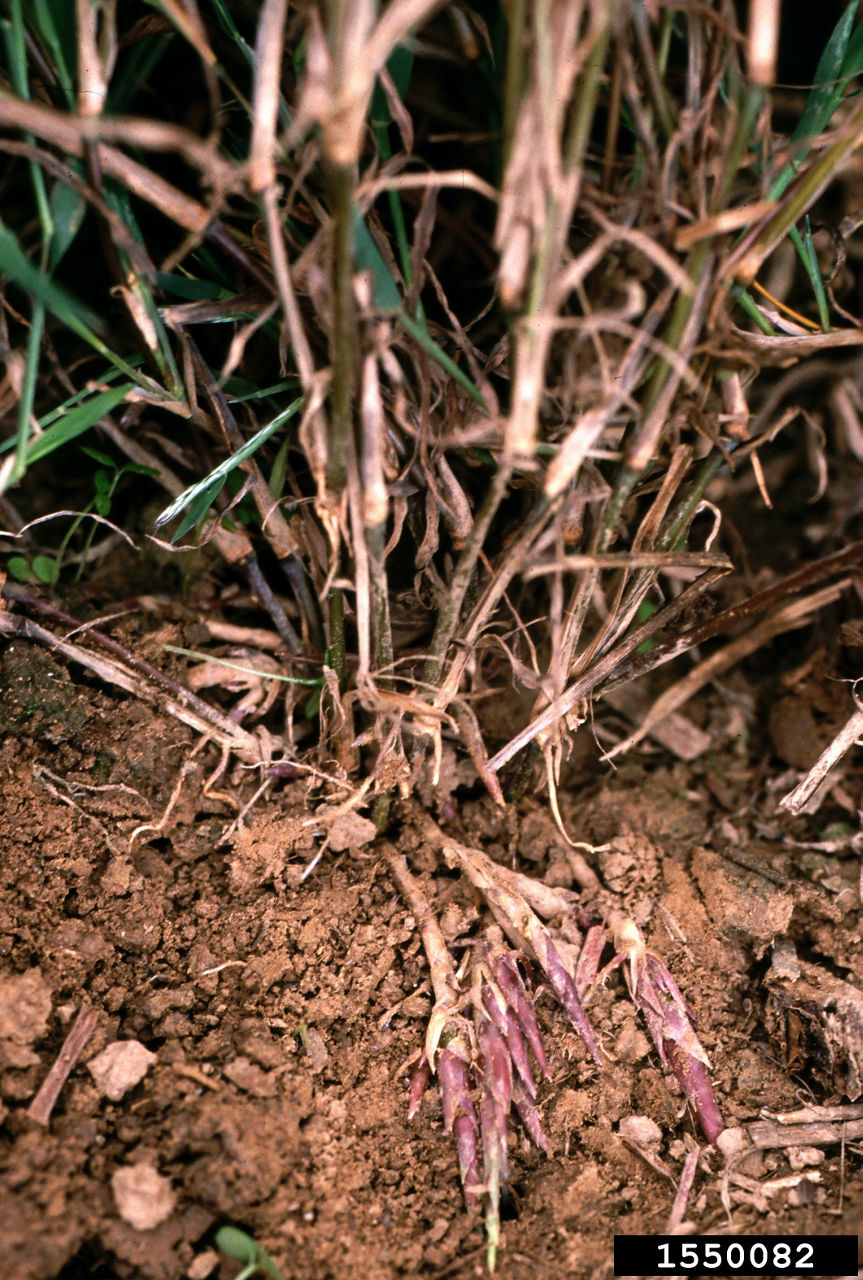
Wirestem muhly produces abundant seed and has an extensive underground root system of short, thick, scaly rhizomes (Figure 33). Both rhizomes and seed are capable of spreading and initiating new infestations and if left unchecked, populations can become very dense, aggressive, and capable of reducing crop yield potential.
Similar Species: Wirestem muhly can be confused with quackgrass. However, quackgrass can be distinguished by its smooth, pointed rhizomes and long, claw-like auricles, which are not present on wirestem muhly.
Management: A combination of preventative, cultural, mechanical, and chemical control methods are needed for effective management. To prevent infestations into crop fields, wirestem muhly should be controlled in fence rows, ditch banks, and other non-crop areas to reduce sources of weed seed. Tillage equipment should be cleaned after working in infested fields to avoid further spread of rhizomes. When possible, vigorous tillage when wirestem muhly growth begins in spring followed by a timely postemergence herbicide application can help reduce the severity of wirestem muhly. However, once established, tillage alone may not provide adequate control. Tillage disrupts and fragments the root system, allowing for better control of smaller root segments by a systemic herbicide. However, infrequent cultivation can exacerbate wirestem muhly by breaking up rhizomes but leaving them buried where they can form new plants. In no-till systems, crop rotation and timely herbicide applications are critical for managing wirestem muhly. Sound agronomic practices (fertility, product selection, crop rotation, etc.) also provide a good foundation for crop growth and competition with wirestem muhly.
There are several herbicide options for control of wirestem muhly in corn and soybean. Unlike quackgrass, which is a cool-season perennial, wirestem muhly is a warm-season species and begins its growth in the late spring and early summer. Early-season burndown applications that are typical prior to corn and soybean planting are not as effective and delaying crop planting until mid-June is not typically practical unless planting double-crop soybeans. Glyphosate provides good control of wirestem muhly when applied during the summer months. Postemergence herbicides should be applied when wirestem muhly is 8 to 10 inches tall and sequential applications may be needed for improved control.
Sources:
Ligenfelter, D.D. and Curran, W.S. September 12, 2017. Wirestem muhly management in agronomic crops. Agronomy Facts 61. Penn State Extension. http://extension.psu.edu
Wirestem muhly (Muhlenbergia frondosa). Ohio Perennial and Biennial Weed Guide. The Ohio State University. http://oardc.ohio-state.edu/weedguide.
General Weed Management Considerations
It is important to start the season clean with tillage or a burndown herbicide application. Allowing weeds to be present at planting because of skipping or delaying the burndown application will give weeds a competitive advantage with the crop.
The use of preemergence herbicides at planting can reduce the risk of early-season competition by reducing densities of weeds that can emerge with the crop.
The use of strictly postemergence herbicide application programs can by risky. Weeds grow rapidly, and weather can delay postemergence applications which can result in loss of yield potential. Surveys have shown that where weeds are managed with only postemergence herbicides, application timings often occur too late to protect the full yield potential of corn from early weed competition.2
The use of preemergence and postemergence herbicides in sequential applications or in tank mixtures can be the best approach to weed control. Weeds should be controlled throughout the season to protect yield potential, using a mix of herbicides and multiple sites of action that can help to prevent the development and spread of resistant weeds.
Sources:
1VanGessel, M. Weed management in row crops: application to corn production - competitive index factor chart. Northeast IPM Module number 10. http://northeastipm.org.
2Fickett, N.D., Boerboom, C.M., and Stoltenberg, D.E. 2013. Predicted corn yield loss due to weed competition prior to postemergence herbicide application on Wisconsin farms. Weed Technology 27:54-62.Schaefer, K., Mueller, D., Sisson, A., Hartzler, B., Anderson, M., Jha, P., and McGrath, C. 2019. Weed identification. Field Guide. 2nd Edition. Iowa State University Extension and Outreach.
Everman, W., Sprague, C., Gower, S., and Richardson, R. 2014. An IPM Pocket Guide for Weed Identification in Field Crops. Bulletin E-3081. Michigan State University Extension.
1027_G1
Disclaimer
ALWAYS READ AND FOLLOW GRAIN MARKETING AND ALL OTHER STEWARDSHIP PRACTICES AND PESTICIDE LABEL DIRECTIONS.