Beneficial Insects in Corn
December 1, 2025
Not all insects found in corn are pests. In fact, relatively few of the insects found in corn are pests. Most insect species found in corn are beneficial and are classified into three broad groups: predators, parasitoids, and pollinators. Examples of predators are lady beetles, ground beetles, assassin bugs, green lacewings, syrphid flies, wasps, and although not insects, spiders. I am going to focus on three very common predators, lady beetles, ground beetles, and green lacewings.
Lady Beetle
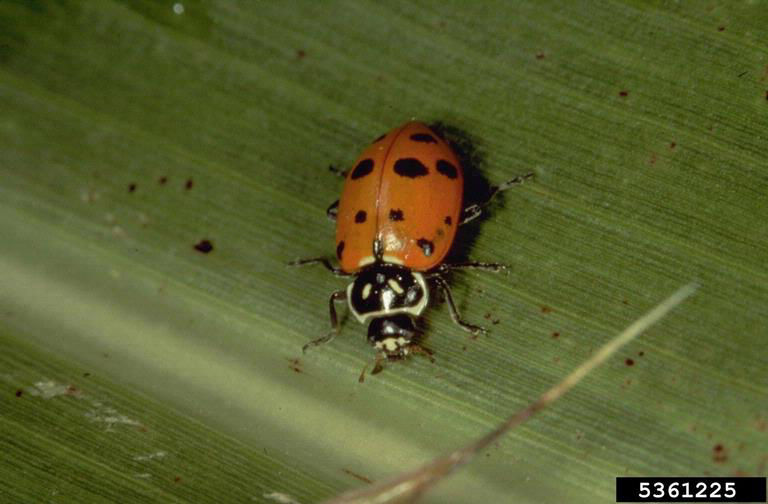
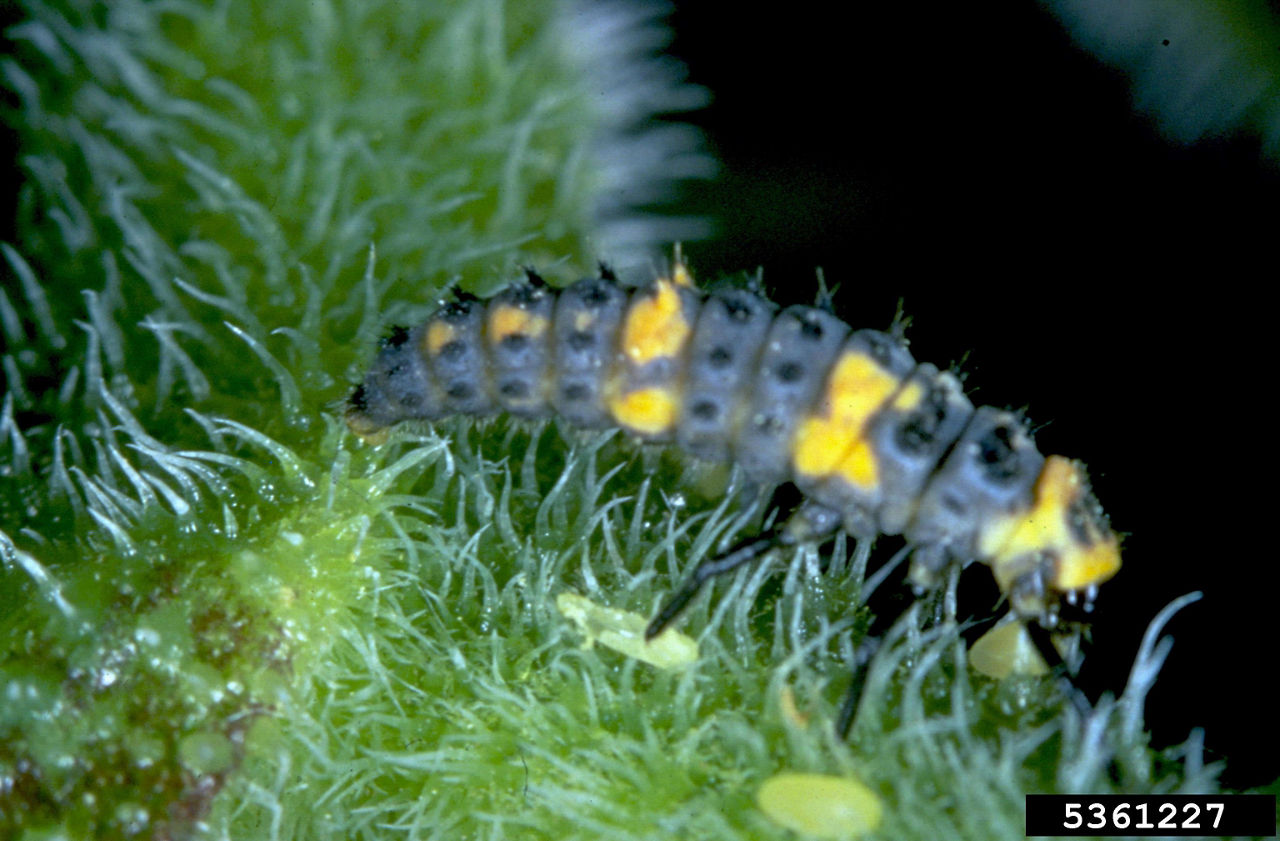
These are the most recognized predatory insect. They are oval, relatively small, and can range in color from yellow, red, orange and even black (Figure 1). The wing covers are usually spotted. Both the adult and larvae are predatory, with the larvae (Figure 2) often referred to as aphid dragons. Aphids are a favorite food for adults and larvae. It has been estimated that a single lady beetle consumes 5,000 aphids in its life.1
Ground Beetle
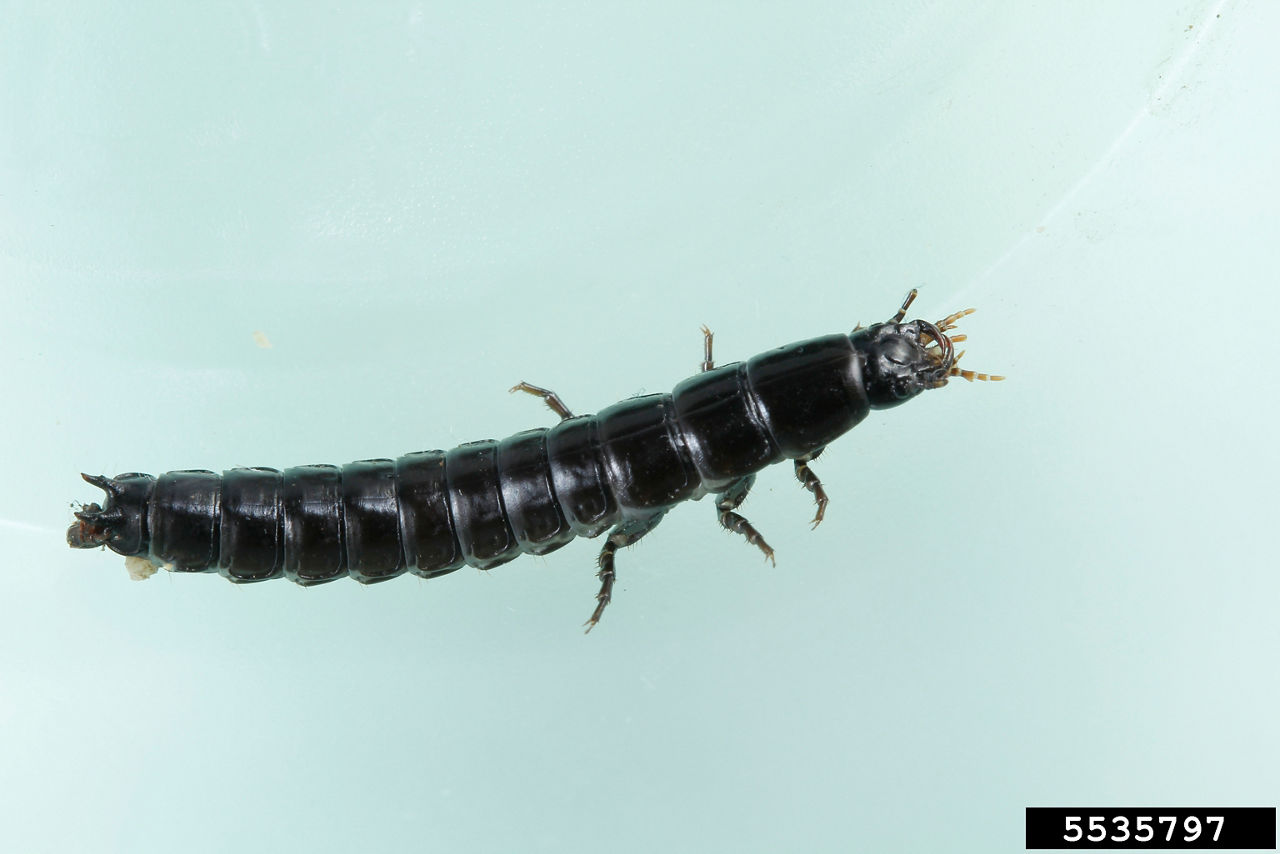
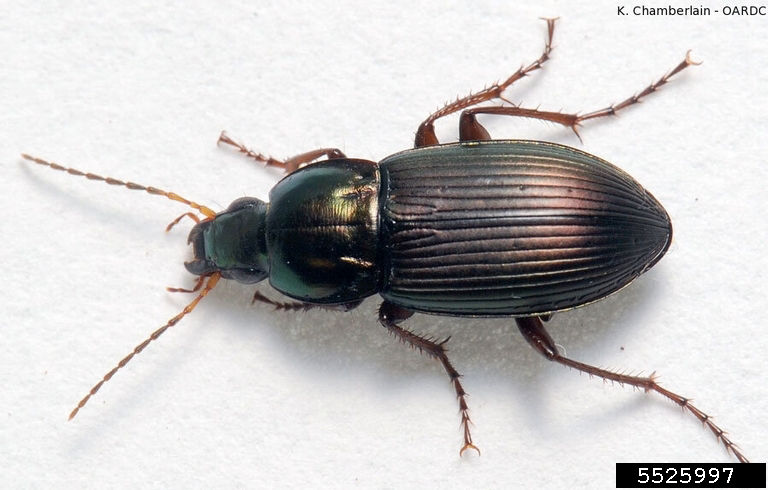
Ground beetle larvae are predators that feed on soil-dwelling insects and other soil inhabitants (Figure 3). Pests fed upon may include the eggs and larvae of pests such as aphids, mites, mealybugs, caterpillars, grubs, fly maggots and pupae, root maggot larvae in the soil, and other small soil dwellers such as snails and slugs. Some ground beetles also consume weed seeds. The adults are typical beetles with hard wing covers and usually a shiny back (Figure 4).2,3 They prefer fields with debris cover and are usually more common in reduced and no-till systems.4
Green Lacewing
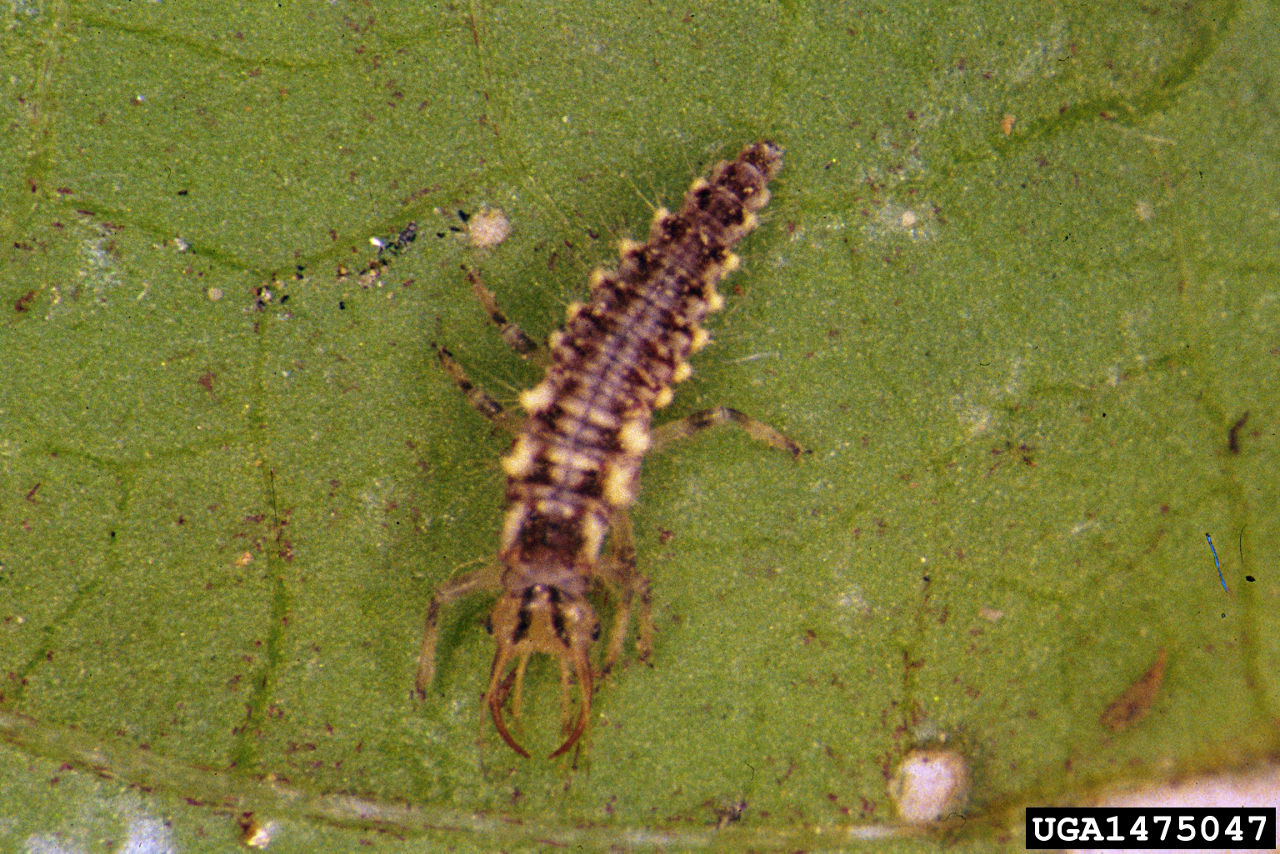
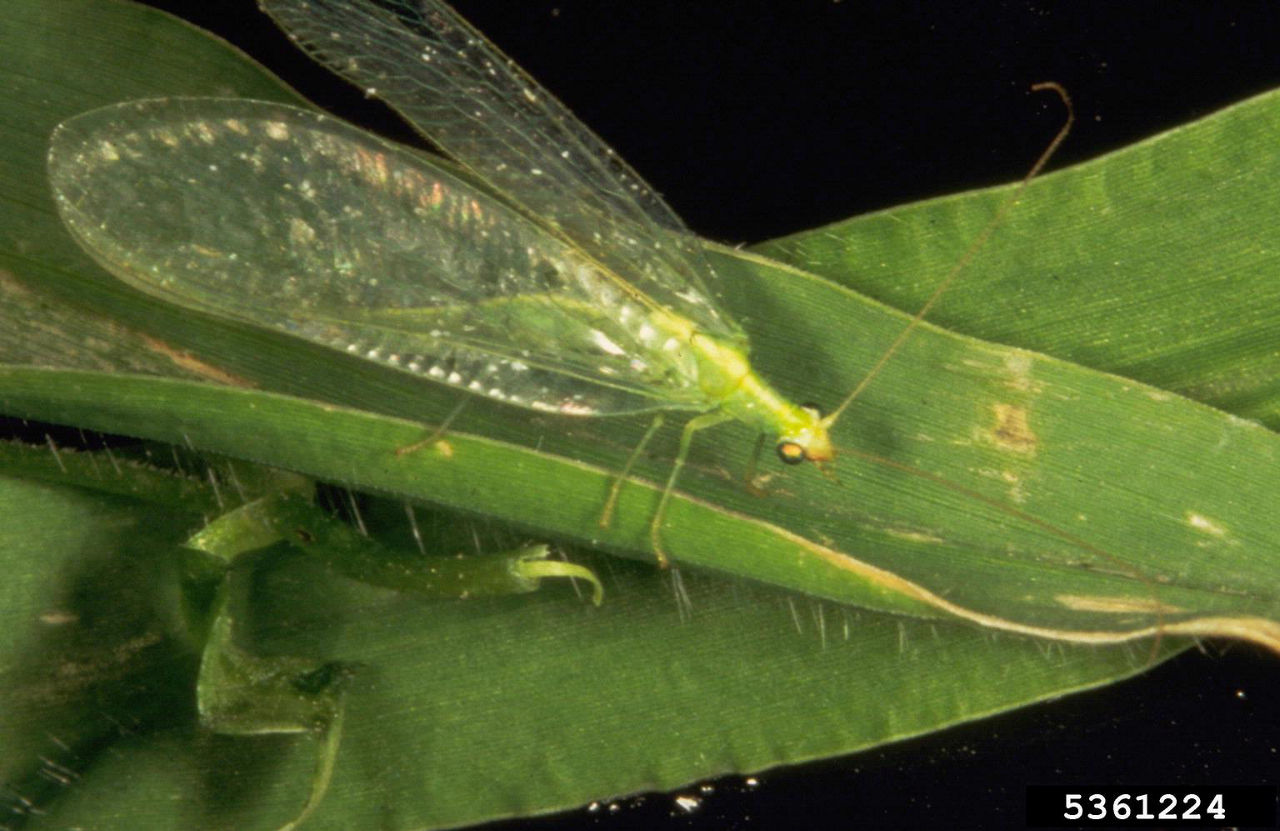
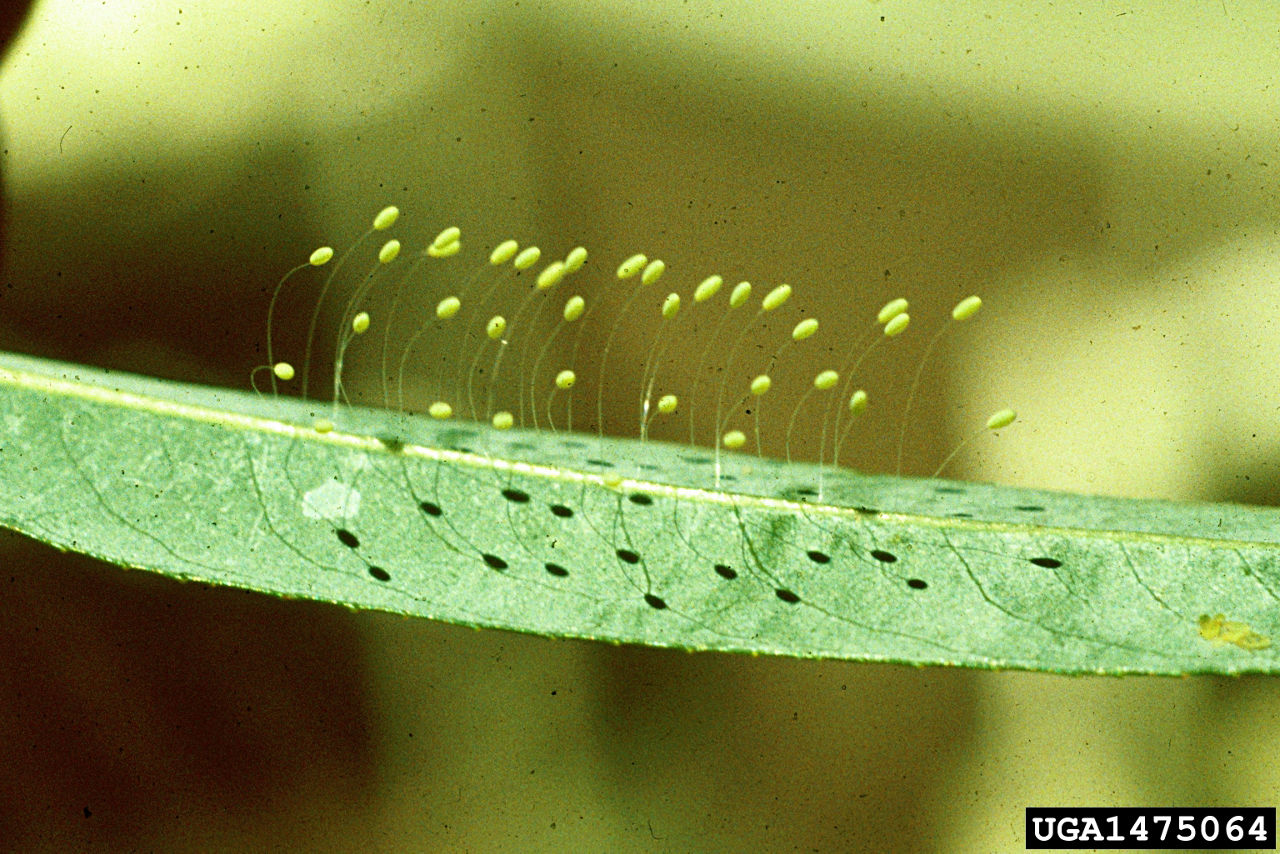
Green lacewing larvae are important predators of aphids, mites, sap-feeding, and soft-bodied insects. The larvae are alligator-like and have large sickle shaped mouthparts (Figure 5). The larvae are predaceous and are sometimes called aphid lions as they have been reported to eat between 100 and 600 aphids each.5 Adults are not always predators and can commonly be found feeding on flower pollen and nectar (Figure 6). Individual eggs are laid on the end of a long thin stalk to prevent predation by other green lacewing larvae (Figure 7).6
What is the effect of Bacillus thuringiensis (B.t.) traited corn on beneficial insects?7
There are three considerations to this question:
- Insecticide (which may kill the pest and any beneficial insects present) use is potentially reduced when corn products with a B.t. trait(s) are planted because B.t. traits are specific to certain insects. If insecticides are not applied, beneficial insects are allowed to survive and help protect plants from other insects.
- Because target pests could be exterminated from the crop by the B.t. toxin, natural enemies relying on the pest for food are negatively affected. While possible, the crop protection benefits of removing pests likely outweigh pest reduction provided by feeding from natural enemies. Also, biological control often results from complex actions of natural enemy species and overall natural enemy benefit may not be greatly affected.
- Finally, natural enemies feeding on pests after ingesting the B.t. toxin may be negatively affected by the toxin. This interaction has been demonstrated; however, the negative effects on natural enemies are thought to be relatively minor.
Bayer Agronomist
Sources
1Walgenbach, J. and Schoof, S. 2015. Lady beetles. NC State Extension. North Carolina State University. https://content.ces.ncsu.edu/lady-beetles
2Raupp, M., Traunfeld, J., and Sargent, C. 2023. Predatory beetles. University of Maryland Extension. https://extension.umd.edu/resource/predatory-beetles/
3Hahn, J. and Kells, S. 2024. Ground beetles. University of Minnesota Extension. https://extension.umn.edu/nuisance-insects/ground-beetles
4Carvalho, C., Gareau, T.P., and Barbercheck, M. 2025. Ground and tiger beetles (Coleoptera: Caravidae). PennState Extension. College of Agricultural Sciences. The Pennsylvania State University. https://extension.psu.edu/ground-and-tiger-beetles-coleoptera-carabidae
5Komondy, L. 2022. Common green lacewing. Cornell Integrated Pest Management. Cornell College of Agriculture and Life Sciences. https://cals.cornell.edu/integrated-pest-management/outreach-education/fact-sheets/common-green-lacewing-biocontrol-agent-factsheet
6Varenhorst, A., Rozeboom, P., and Wagner, P. 2023. Green lacewings: Beneficial predators for both small and large-scale landscapes. South Dakota State University Extension. https://extension.sdstate.edu/green-lacewings-beneficial-predators-both-small-and-large-scale-landscapes
7Peairs, F.B. 2013. Bt corn: Health and the environment. Fact Sheet No. 0.707. Crop Series Production. Colorado State University Extension. https://agsci.colostate.edu/wp-content/uploads/sites/127/2022/03/BT-Corn-Health-and-the-Environment.pdf
Websites verified 10/29/25. 1110_708600
Disclaimer
ALWAYS READ AND FOLLOW GRAIN MARKETING AND ALL OTHER STEWARDSHIP PRACTICES AND PESTICIDE LABEL DIRECTIONS.