Grain Loss from Behind the Combine
August 15, 2025
Get Year-Round Updates From Our Agronomic Experts
Once harvest begins, additional inputs that can help increase yield potential are limited; therefore, leaving bushels in the field can be detrimental to profit. Grain loss can also cause problems the following growing season with volunteer plants. These are just a couple of reasons why measuring and limiting grain loss from behind the combine is an important step during harvest.
Grain loss could be classified into two timeframes– pre-harvest and at-harvest. Pre-harvest grain loss is generally a result of Mother Nature events like high wind causing lodging or dry weather creating loose soybean pods. While at-harvest losses occur from mechanical means during threshing and unloading.
Machine preparation for harvest should begin with reviewing the manufactures manual for their recommended settings. After adjusting the settings, measurements can be taken before and during harvest to help determine grain loss. If crops are standing well, combine losses should not be over one bushel per acre.1 While threshing and separation losses should not be over 0.2 bushels per acre in good conditions.1
Corn: Measuring Grain Loss
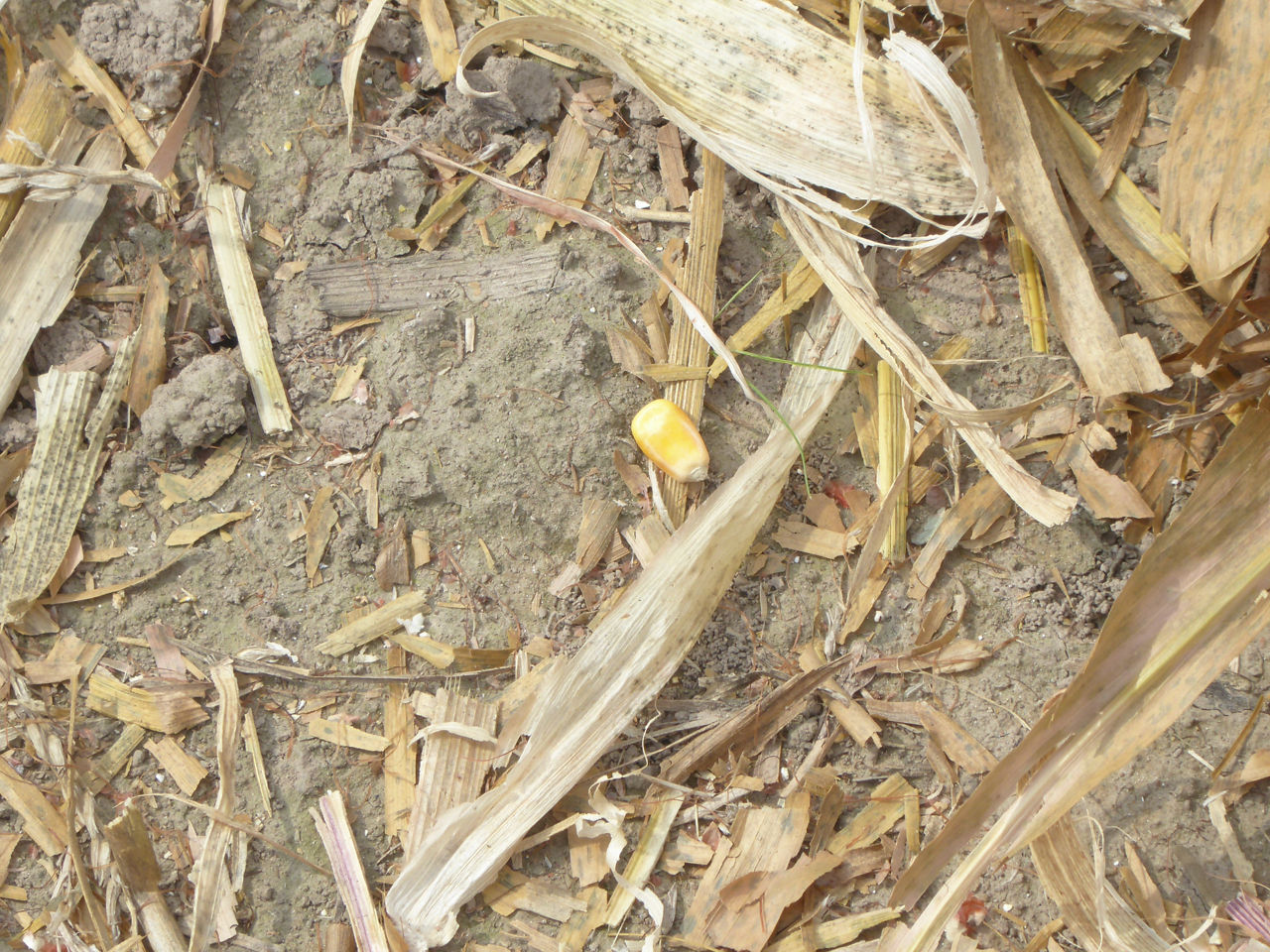
Majority of losses occur from dropped ears or exposed stock rolls shelling corn kernels. The first area to start measuring grain loss is behind the combine (Figure 1). Ears can be dropped and left in the residue, sort through an area of 436 ft (1/100th of an acre), a ¾ lb ear equals one bushel per acre.1 This observation allows for a dropped ear loss calculation. If field loss is greater than acceptable, a pre-harvest loss estimate can be made by taking measurements in standing corn to assess dropped ears.
Measurements can also be made for losses made in front of the combine head but not run through by the rear of the combine (back-up 20 feet from harvest area). To measure loose kernels, measure out a 10 square foot area in the center of each row and count the loose kernels inside the 10 square foot area and divide by 20. This helps determine if adjustments are needed for each individual row.1,2,3
To calculate machine loss, subtract pre-harvest field loss from total loss. Threshing and separating losses can also be accessed. Separating losses are calculated by subtracting losses made at the header from the total machine loss. Threshing loss is then determined by kernels left on cobs.
Once losses can be determined by each individual combine component, adjustments can be made accordingly.1
- Header Loss- dropped ears can be reduced with slower speeds, lowering snouts, maintain ear savers and adjusting stalk roll speed.
- Kernel Loss- to help reduce lost kernels, snapping plates should be adjusted for ear size. To minimize threshing losses, concave spacing and cylinder speed should be evaluated.
Soybean: Measuring Grain Loss
Soybean grain loss can occur with unthreshed pods, too high of header height leaving uncut soybean stalks and usually the greatest loss is at the header in gathering cut soybean stalks.
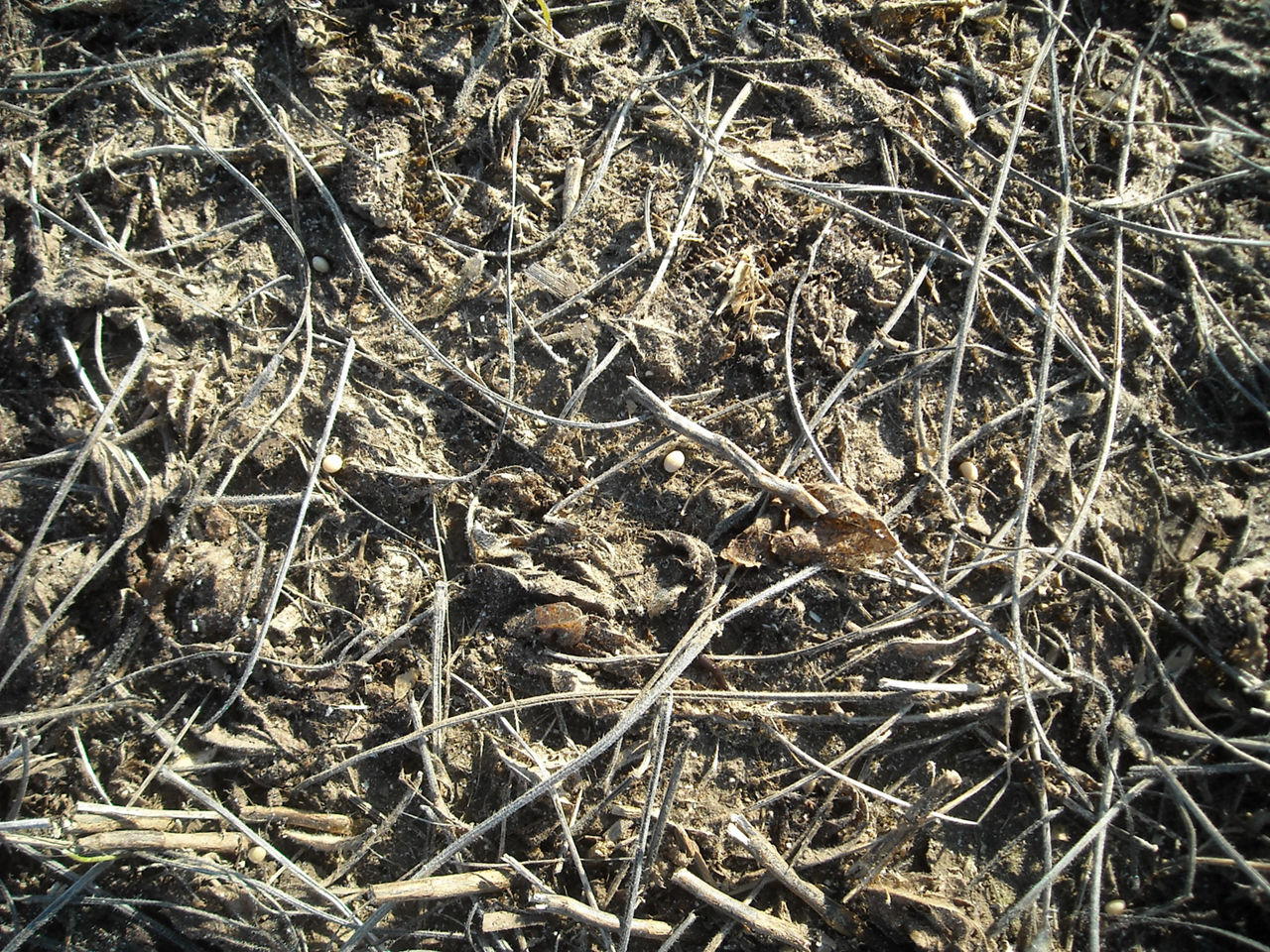
Like measuring corn loss, begin by observing for seeds on the ground behind the combine (Figure 2). It takes four seeds per square foot to equal one bushel per acre loss.1 Take a few measurements behind the combine by measuring out one square foot area to determine loss. Shatter loss by the head can be evaluated by backing up 10 feet and measuring losses in a 30-foot by 8-inch area for heads 25 feet or wider. Measure directly below the header. Pre-harvest loss is taken by selecting a few areas in the standing crop and looking for seeds on the ground inside the one square foot area.1,2,3
Combine adjustments can be made to reduce the different types of losses.1
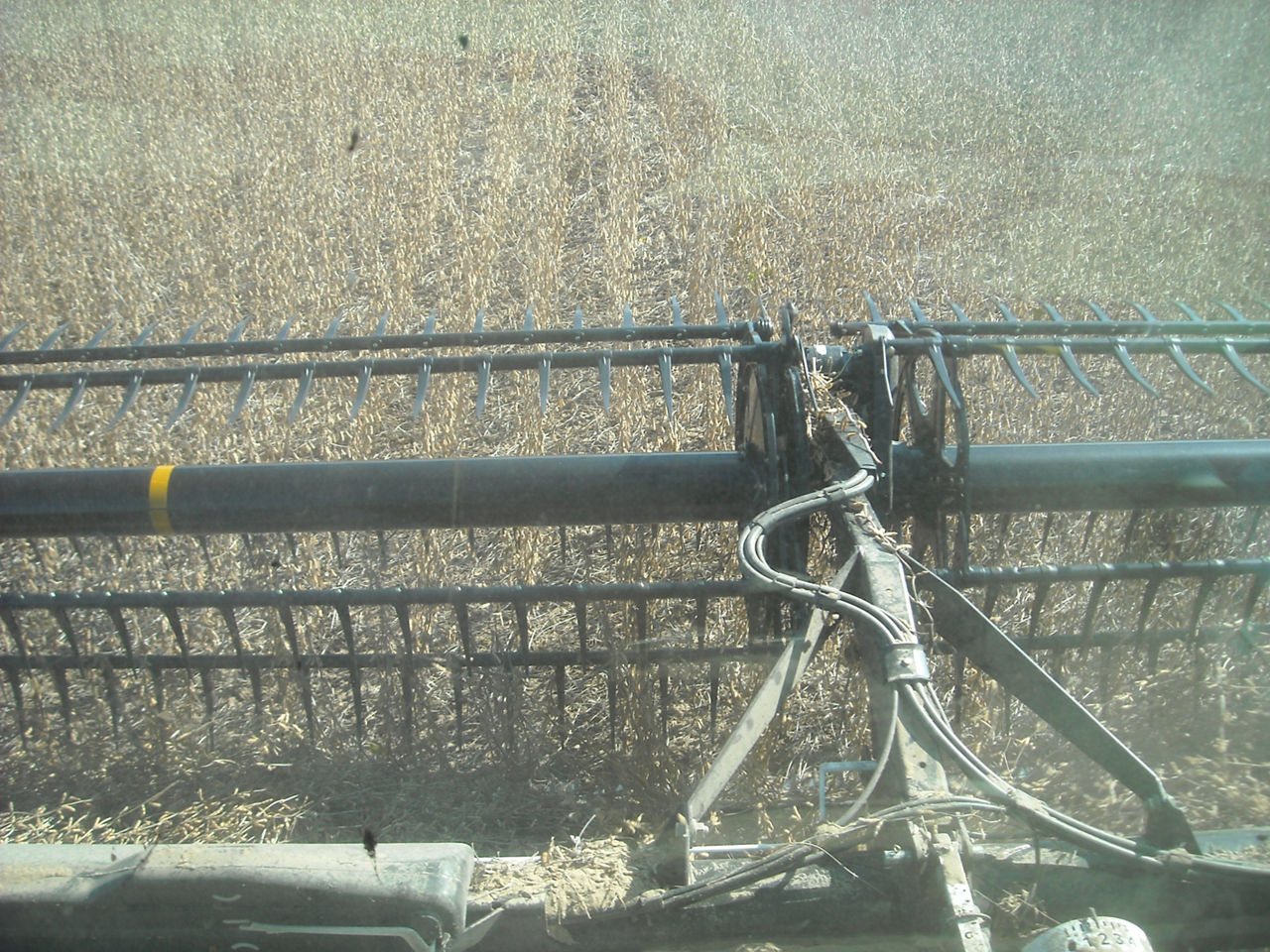
- Header Loss- reduce speed, check cutterbar conditions for sharp knives and good contact with guards and adjusting reel speed and height (Figure 3).
- Pod/bean Loss- if pods with seeds are being thrown out the back of the combine, threshing and separation settings should be increased while cutterbar and reel adjustments should be made for pods under the head.
Channel Agronomist
Heidi Speer
Sources
1Hanna, H.M. 2010. Combine harvest settings to reduce grain loss and improve grain quality. 2010 Integrated Crop Management Conference. Iowa State University. https://dr.lib.iastate.edu/server/api/core/bitstreams/319c47e5-906d-42d1-bef5-64af32baac13/content
2Pereira de Oliveira, L., Dorsey, N., Lena, B., and Freire de Oliveira, M. 2023. How to estimate harvest losses in soybean and corn fields. CROPWATCH. Institute of Agriculture and Nautural Resources. University of Nebraska-Lincoln. https://cropwatch.unl.edu/2023/how-estimate-harvest-losses-soybeans-and-corn-fields/
3Sumner, P.E. and Williams, E.J. 2012. Measuring field losses from grain combines. Bulletin 973.The University of Georgia Cooperative Extension. https://extension.uga.edu/publications/detail.html?number=B973
Web sites verified 6/20/25. 1110_611894
Disclaimer
ALWAYS READ AND FOLLOW GRAIN MARKETING AND ALL OTHER STEWARDSHIP PRACTICES AND PESTICIDE LABEL DIRECTIONS.