Green Stem Syndrome in Soybean
December 1, 2025
Green Stem Syndrome (GSS) is a condition in soybean where stems remain green while pods and seeds have reached maturity.1 This physiological disorder complicates harvest, as the green stems can cause difficulties in mechanical harvesting, leading to increased wear on equipment and potential delays. The syndrome is characterized by the retention of green stems even after leaves have senesced and fallen off, which can affect the overall efficiency of soybean production.
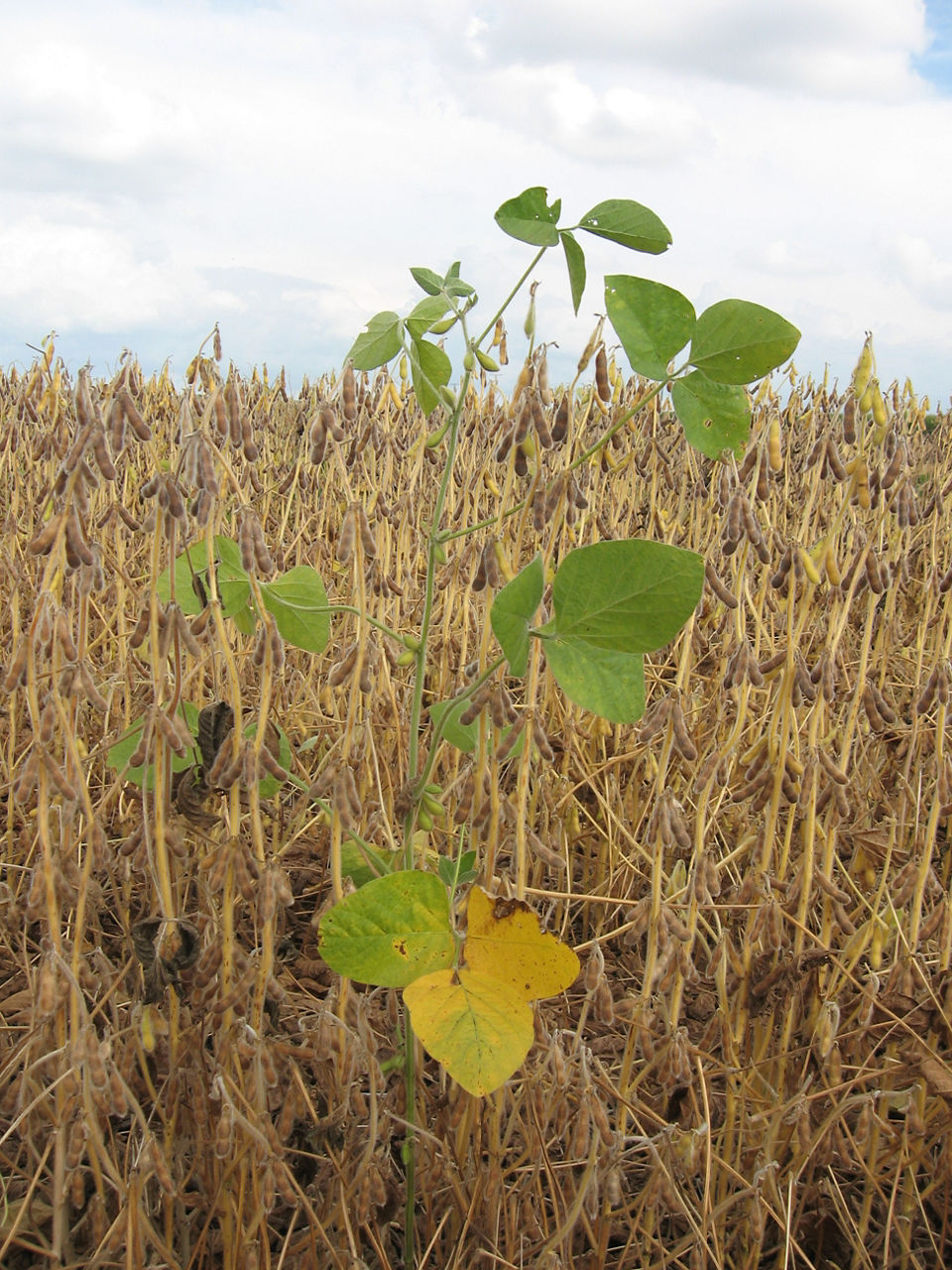
Green Stem Syndrome Causes
The causes of green stem syndrome are complex, involving biological, environmental, and/or management factors. Biologically, the syndrome is often associated with low pod counts and reduced seed numbers per pod.1 Anything that can cause a disruption or “stress” to the plant (insects like stink bugs, diseases, or environmental stresses) can cause an imbalance in the source-sink relationship within the plant and prevent the usual transfer of nutrients from the vegetative parts to the seeds, causing the stems to remain green.2
Environmental stress is a large contributor. Conditions, such as early-season drought followed by late-season rains can disrupt the normal growth cycle of the plant and can lead to an imbalance in the physiological processes of plants and result in green stems.1,2,3
Additionally, soybean fields with certain management practices can be more susceptible to green stem syndrome. The application of foliar fungicides (specifically strobulurins – group 11 fungicides) can exacerbate green stem syndrome due to the added “greening effect”.2,3
In-Season Management for Green Stem Soybean
Management of green stem syndrome can be challenging because no two years are ever the same. However, there are a few things farmers can manage to help mitigate the chances of green stem soybeans. First and foremost, manage in-season stresses during pod fill (insect control, apply fungicides if needed, and irrigate where available). Secondly, shift planting earlier or later to help minimize stress during pod fill in mid- to late-July.1,2,3
Management at Harvest for Green Stem Soybean
With green stems and leaves, the use of chemical desiccants can be beneficial to help speed up the dry-down process, but their application must be carefully timed and weighed against cost considerations. Keep an eye on seed moisture and not necessarily on plant moisture as delaying harvest based on plant moisture can increase the chances of yield loss due to shatter. Finally, during harvest, equipment optimization is vital. Farmers should ensure that harvest equipment is sharp and well-maintained and ground speed adjusted according to field conditions.1,2,3
Conclusion
Green stem syndrome remains a large challenge in soybean production. By understanding the causes and implementing effective management strategies, farmers can help minimize the impact on potential yields and operation.
Brook Mitchell
Channel Agronomist
Sources
1Sullivan, T. 2025. Green stem syndrome in soybeans. Agronomy eUpdates. Kansas State University. https://eupdate.agronomy.ksu.edu/article/green-stem-syndrome-in-soybeans-669-1
2Lofton, J., Damicone, J., Zander, A., and Kezar, S. 2021. Green-stem syndrome in soybean. PSS-3003. Oklahoma State University Extension. https://extension.okstate.edu/fact-sheets/green-stem-syndrome-in-soybean.html
3Harbach, C.J., Allen, T.W., Bowen, et al. 2016. Delayed senescence in soybean: Terminology, research update, and survey results from growers. Plant Health Progress. 17(2): 76-83. https://apsjournals.apsnet.org/doi/pdf/10.1094/PHP-RV-16-0008
Websites verified 10/27/25. 1110_678151
Disclaimer
ALWAYS READ AND FOLLOW GRAIN MARKETING AND ALL OTHER STEWARDSHIP PRACTICES AND PESTICIDE LABEL DIRECTIONS.