Managing Late Season Stalk Rot in Corn with Harvest Scheduling
October 1, 2025
Late season stalk rot can be challenging as lodging can alter harvest schedules, increase personal stress, create equipment problems, and reduce potential yield. The agronomic challenges of the entire growing season typically culminate during grain fill and can likely add to the severity of stalk rots if plants have been under stress. Physiological stalk rot can result from drought, nutrient deficiency, and heat stress (Figure 1). For additional information on physiological stalk lodging, please visit Stalk Cannibalization in Corn.
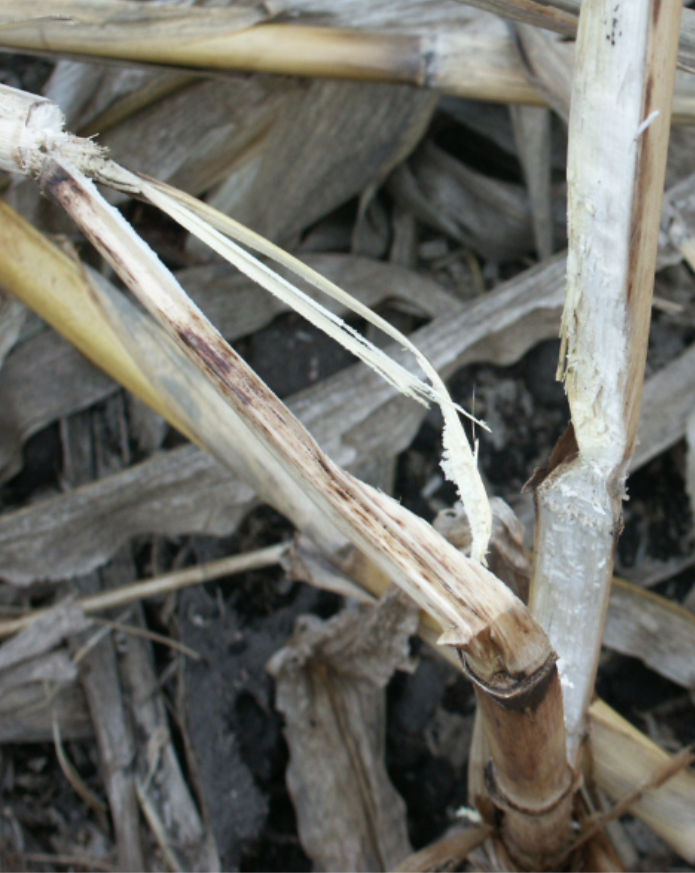
A few factors to consider for managing late season stalk rot and how it affects harvest scheduling include:
Stalk Rot Identification
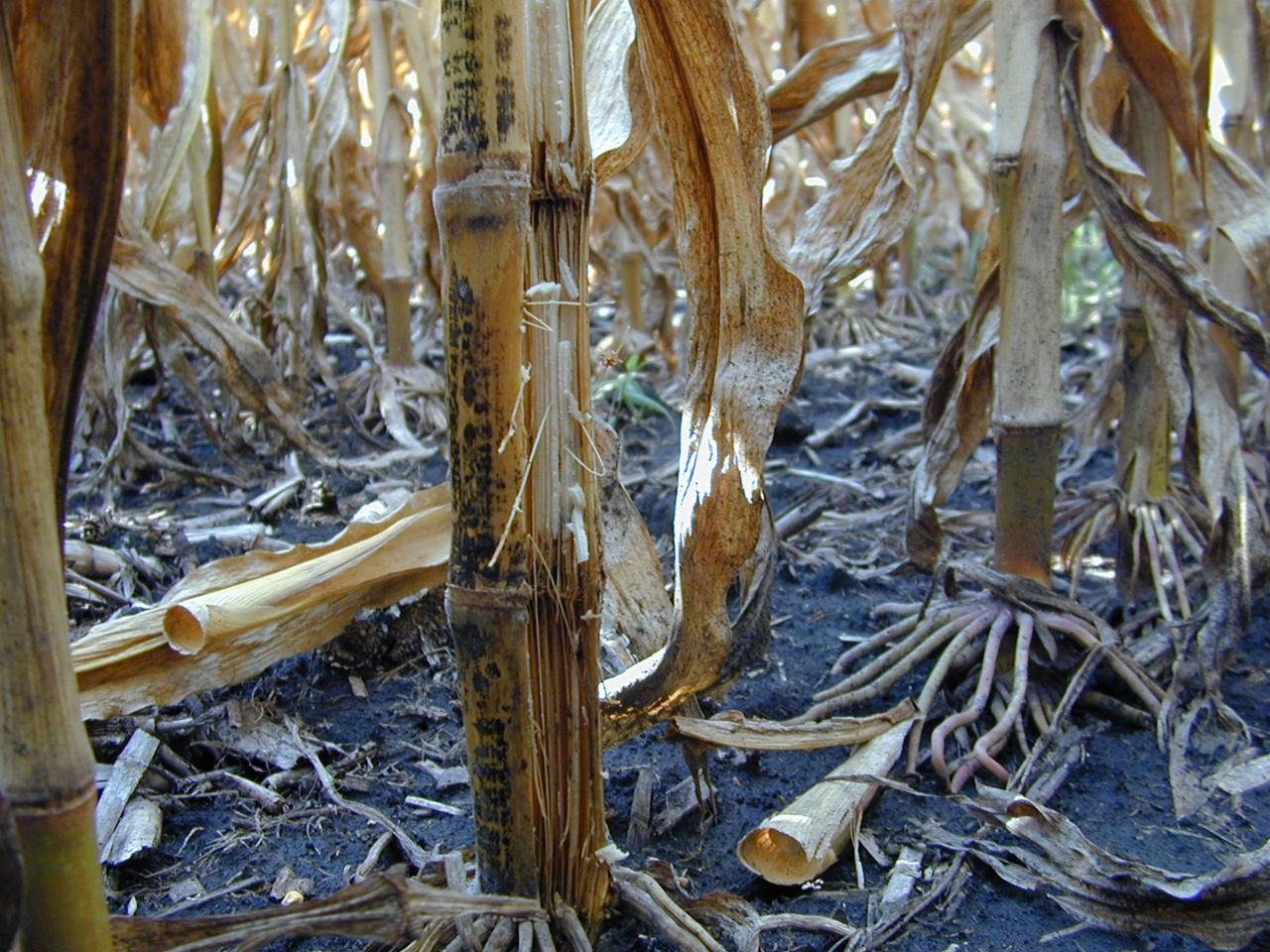
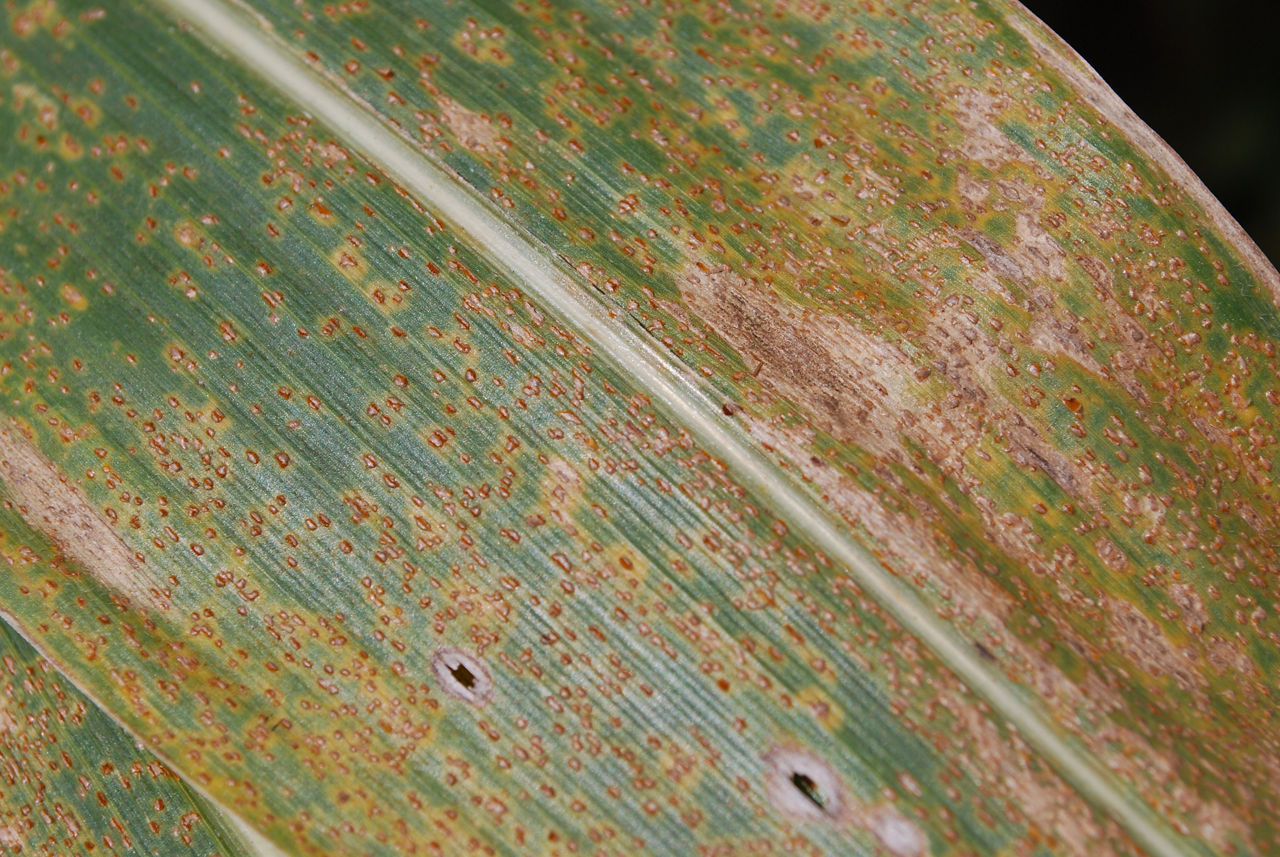
If you plan to go back-to-back corn, it is critical to identify the disease(s) in a field and to understand their life cycle to plan for the following crop. This is important because some pathogens such as the fungus that causes anthracnose stalk rot (Figure 2) can overwinter on residue while others need wind such as southern corn rust (Figure 3) to carry spores in each growing season.
Managing Stalk Rots with Fungicides
Fungicides are useful to help manage foliar diseases caused by fungal pathogens. Foliar disease lesions can overtake green leaf tissue which can reduce photosynthesis and cause the plants to draw sugars from the stalks to fill kernels. As a result, stalks can become weak. Therefore, understanding the efficacy of any fungicides used is a factor to consider. To see if any fungicides should be changed for the following year, evaluate the fungicide(s) response based on labelled diseases and application timing. For additional fungicide information, please visit Three Ways Fungicides Protect Crop Potential and Increase ROI and How to Determine Which Fungicide to Use and When.
Stalk Rot and Corn Product Selection
Selecting a corn product with natural tolerance to a disease is another layer of protection against some common stalk rots like anthracnose stalk rot and crown rots. Historical disease information for your farming operation can help determine which corn products should be selected to help preserve yield potential.
Stalk Rot Management with Cultural Practices
Sometimes it is necessary to look at different cultural practices when stalk rots have been common in a field. This could mean tillage to break up residue or even switching to a non-host crop to break up the disease’s life cycle and reduce spore populations.
Stalk Rot Harvest Scheduling
Planning a harvest schedule around stalk degradation and disease presence can be an effective way to help get high risk fields harvested early, in the bin, and before larger issues such as lodging occur. Take time to assess every field with push or pinch tests to evaluate stalk integrity and take notes on which fields are maturing more rapidly than others. For additional information, please visit Pre-Harvest Corn Scouting for Stalk Integrity.
For additional information on corn stalk rots, please see Corn Stalk Rots & Lodging Issues.
Tyler Vreugdenhil
Channel Agronomist
Sources
Nielsen, R.L. 2021. Stress during grain fill: A harbinger of stalk health problems. Corny News Network. Purdue University. https://www.agry.purdue.edu/ext/corn/news/timeless/stalkhealth.html
Nielsen, B., Stewart, J., and Robinson, K. 2013. Poor stalk health means corn growers need to prioritize harvest. News Archive. Purdue University. https://www.purdue.edu/newsroom/archive/releases/2013/Q4/poor-stalk-health-means-corn-growers-need-to-prioritize-harvest.html
Web sites verified 8/15/25. 1110_623101
Disclaimer
ALWAYS READ AND FOLLOW GRAIN MARKETING AND ALL OTHER STEWARDSHIP PRACTICES AND PESTICIDE LABEL DIRECTIONS.