The Role and Importance of Soil Organic Carbon
September 3, 2025
Get Year-Round Updates From Our Agronomic Experts
One of the most common elements on earth is carbon (C) as it is the base building block of all life on earth. The majority of active C is contained in our soils and is constantly cycling. The crops we grow take C from the air via photosynthesis and convert it to plant tissue, which then returns to the soil as residue after harvest (Figure 1). One of the key measures of soil productivity is the percentage of plant available Soil Organic Carbon (SOC) in a specific field. Higher levels are nearly always associated with high productivity while lower levels typically have lower productivity. Soils with higher SOC tend to be more resilient during times of stress and help to maximize the yield potential of the crop.
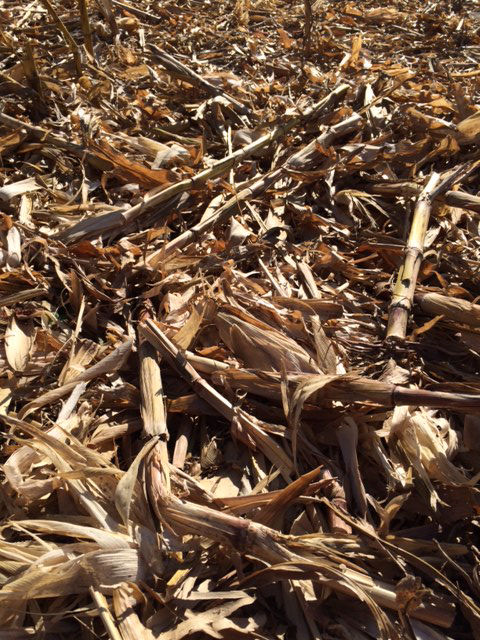
Some of the important functions provided by SOC include:
- Building soil structure
- Improving soil stability
- Aerating the soil by building pore spaces
- Increasing water retention
- Acting as nature’s pollutant filter
- Recycling nutrients making them available to crops
- Increasing soil biodiversity
- Most importantly improving soil productivity which helps to increase yields.
Farmers recognize the role SOC plays in building soil health and resiliency and have adopted farming practices that help build and preserve this important soil resource. Some of the practices that have been proven to help build SOC levels include:
- Conservation tillage
- Crop residue management
- Growing cover crops when possible
- Crop rotation and selection
- Adding manure and compost to the field
Building soil resiliency by increasing the available SOC helps fulfill the goal most farmers have to pass more productive soils on to the next farming generation. To learn more about building SOC on your farm, check in with your local Channel® SeedPro for more information.
Channel Agronomist
John Goeden
Source
Corning, E., Sadeghpour, A., Ketterings, Q., and Czymmek, K. 2016. The carbon cycle and soil organic carbon. Agronomy Fact Sheet Series. Fact Sheet 91. Cornell University Cooperative Extension. http://nmsp.cals.cornell.edu/publications/factsheets/factsheet91.pdf
Web source verified 7/18/25. 1110_606394
Disclaimer
ALWAYS READ AND FOLLOW GRAIN MARKETING AND ALL OTHER STEWARDSHIP PRACTICES AND PESTICIDE LABEL DIRECTIONS.