Role and Importance of Soil Organic Matter
August 15, 2025
Soil organic matter (SOM) is important for soil health, and it plays a vital role in crop production. Organic matter consists of a mixture of decomposing plant and animal materials that enrich the soil (Figure 1). It is essential in supporting soil structure, increasing nutrient availability, and improving water retention.1,2 It affects the soil’s physical, chemical and biological properties which contributes to overall agricultural productivity.
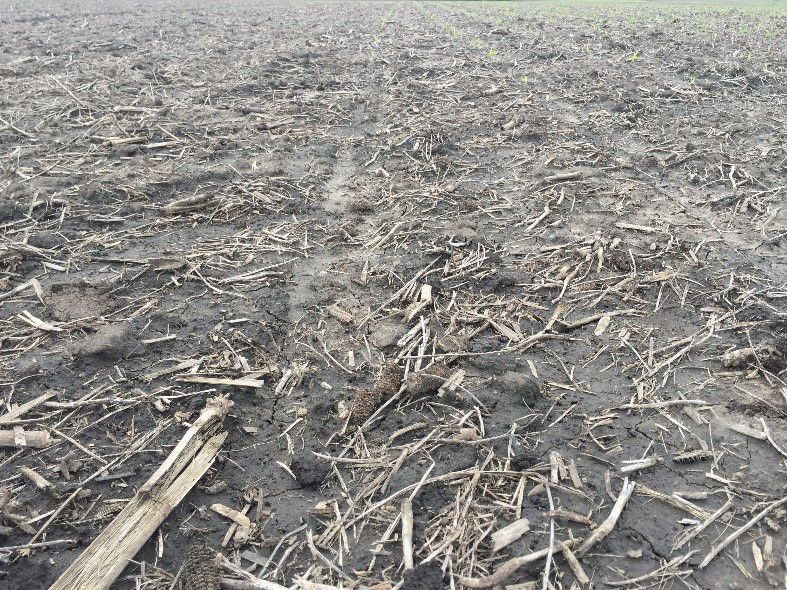
Physically, SOM influences soil structure, water holding capacity, and erosion control. Mineral particles are bound into aggregates which improve soil structure and enhance soil porosity and water infiltration.1,2 These aid in root penetration and root growth which are critical for crop nutrient and water uptake and helps decrease surface runoff and erosion which can cause loss of topsoil and nutrients. Soil organic matter also has a higher water holding capacity, which helps reduce the susceptibility of crops to drought.
Chemically, SOM is a supply source of essential nutrients and acts as a buffer against changes in soil pH.1,2 As SOM decomposes, it releases nutrients such as nitrogen, phosphorus, and sulfur which plants can uptake readily. In addition, certain components of SOM enhance the availability of micronutrients such as iron, zinc, and manganese by forming complexes with metal ions.1 The nutrient supply of SOM is one of the most important contributions to crop production. Crops absorb the nutrients which contribute to their growth and development and overall plant health.
Biologically, SOM serves as a habitat and energy source for diverse soil organisms which play a vital role in nutrient cycling, disease suppression, and soil structure formation.1,2 Soil fauna such as earthworms, mites, and beetles contribute to nutrient recycling and organic matter decomposition. Soil organic matter also supports a microbial community which can assist in soil-borne disease suppression by inhibiting the pathogen microbes.1
Darker soils tend to have a higher level of SOM. Sandier soil types naturally have lower SOM contents, whereas clay soil types tend to have higher SOM contents. Regardless of soil type, SOM is rapidly lost when the soil is disturbed. Taking steps to increase SOM is essential in helping to ensure agricultural productivity. Key practices include cover cropping, conservation tillage, and crop rotation. 1,2 These practices help lead to improved soil quality and aid in promoting microbial activity for maintaining soil health.
Channel Agronomist
Dawn Gustafson
Sources
1Hussain, A., Bashir, H., Zafar, S.A., Rehman, R.S., Khalid, M.N., Awais, M., Sadiq, M.T., and Amjad, I. 2023. The importance of soil organic matter (SOM) on soil productivity and plant growth. Biological and Agricultural Sciences Research Journal. Vol 2: 11.
https://www.researchgate.net/publication/373237773_THE_IMPORTANCE_OF_SOIL_ORGANIC_MATTER_SOM_ON_SOIL_PRODUCTIVITY_AND_PLANT_GROWTH
2Fenton, M., Albers, C., and Ketterings, Q. 2008. Soil organic matter. Fact Sheet 41. Agronomy Fact Sheet Series. Cornell University Cooperative Extension. https://franklin.cce.cornell.edu/resources/soil-organic-matter-fact-sheet.
Web sites verified 6/30/25. 1110_584994
Disclaimer
ALWAYS READ AND FOLLOW GRAIN MARKETING AND ALL OTHER STEWARDSHIP PRACTICES AND PESTICIDE LABEL DIRECTIONS.