Southern Corn Leaf Blight and Gray Leaf Spot
December 15, 2025
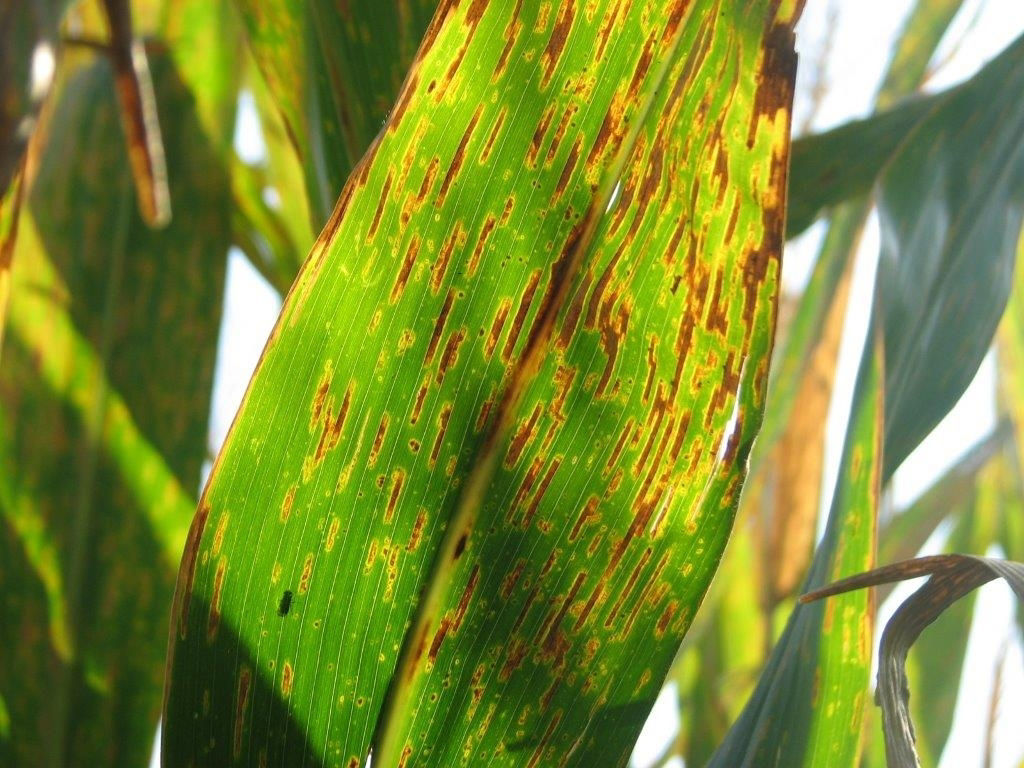
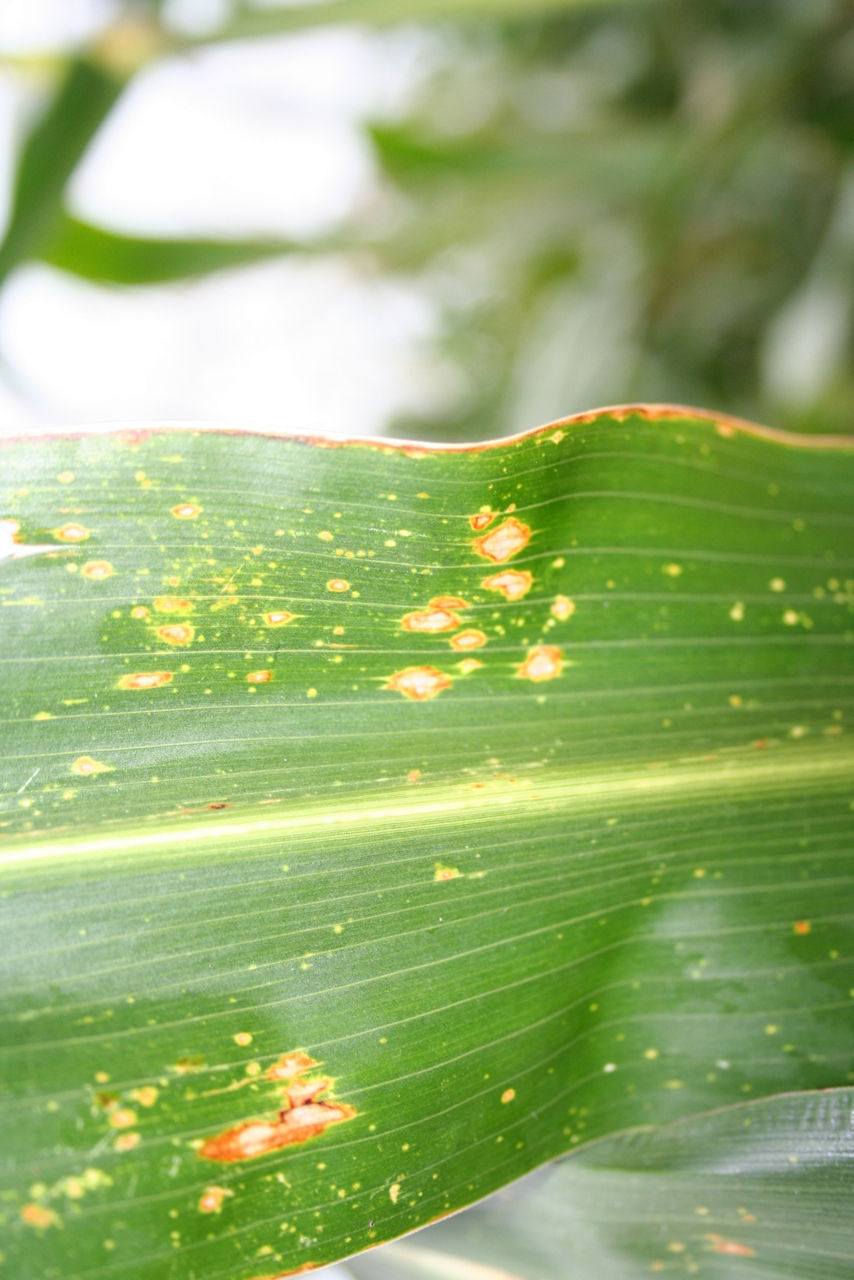
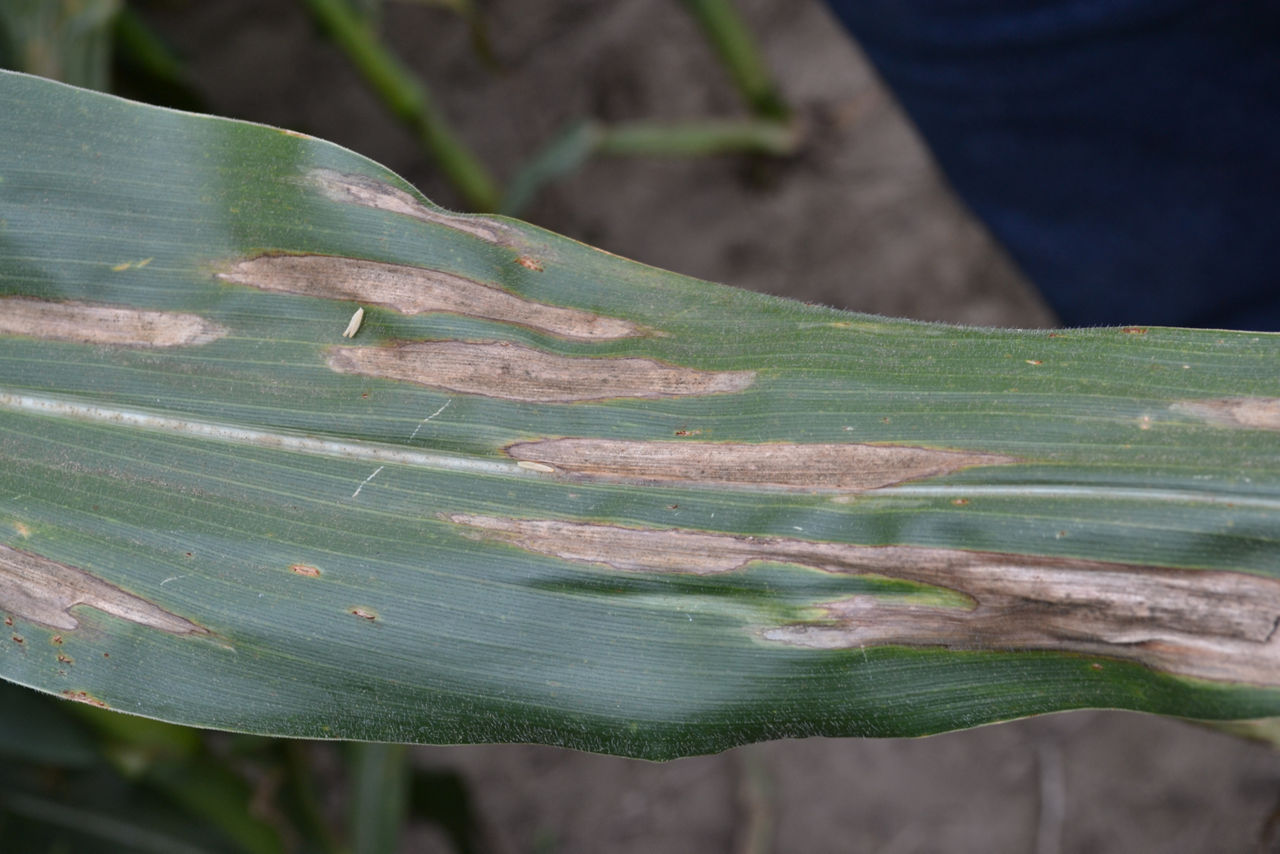
In the Mid-Atlantic region, we see varying levels of gray leaf spot (GLS) pressure every season when favorable environmental conditions occur. Growers do an excellent job of identification of this fungal pathogen. The lesions are easy to identify with characteristic yellow or tan rectangular lesions within the leaf veins (Figure 1). However, if you ask a grower about southern corn leaf blight (SCLB) (Figure 2) they often reply with, “you mean northern corn leaf blight”? (Figure 3) Though SCLB is not a large threat today, there are farmers that remember the havoc SCLB wreaked in the early 1970’s. There are two races of SCLB, Race O and Race T. Race T was the infamous problem of the early 70’s. Race O mostly infects leaves while Race T infects the entire plant.1
Southern corn leaf blight is caused by the fungus Bipolaris maydis and is most likely to occur in climates with frequent rain, heavy dews, and prolonged humidity when temperatures range from 68 °F to 90 °F.2 Similar to GLS, SCLB typically develops on lower leaves and spreads upward.2 However, unlike GLS with its rectangular lesions, SCLB, Race O leaf lesions are tan, oval to somewhat rectangular, and have reddish-brown margins.2,3 Race T lesions are rectangular to elliptical, have a reddish-brown border, and may be surrounded by a chlorotic zone.3 On a particular leaf, the lesion sizes and shapes can vary greatly. Northern corn leaf blight lesions are long, oblong, tan or grayish and often described as cigar shaped.4 For additional NCLB information, please visit Northern Corn Leaf Blight Identification, Favorable Environment, and Management.
History tells us how yield limiting this disease can be with regions of the Corn Belt averaging losses from 35 to 50% in 1970.1 Like many of our corn diseases, inoculum overwinters on crop residue. Effective management of SCLB involves a combination of cultural practices and chemical controls. Applying fungicides at the first sign of lesions, particularly during the tasseling (VT) to silking (R1) stages are effective against SCLB. Multiple applications may be necessary in severe cases. Rotate to non-host crops such as soybean or wheat to help reduce the pathogen's survival. Planting corn products with resistance to SCLB helps reduce disease impact. This is crucial in fields with a history of SCLB pressure.
Understanding the differences between SCLB and GLS is essential for developing a comprehensive disease management strategy. Regular scouting and timely interventions can greatly reduce the effect of these diseases on corn yield potential and quality. For additional SCLB information, please visit If Southern Corn Leaf Blight Strikes. For additional GLS information, please visit Gray Leaf Spot in Corn.
Jarette Hurry
Channel Agronomist
Sources
1Bruns, H. A. 2017. Southern corn leaf blight: A story worth retelling. Agronomy Journal. American Society of Agronomy. 109(4): 1-7 https://www.ars.usda.gov/ARSUserFiles/60663500/Publications/Bruns/2017/Bruns_2017_Corn%20Leaf%20Blight.pdf
2Alabi, O. and Isakeit, T. (posted by Francis, L.) 2015. Southern corn leaf blight in fall corn. Texas Row Crops Newsletter. Texas A&M AgriLife Extension. https://agrilife.org/texasrowcrops/2015/10/05/southern-corn-leaf-blight-in-fall-corn/
32019. Southern corn leaf blight of corn. Crop Protection Network. https://cropprotectionnetwork.org/encyclopedia/southern-corn-leaf-blight-of-corn
4Wise, K. 2011. Northern corn leaf blight. Diseases of Corn. BP-84-W. Purdue Extension. Purdue University. https://www.extension.purdue.edu/extmedia/BP/BP-84-W.pdf
Websites verified 10/28/25. 1110_708671
Disclaimer
ALWAYS READ AND FOLLOW GRAIN MARKETING AND ALL OTHER STEWARDSHIP PRACTICES AND PESTICIDE LABEL DIRECTIONS.