Corn Fertilizer Source and Application Method
December 14, 2023
TRIAL OBJECTIVE
- Fertility application timing and method are very important for the maximation of corn yield potential.
- Many application types occur across the southern agricultural system including knifed-in soil applications, surface applications of liquid fertilizer, and surface-applied granular applications.
- Each application technique has potential benefits and drawbacks. The purpose of this study was to evaluate different application methods across a range of DEKALB® Brand Corn Products.
- Usually, one type of fertilizer application has a lower price compared to others. Therefore, this experiment was conducted to help answer the question – Does the type of fertilizer application matter?
RESEARCH SITE DETAILS

- All field work, tillage, and herbicides were per local standards.
- DEKALB® Brand Products planted in trial:
- DKC62-89 Brand, 112 RM, Trecepta® Corn
- DKC64-22 Brand, 114 RM, VT Double PRO® Corn
- DKC65-95 Brand, 115 RM, VT Double PRO® Corn
- DKC67-44 Brand, 117 RM, VT Double PRO® Corn
- DKC68-35 Brand, 118 RM, VT Double PRO®
- Corn Seeding Rate – 36,000 seeds/acre.
- Split application of nitrogen (N) (240 lb/acre) for each application treatment:
- 50% (120 lb/acre) applied at 3 to 4 leaf stage.
- 50% (120 lb/acre) applied at layby.
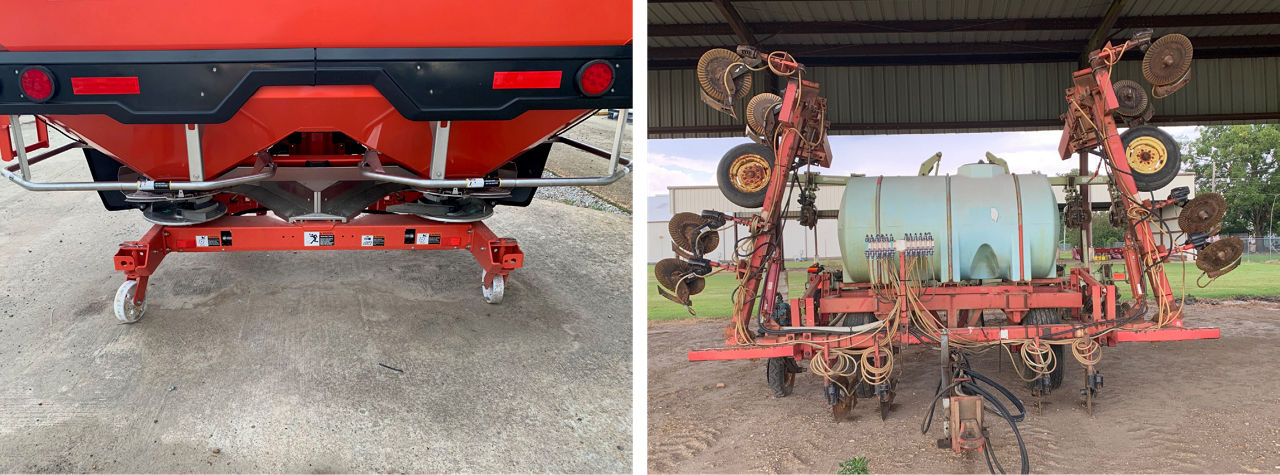
- Fertilizer Application Treatments (Figure 1):
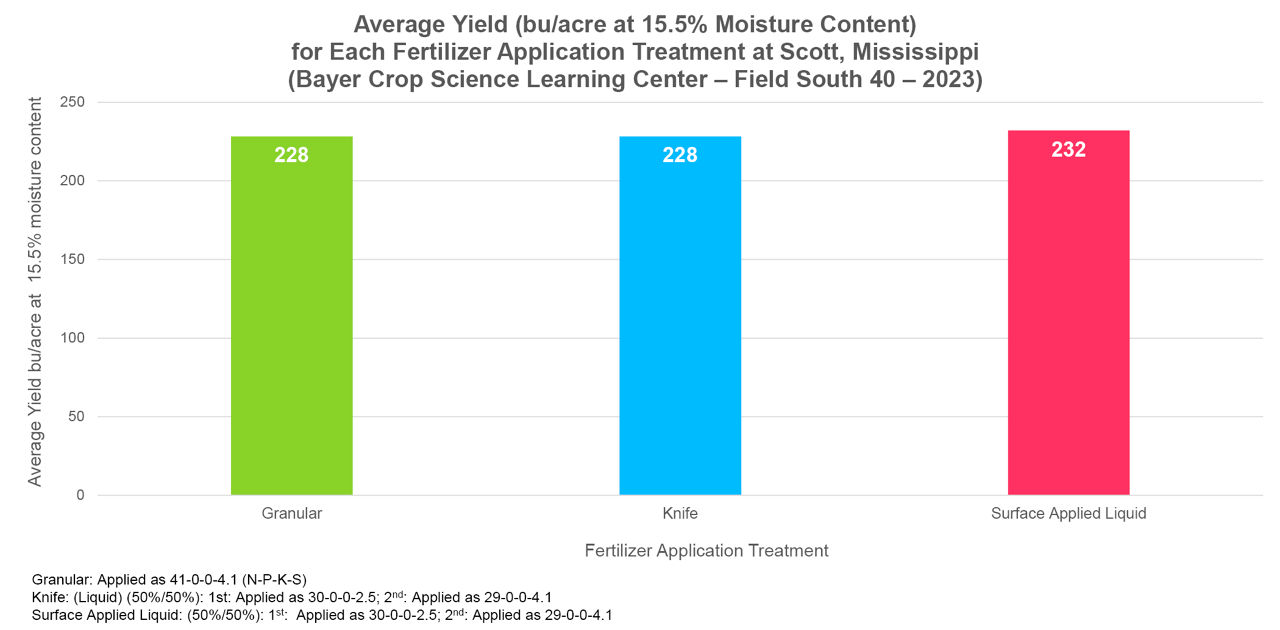
- Dry – Applied as 41-0-0-4.1
- Surface Applied Liquid (50%/50%)
- First – Applied as 30-0-0-2.5
- Second – Applied as 29-0-0-4.1
- Liquid – Knifed-In Soil Applied as 50%/50%
- First – Applied as 30-0-0-2.5
- Second – Applied as 29-0-0-4.1
- Similar amounts of sulfur were applied for each treatment
- DEKALB® Brand Products planted in trial:
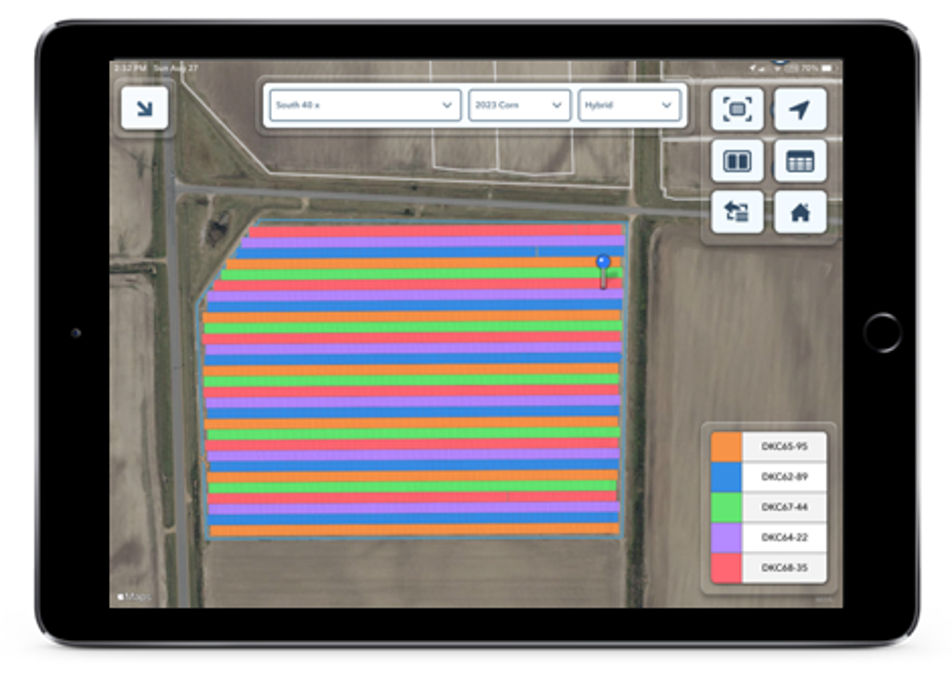
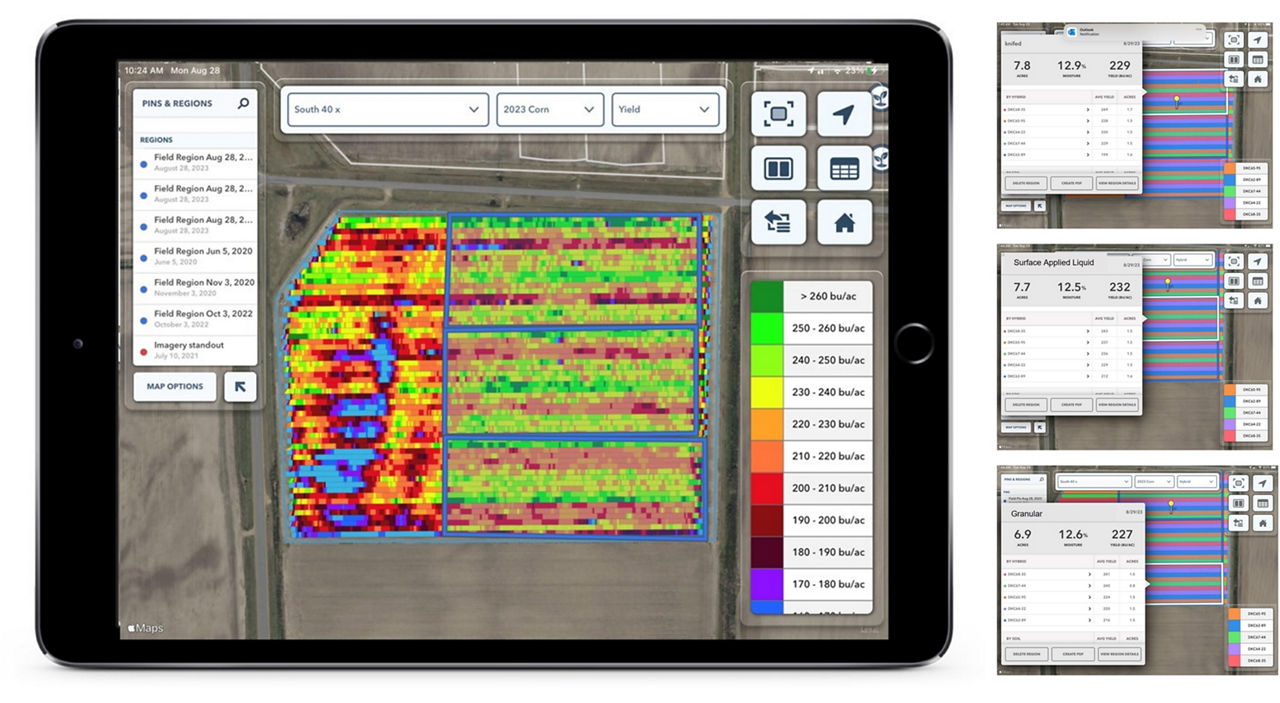
- Two replicate strip plot – 12 row plots, 1100 feet in length, about 1.2 acres/experimental unit (Figure 2).
- Harvested with commercial combine and yields recorded using Climate FieldView™ data collection on the combine.
- Yields corrected to 15.5% moisture content.
UNDERSTANDING THE RESULTS
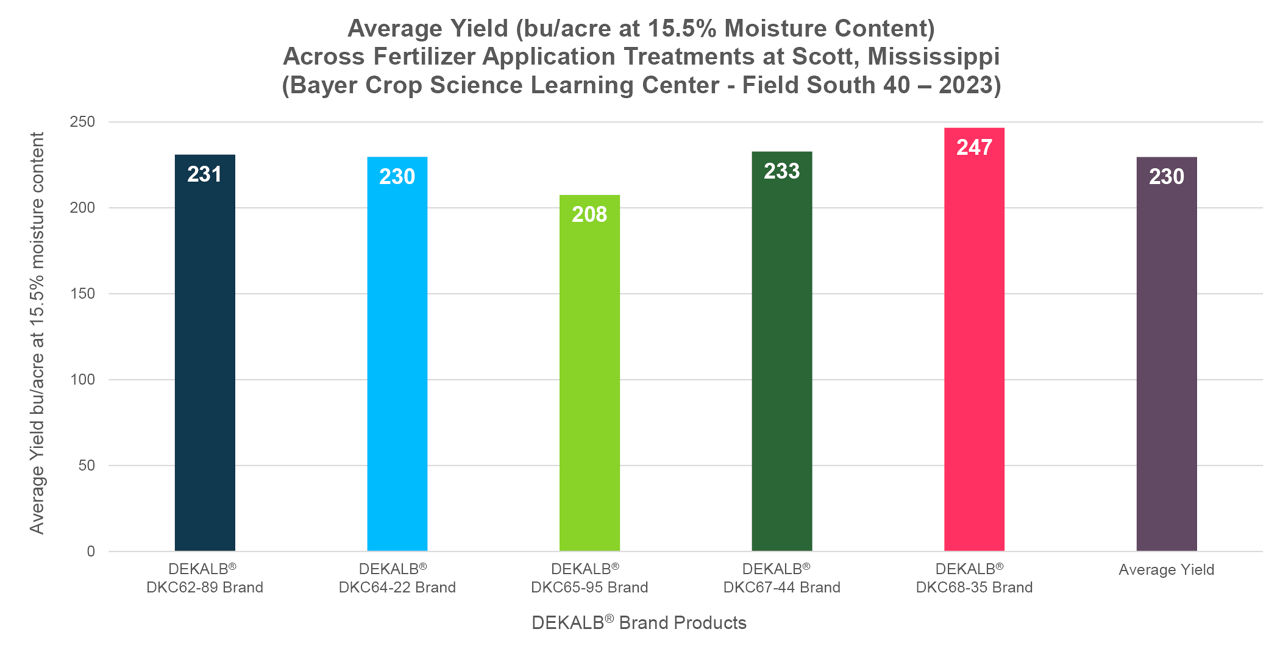
- The average yield for the trial was 230 bu/acre (Figure 3).
- Yields by corn product:
- Several of the tested products demonstrated very high yield potential with DEKALB® DKC68-35 Brand obtaining the highest yield (Figures 3 and 4).
- Yields by corn product and fertilizer application method:
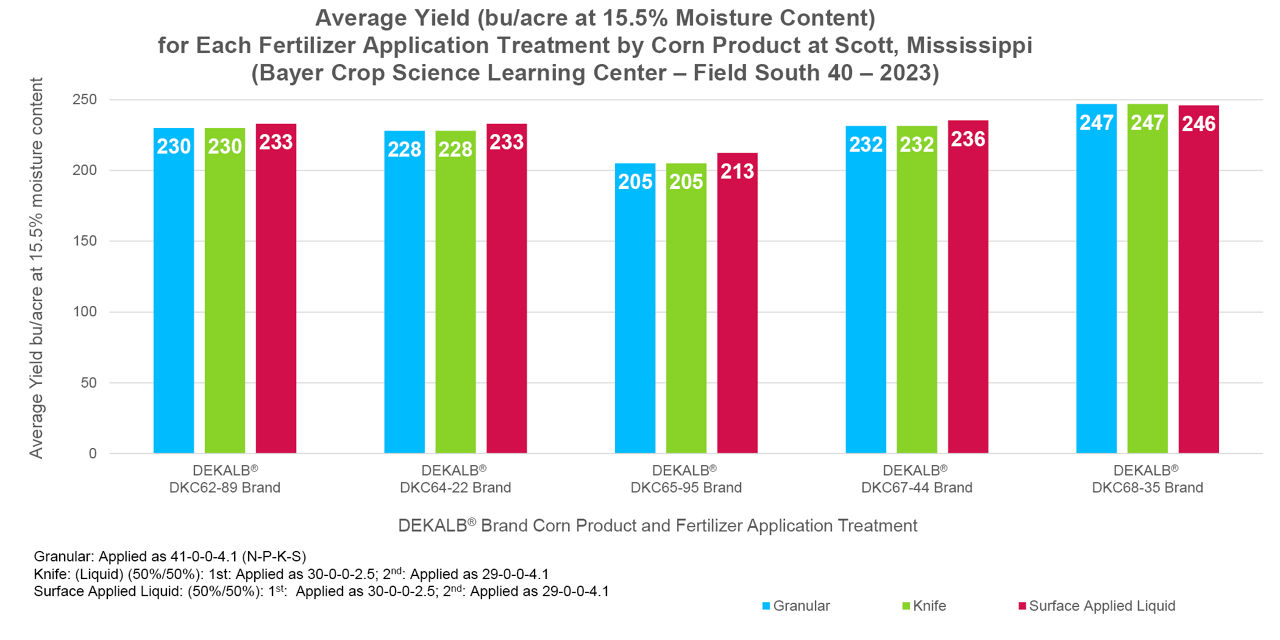
- Average yields, by each application method for each DEKALB® Brand corn product, were similar in this study (Figure 5).
- Weather-related variability was reduced by using Climate FieldView™ data to remove a weather-damaged area from yield data (Figure 6).
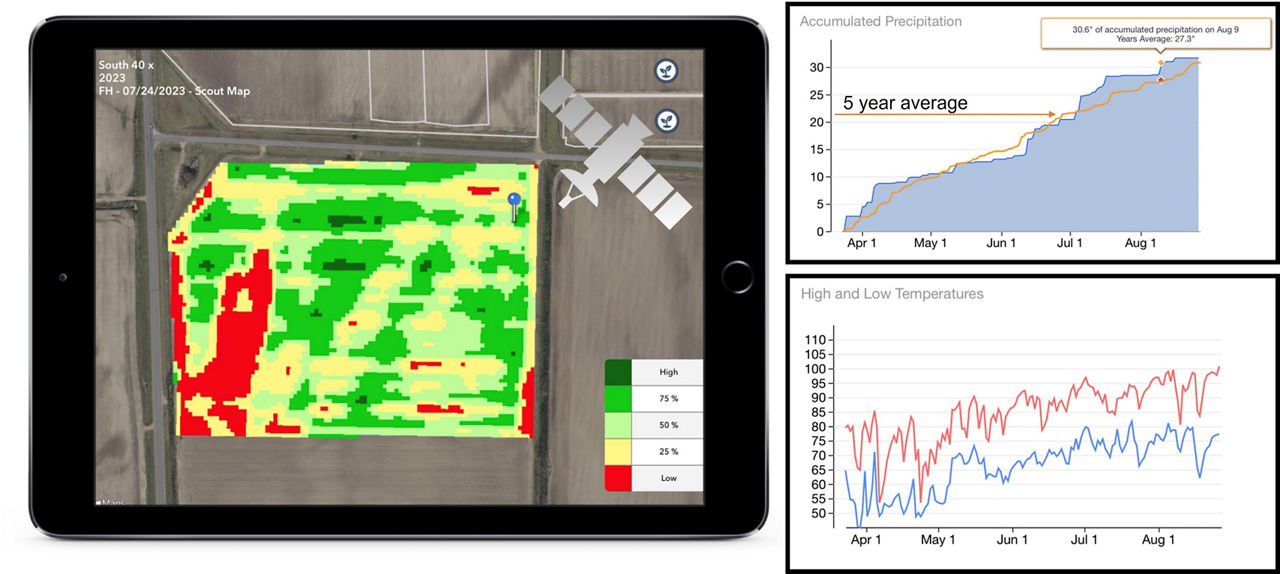
- FieldView™ data helps visualize the effects of rain and temperature on crop production compared to long-term averages (Figure 7).
KEY LEARNINGS
- From this data we conclude that timely applications of appropriate fertilizers offer similar results regardless of application method.
- Growers should continue to focus on economic returns, timeliness of application, and management of risk when applying fertilizer.
- Appropriate rainfall for the incorporation of surface-applied N remains a major factor in success.
- Nitrogen stabilizers are particularly important when using either dry- or liquid-applied N applications.
- Climate FieldView™ data provides useful information to help understand variability that influences corn production.
- Please contact your local DEKALB® Brand representative for more information.
1213_295300
Disclaimer
ALWAYS READ AND FOLLOW GRAIN MARKETING AND ALL OTHER STEWARDSHIP PRACTICES AND PESTICIDE LABEL DIRECTIONS.