How to Identify and Manage the Cotton Jassid
September 18, 2025
- The two-spot cotton leafhopper (TSCL), or cotton jassid, is a serious pest of cotton that is actively spreading through cotton growing areas.
- This pest feeds on the underside of leaves and can burn through a field in two weeks, causing substantial yield loss.
- Adults are tiny green insects that can be distinguished by a dark spot on each wing.
What is the cotton jassid and where can it be found?
The cotton jassid, or the two-spot cotton leaf hopper (Amrasca biguttula (Ishida)), has recently become a major pest of US cotton. This insect is native to Asia and is a serious pest of cotton, peanut, okra, sunflower, and eggplant, with yield losses exceeding 50% under certain growing conditions. Cotton jassid was first observed in the US Virgin Islands and Puerto Rico in the spring of 2023, in Florida in 2024, and is continuing to spread through cotton growing areas in 2025, with known presence in Georgia, Alabama, South Carolina, and Mississippi.1,2.3
What are the symptoms that Amrasca biguttula causes?
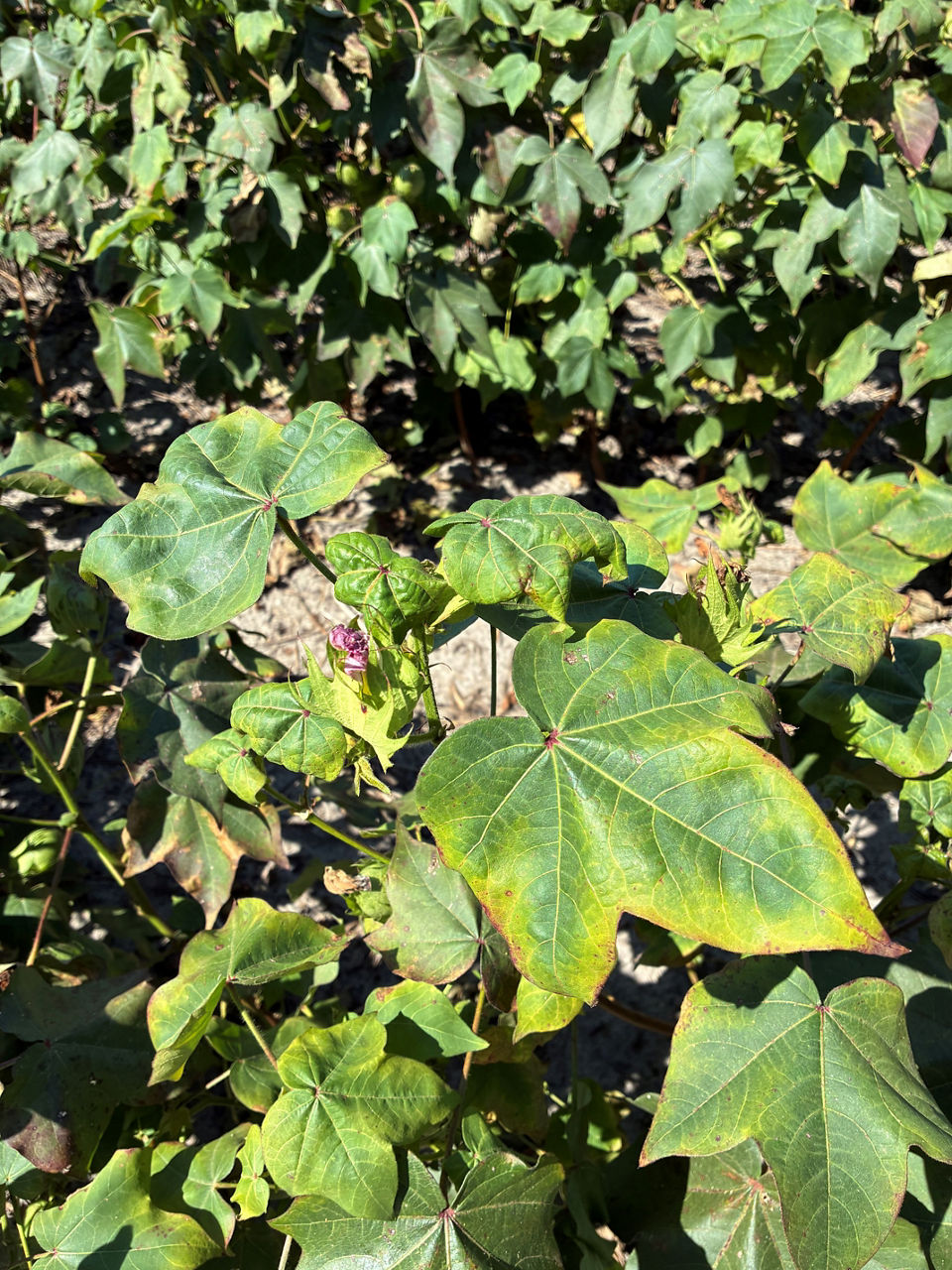
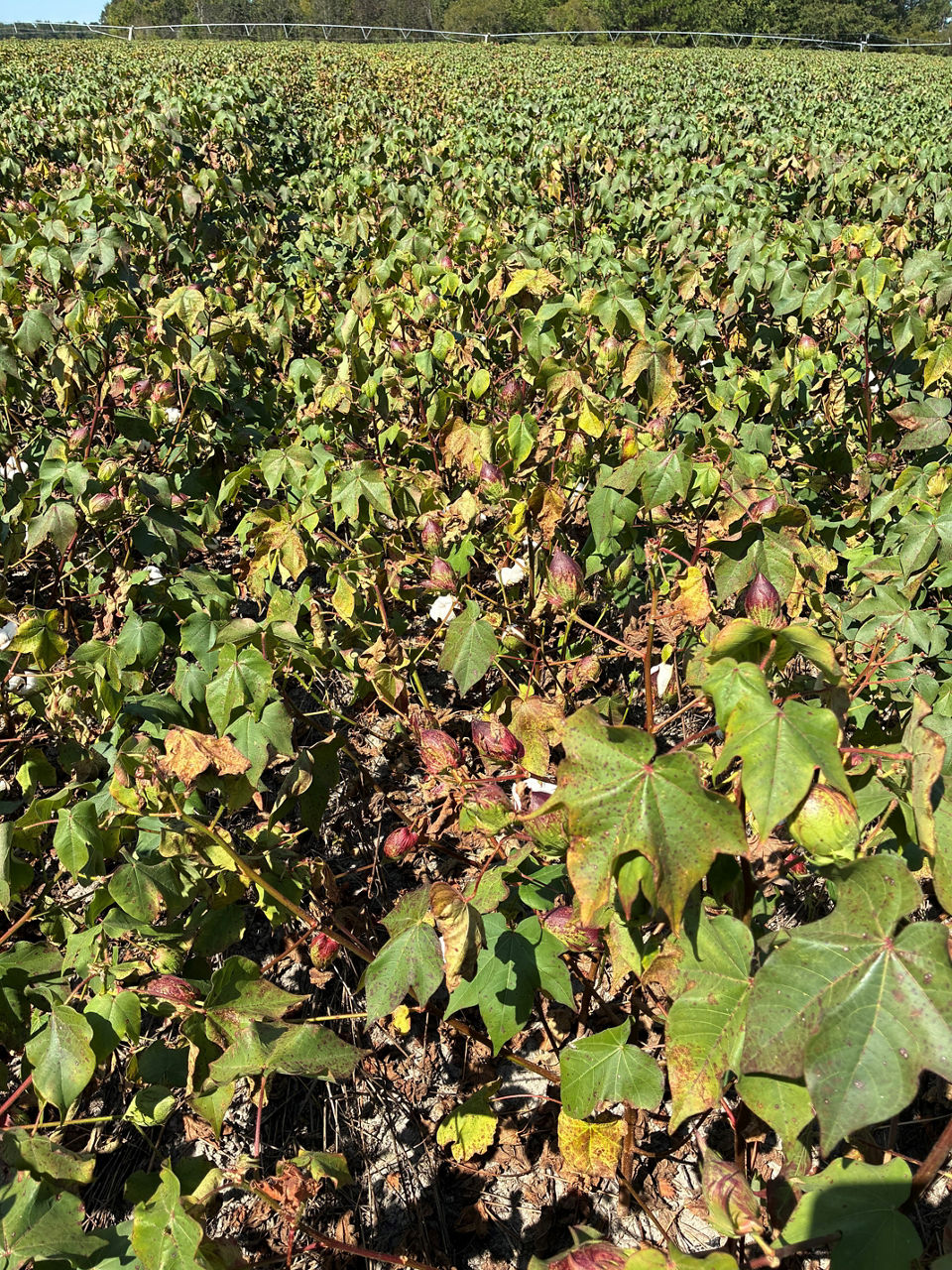
Damage to cotton plants will likely be observed first. Cotton jassids feed on the underside of leaves like other leaf hoppers in the same subfamily, Typhlocybinae. This feeding results in leaf wilting or curling (Figure 1) as well as leaf color change starting from yellow, then changing to red, and finally brown (necrosis). This effect is referred to as “hopperburn” (Figure 2).1
How do I identify cotton jassid?
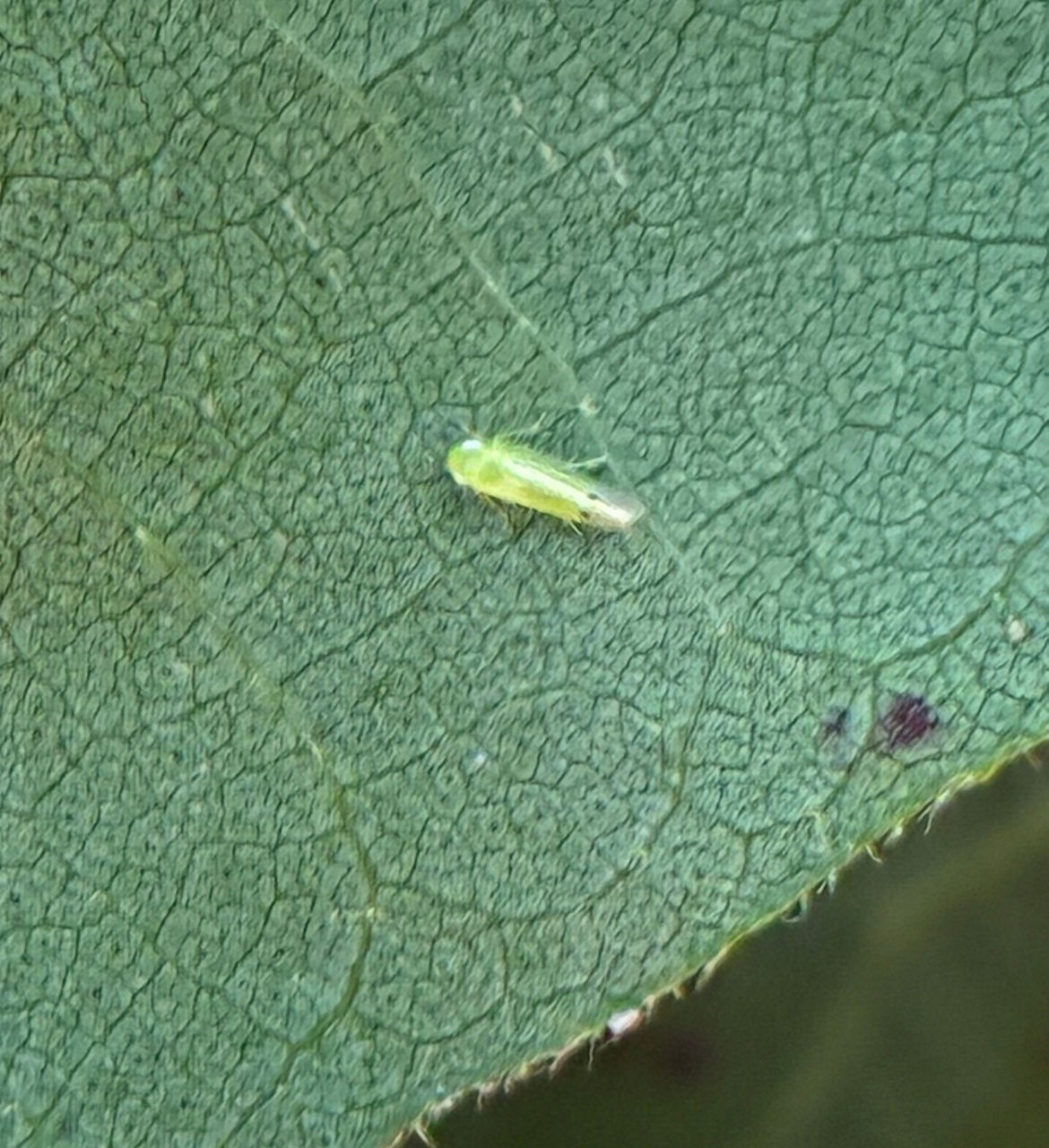
Adults are tiny and green, with a single dark spot on each wing (Figure 3), and some may have two spots on the head. If using a sweep net, a fine mesh used above the crop instead of through the crop is more effective at collecting jassids.1
How should I scout for cotton jassid?
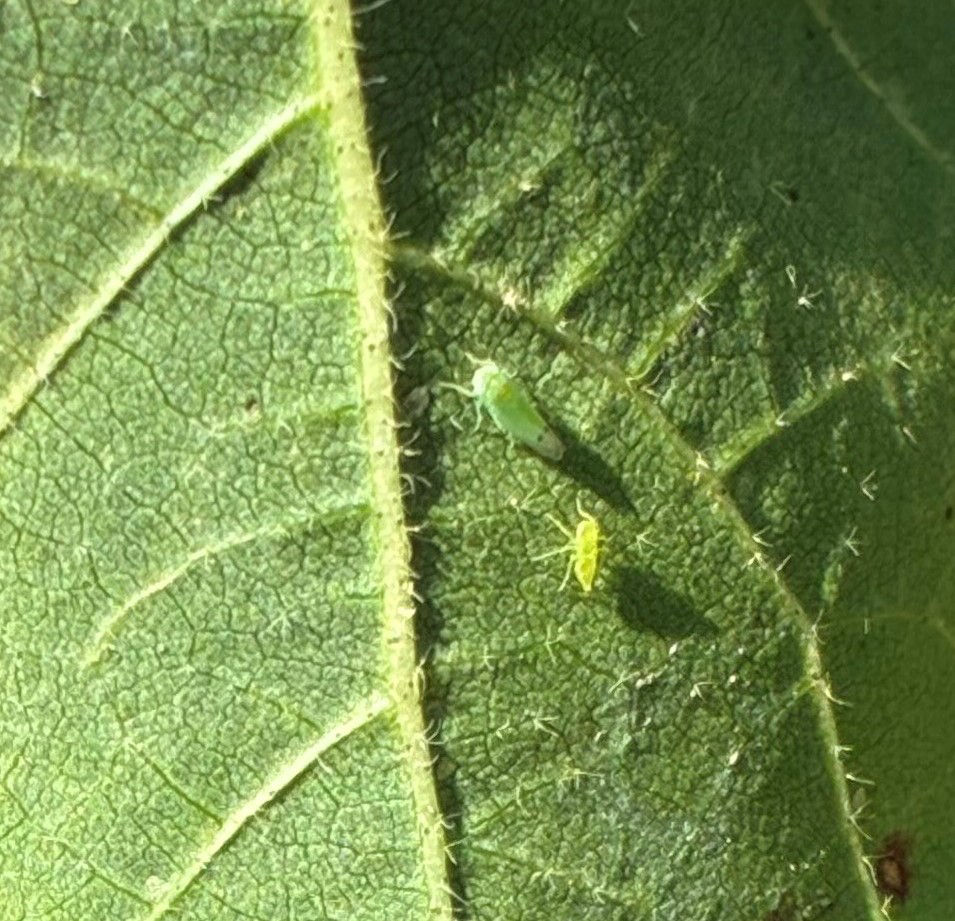
Scout cotton fields weekly by examining the undersides of leaves for adults, nymphs, and exoskeletons (Figure 4). 2 Cotton jassids may be more concentrated on the third, fourth, or fifth mainstem leaves below the terminal. The preliminary threshold is one to two jassid nymphs per leaf or early observations of hopperburn, especially if the symptom occurs on the interior of the field. This recommendation is subject to change as research continues.4
Are there insecticides available to help control cotton jassid?
Yes, and they continue to be assessed by extension entomologists. Preliminary trial results indicate that Bidrin® 8 insecticide helps provide consistent control in small plot trials and commercial field applications. If white flies also require control, then ARGYLE® insecticide or ASSAIL® insecticide can help provide control for both pests. Carbine® 50WG insecticide shows positive preliminary results. Additional insecticides that may be effective include Centric® 40WG insecticide, Transform® WG insecticide, Sefina® insecticide, and Sivanto® Prime Insecticide. Early testing indicates that pyrethroids are not effective at controlling cotton jassids.4
Are multiple insecticide applications necessary?
This depends on the effectiveness of the insecticide used as well as the pest pressure. There have been fields that required multiple applications, so continued scouting is critical.4 Always read and follow all pesticide label instructions.
How long do I need to protect my cotton field from two-spot cotton leaf hopper?
It is recommended to continue efforts until two weeks before anticipated defoliation. This usually equates to 20 to 25% open boll. It is important to protect green leaves, as those are needed to fill the remaining green bolls on the plant. Regular scouting is key as a jassid population can substantially damage a field in only two weeks.4
What if the field is already damaged? Is it worth treating?
If most of the leaves in the field are reddish or brown, then treatment may not be economically sustainable. However, if symptoms are early with some yellowing leaves, but leaves are still mostly green, then treatment is recommended.4
Are there natural predators of cotton jassid?
Information from Pakistan indicates that spiders, lady beetles, ants, and green lacewings help provide control.1 It is important to consider beneficial insect populations when selecting an insecticide.
What plants are hosts of cotton jassid?
There are many plants that host cotton jassid, including plants from four different families: Malvaceae, Fabaceae, Asteraceae, and Solanaceae. Common hosts other than cotton include okra, peanut, soybean, sunflower, eggplant, potato, cowpea, and roselle. Not all cultivars have the same level of infestation and damage. This wide range of hosts is part of why this insect is such a difficult pest to manage.1
Are some cotton fields more susceptible to damage?
It appears that earlier planted cotton has higher populations, but this may change as those fields are defoliated and populations potentially move to later planted cotton. 3 Fields with lower fertility may also be more prone to damage.5
Sources
1Liburd, O.E., Halbert, S.E, Samuel, N., and Dreves, A.J. 2024. Two-spot cotton leafhopper, Hemiptera: Cicadellidae, Typhlocybinae, Empoascini; Amrasca biguttula (Ishida) – A serious pest of cotton, okra and eggplant that has become established in the Caribbean Basin. Florida Department of Agriculture and Consumer Services. FDACS-P-02229. https://ccmedia.fdacs.gov/content/download/117692/file/two-spot-cotton-leaf-hopper-pest-alert.pdf
22025. Cotton jassid: A new threat to U.S. cotton. The National Cotton Council. https://www.cotton.org/tech/pest/upload/Cotton-Jassid-alert-flyer.pdf
3Towes, T., Crow, W., Cook, D., and Allen, T. 2025. Two-spotted cotton leafhopper/cotton jassid update. Mississippi State University Extension. https://www.mississippi-crops.com/2025/09/08/two-spotted-cotton-leafhopper-cotton-jassid-update/
4Greene, W.R. 2025. Updated thresholds and management guidelines for cotton jassid in Georgia. University of Georgia Cooperative Extension. https://site.extension.uga.edu/evansag/2025/09/updated-thresholds-and-management-guidelines-for-cotton-jassid-in-georgia/
5Graham, S. 2025. Alabama cotton jassid update. Alabama Cooperative Extension System. https://www.aces.edu/blog/topics/crop-production/alabama-cotton-jassid-update/
Web sources verified 09/05/25. 1415_640201
Disclaimer
ALWAYS READ AND FOLLOW GRAIN MARKETING AND ALL OTHER STEWARDSHIP PRACTICES AND PESTICIDE LABEL DIRECTIONS.