Deltapine® Brand Cotton Varieties Response to Plant Growth Regulator (PGR) Regimens – Mid-South
February 2, 2026
Click on a tab below to see data collected each year for this study
TRIAL OBJECTIVE
- Growers need information on the growth characteristics of new cotton varieties. Research at the Bayer Crop Science Learning Center at Scott, MS assesses the range of relative sensitivity to plant growth regulator (PGR) applications as new varieties are advanced into seed product lineups. This is particularly important with new varieties that contain ThryvOn® Technology, since these trait technologies are often introduced into genetic packages.
- This study was conducted to evaluate the yield characteristics and PGR response of newly introduced cotton varieties, providing basic considerations for how aggressively new cotton varieties should be managed relative to each other.
- This information is needed as soon as possible in the product introduction cycle to help optimize the performance of newly introduced cotton varieties.
RESEARCH SITE DETAILS

- Rates and timing of PGR treatments:
- A 4.2% mepiquat formulation (0.35 lb active ingredient/gal) was used for all applications.
- Three plant growth regulator regimes were implemented as follows:
- Untreated Check (UTC) – No application
- Passive Regime – represents controlling early season vegetative cotton growth with moderate rates of plant growth regulators and finishing the crop with stronger rates (mepiquat at 16 oz/acre) of plant growth regulator product.
- Aggressive Regime – consumes all the mepiquat active ingredient (a.i.) on either the Stance® or 4.2% mepiquat plant growth regulator labels. The maximum is 0.132 lb mepiquat a.i. from all sources.
- Fertility program:
- A mixed phosphorus and potassium fertilizer was fall-applied.
- An application of 140 lb nitrogen was soil surface applied as 30-0-0-2.5 fertilizer product during the 8-leaf or 9-node growth stage.
- All other field work, tillage, and herbicides were per local standards.
- This trial included five of the new product evaluators (NPE) cotton varieties tested during 2024. Three of those products were not advanced and were removed from the field part of the analysis. The one advanced product was renamed and included in the analysis.
- Trial was designed as a non-replicated strip plot.
- Plot size:
- 6 rows – approximately 0.17 to 0.21 acre per plot
- Data collected as follows –
- End-of-season plant heights – 10 plants measured per plot
- Machine harvested yield – entire plot
- Hand samples collected for fiber quality estimations
Table 1. Passive regime plant growth regulator products, application rates, and application dates used in this study.
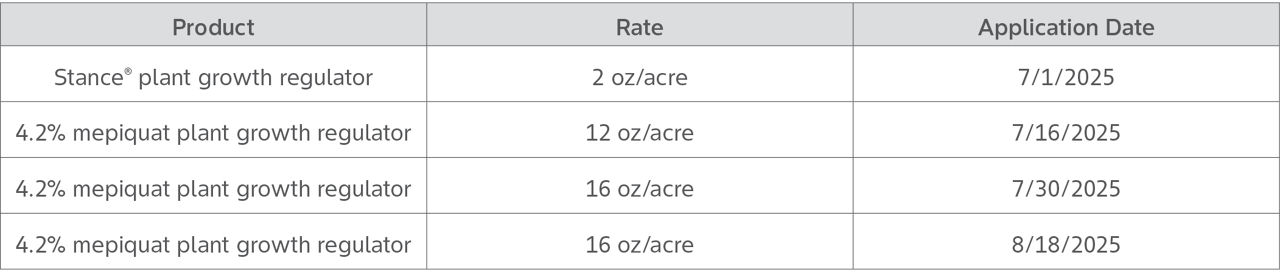
Table 2. Aggressive regime plant growth regulator products, application rates, and application dates used in this study.
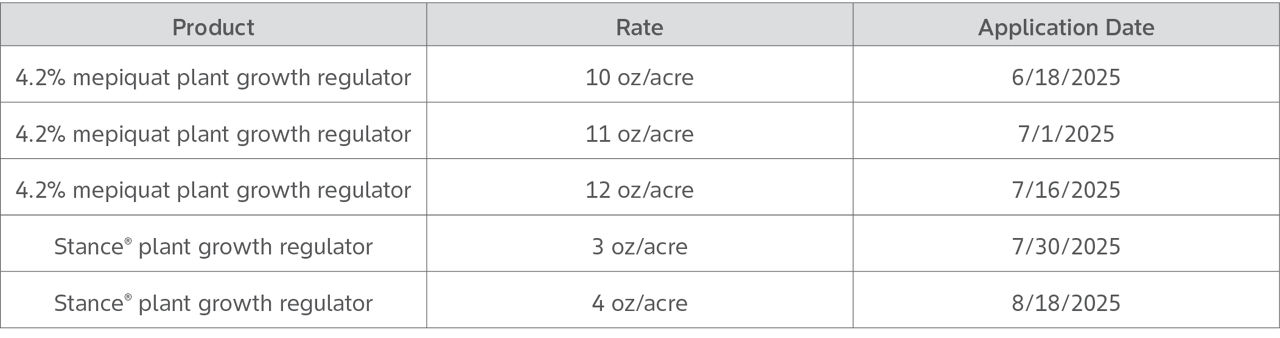
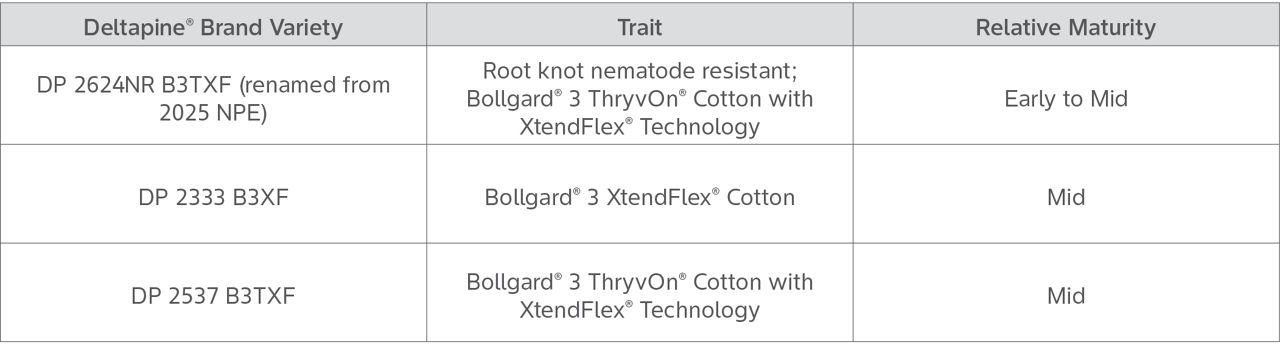
Table 3. Deltapine® brand cotton varieties planted in the trial, their traits, and relative maturities.
UNDERSTANDING THE RESULTS
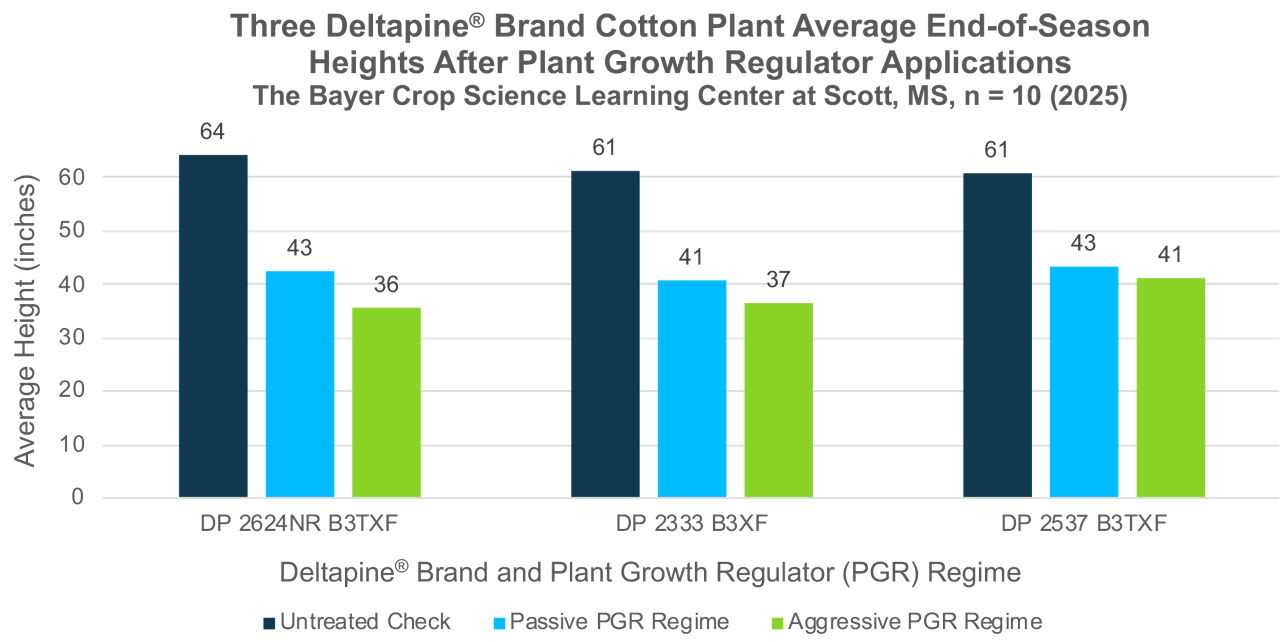
- End of season heights (Figure 1)
- Height reductions across this study were in the expected range.
- Untreated Check (UTC) – End of season height
- Ranged from 64 to 61 inches tall
- Average height across varieties = 62 inches
- Passive PGR Regime – End of season height
- Ranged from 41 to 43 inches tall
- Average height across varieties = 42 inches
- Average height reduction compared to UTC = 20 inches
- Aggressive PGR Regime – End of season height
- Ranged from 36 to 41 inches tall
- Average height across varieties = 38 inches
- Average height reduction compared to UTC = 24 inches
- Untreated Check (UTC) – End of season height
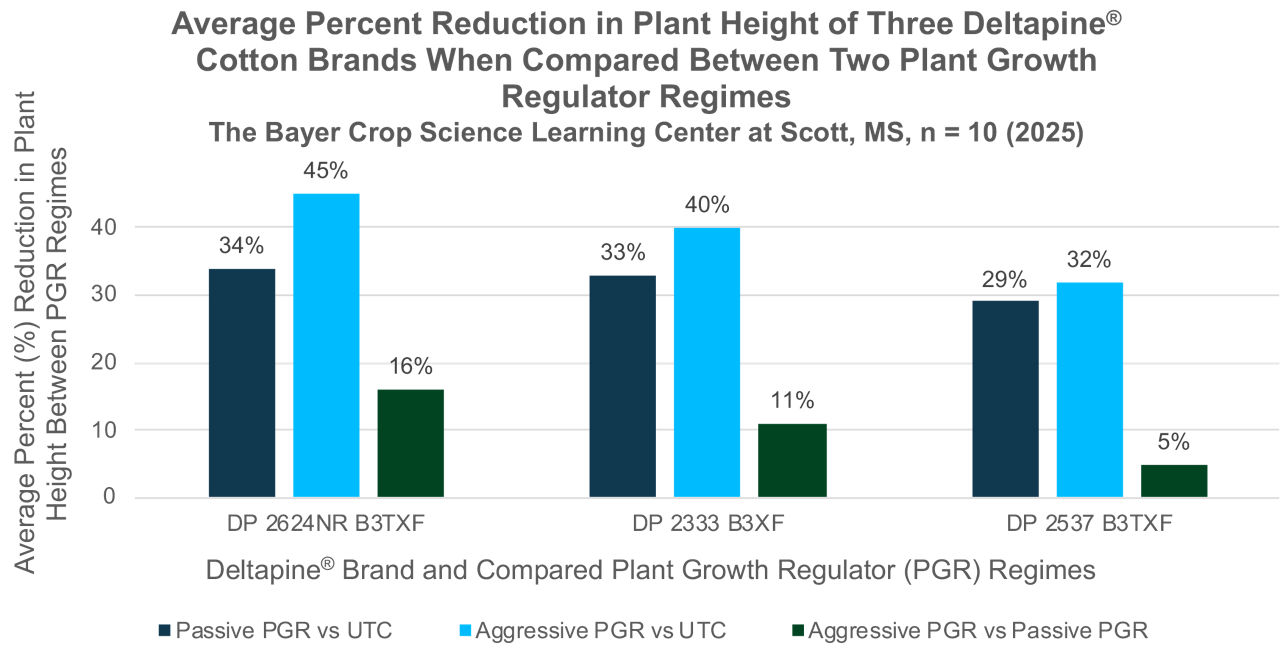
- Percent Height Reduction (Figure 2)
- This parameter was originally included in the 2025 report, which analyzed data from 2024. It indicates the relative value of PGR use across varieties and highlights the relative effects on plant response from increasing the aggressiveness of plant growth regulator applications.
- Passive PGR versus UTC
- Ranged from 34% to 29%
- Average reduction across varieties = 32%
- Aggressive PGR versus UTC
- Ranged from 32% to 45%
- Average reduction across varieties = 39%
- Aggressive PGR versus Passive
- Ranged from 5 to 16%
- Average reduction across varieties = 11%
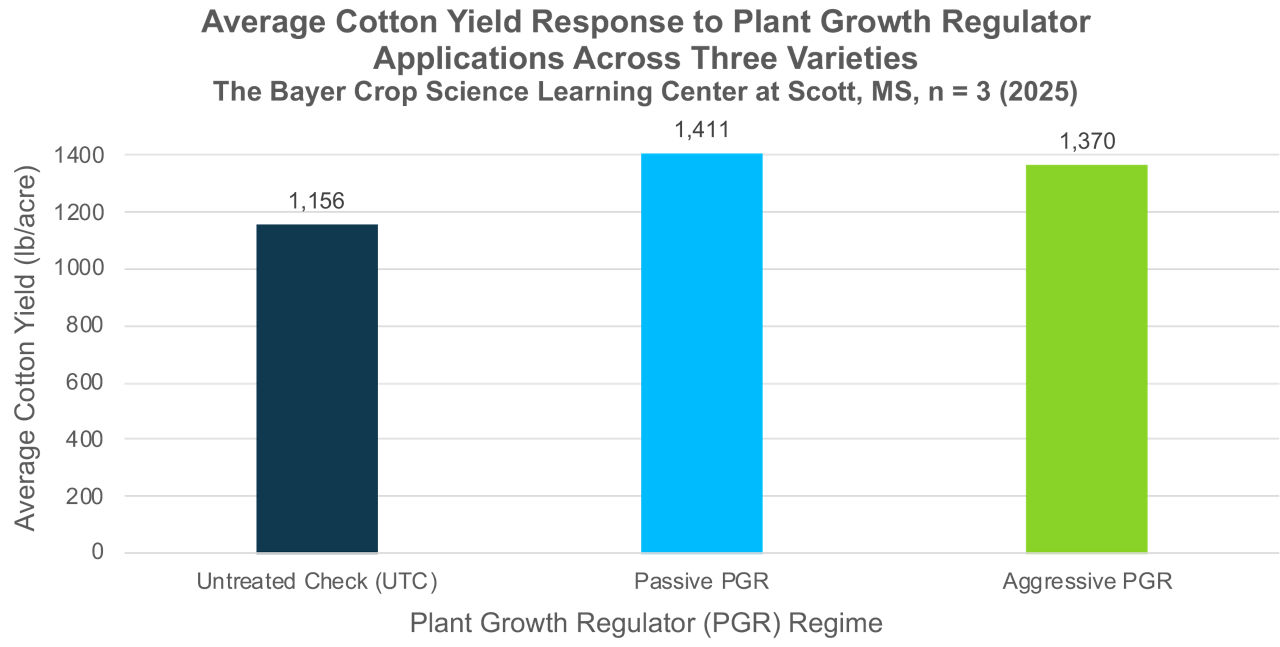
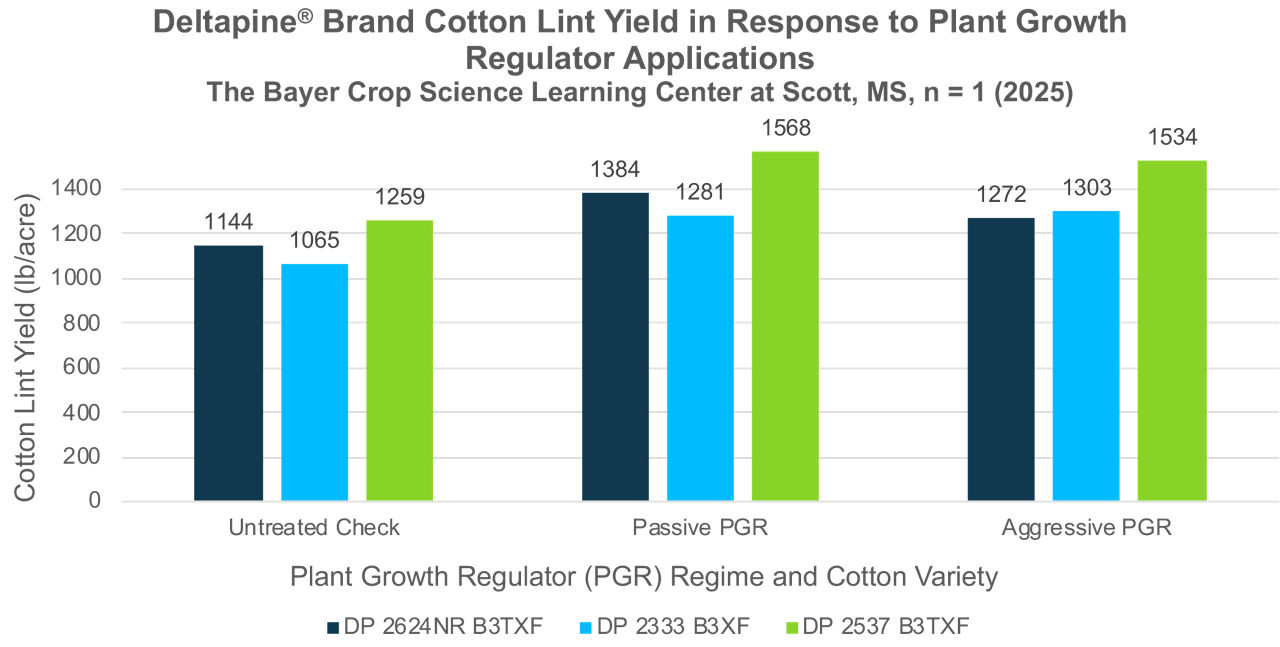
- Yield Results (Figures 3 and 4)
- Untreated check (UTC) average lint yields across varieties = 1,156 lb/acre
- Passive PGR average lint yields = 1,411 lb/acre
- Aggressive PGR average lint yields = 1,370 lb/acre
- Across varieties, the Passive PGR regime yielded an average of 255 lb/acre more than the UTC (Figure 3).
- Across varieties, the Aggressive PGR regime yielded an average of 214 lb/acre more than the UTC (Figure 3).
- The highest yields for both DP 2624NR B3TXF and DP 2537 B3TXF occurred under the Passive PGR regime (Figure 4).
- The range of yields produced under the Passive PGR regime were 240 to 309 lb/acre higher than the yields produced in the UTC (Figure 4).
KEY LEARNINGS
- As expected, the varieties tested showed a range of sensitivity to PGR, and DP 2624NR B3TXF and DP 2537 B3TXF showed the highest increase in yield under the passive plant growth regulator regime. Management should be tailored to the unique growth habits of each variety.
- The DP 2333 B3XF and DP 2624NR B3XF brands appeared to be moderately sensitive to PGR applications and/or not extremely aggressive in growth habit through the season. In particular, the brand DP 2624NR B3TXF may require less aggressive management strategies depending on the individual field. Brand DP 2333 B3XF was intermediate in PGR sensitivity versus either of the other varieties.
- An important note about DP 2624NR B3TXF brand: This variety is root knot nematode resistant and relatively sensitive to PGR applications. When planted into fields infested with root knot nematode, it is expected to exhibit aggressive early season growth, and curbing plant growth is particularly important under nematode pressure. Combined with the thrips management from ThryvOn® Technology, DP 2624NR B3TXF could develop very aggressive growth requiring PGR intervention at the appropriate timing to establish optimal growth management.
- Brand DP 2537 B3TXF appears less growth (height) responsive to PGR management and can be highly yield responsive to intensive PGR management. When combined with thrips control from ThryvOn® Technology, the DP 2537 B3TXF cotton variety can—and likely will—express aggressive early season growth. For this reason, growers should carefully plan early PGR intervention when planting the DP 2537 B3TXF cotton variety.
- Each field scenario should be carefully evaluated before implementing any PGR strategy. Evaluation should include consideration of established plant population, fertility, rotational crops, current growth rate, and varietal response to PGR use.
- Please contact your local Deltapine® brand representative for more information.
1414_340645
Disclaimer
ALWAYS READ AND FOLLOW GRAIN MARKETING AND ALL OTHER STEWARDSHIP PRACTICES AND PESTICIDE LABEL DIRECTIONS.