Palmer Amaranth & Waterhemp Identification and Management
August 26, 2026
Get Year-Round Updates From Our Agronomic Experts
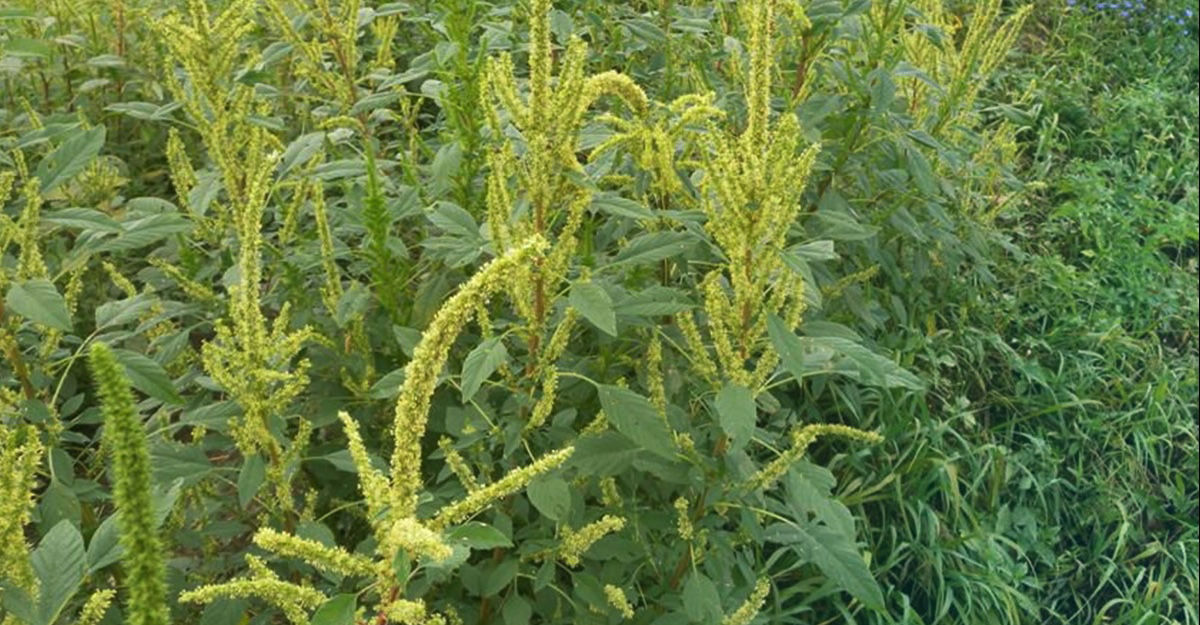
Palmer amaranth (Amaranthus palmeri) and common waterhemp (Amaranthus tuberculatus) are the agricultural equivalent of coyotes—cunning, adaptable, and relentless in their ability to survive and thrive under tough conditions. Each year, these weeds seem to get a little tougher, a little sneakier, and a lot more expensive to manage. Like coyotes that establish territory on roadsides and spread throughout neighborhoods, get Palmer amaranth or waterhemp on your roadside, and within a year millions of seeds can be dispersed throughout your fields.
Why are Palmer Amaranth & Waterhemp Key Management Priorities for Corn & Soybean Farmers?
These aren't average weeds. Both species have a notable capacity to adapt over time, which can make management more challenging.
- Waterhemp: Reported average yield reduction of 43% over three years when uncontrolled.1
- Palmer amaranth: Soybean yield potential can be reduced up to 79% when there are 2.5 plants per foot of row.2
- Seed Production: Without competition, each female waterhemp and Palmer amaranth plant can produce up to 1,000,000 seeds.3
- Seed Dispersal: Seeds from these species can be spread by harvesting and tillage equipment, wildlife, flooding, manure or compost, and gravity. Strong winds can move seeds about 1000 feet and pollen about 1600 feet.4
Like coyotes, they adapt and overcome tough conditions. Knowledge is your first line of defense against these resistant weeds.
How to Identify Palmer Amaranth vs. Waterhemp
Early identification is critical—both weeds become difficult to control once they exceed 3 to 4 inches in height. While both are aggressive pigweeds in the genus Amaranthus, here's how to tell them apart:4
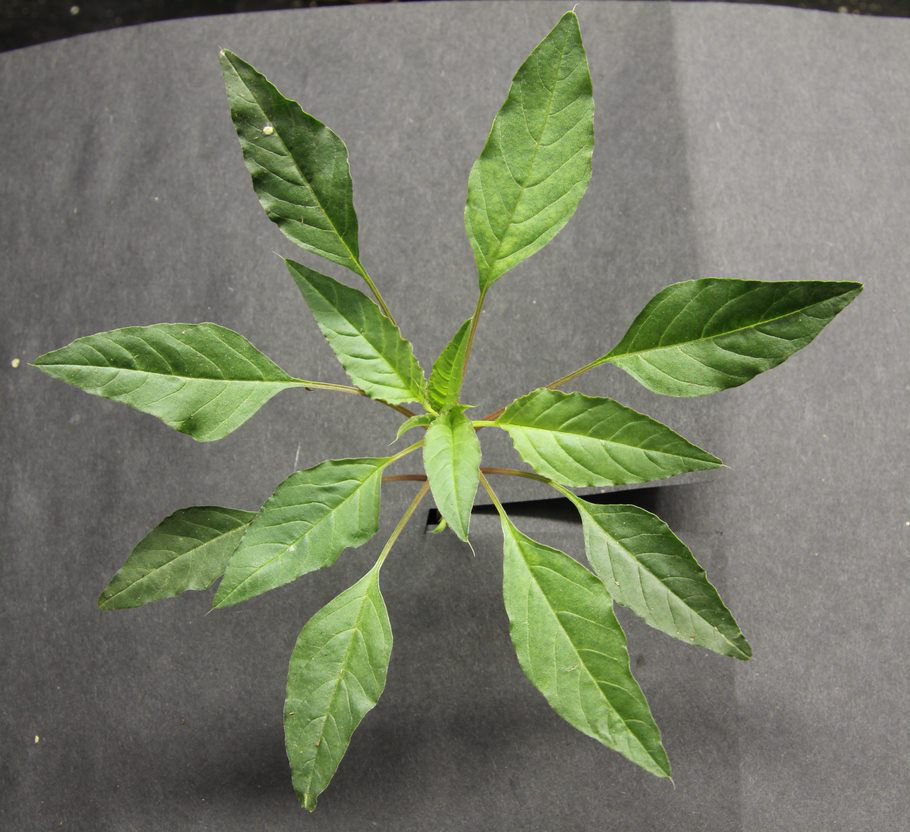
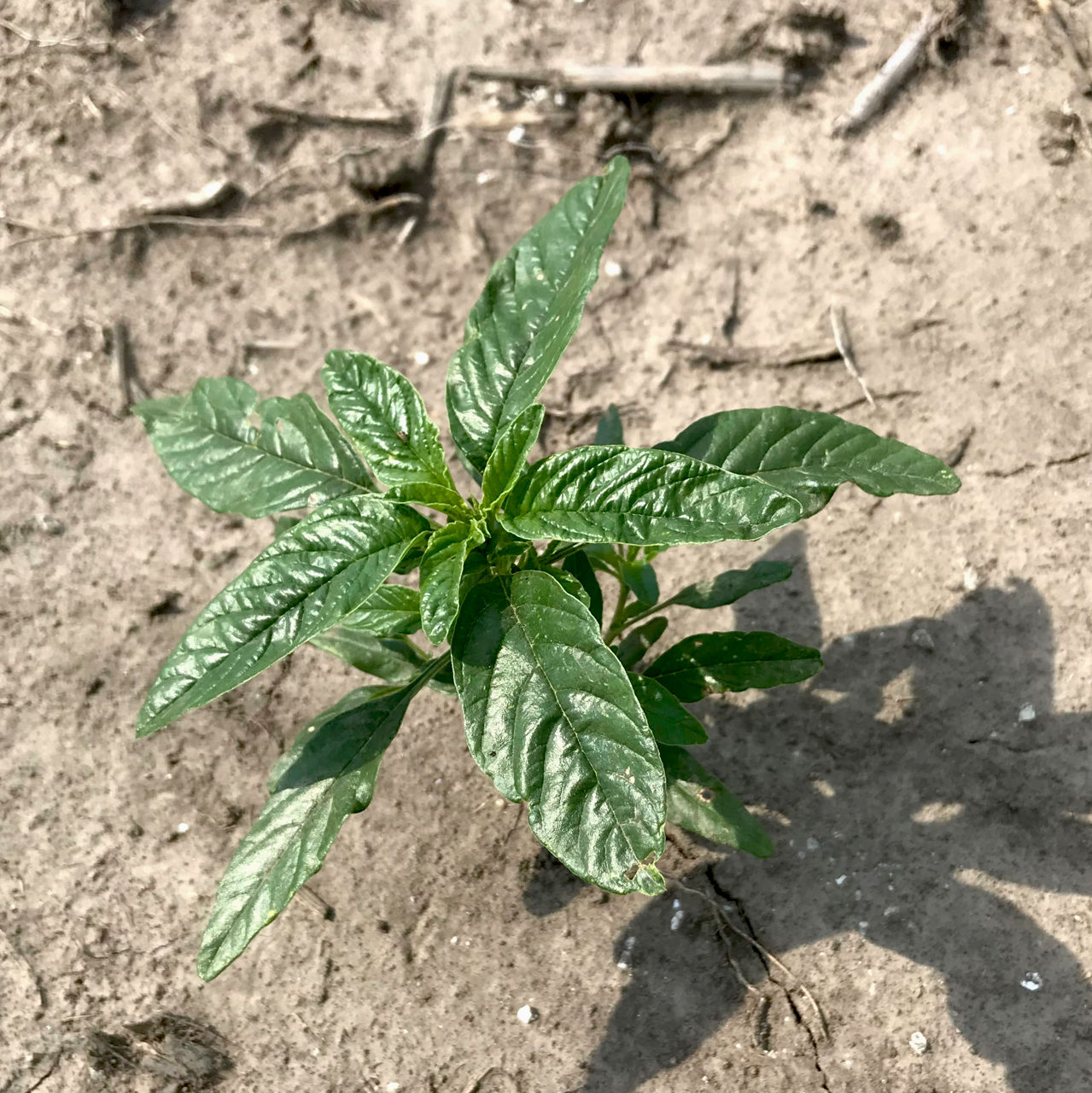
Palmer Amaranth Identification
- Leaf Shape: Broad, egg-shaped, or diamond-shaped leaves, sometimes with a faint "V" watermark
- First true leaves: First 1–2 true leaves (those produced after the cotyledon leaves) of Palmer amaranth have a small notch (hair) in the tip
- Stem: Smooth, often reddish, and flexible
- Petiole: Petioles are often longer than the leaf blade
- Seed Head: Large, dense, prickly terminal spikes on female plants
- Growth Rate: Can grow up to 2 to 3 inches per day under optimal conditions
- Height: Can reach six feet or more
- Geographic Focus: Dominant in Southern and Delta states and becoming a problem in Northern states
Waterhemp Identification
- Leaf Shape: Long, narrow, and lance-shaped leaves
- First true leaves: Common waterhemp true leaves without singular hair in the leaf tip notch.
- Stem: Smooth, less frequently reddish
- Petiole: Waterhemp has shorter petioles, with the petiole being shorter than the leaf blade
- Seed Head: Smaller, more slender and thinner than Palmer amaranth
- Growth Rate: Grows 1 to 1.25 inches per day
- Height: Generally shorter than Palmer amaranth
- Geographic Focus: Primarily a Midwest/Northern issue
For detailed visual identification guides, consult extension resources from various land-grant universities in the Additional Resources section below.
Palmer Amaranth & Waterhemp Crop Protection Management Strategies in Corn & Soybean
Zero Tolerance Is Key
Both Palmer amaranth and waterhemp can grow up to three inches per day. That means capturing them at their first emergence is key to keeping these weeds from going to seed. Once these prolific, resistant weeds get larger than 3 to 4 inches, they are difficult to slow down. A zero-tolerance policy and scouting 10 to 12 days post-planting can help protect fields from these resistant weeds.
A New Active Ingredient in Convintro™ Pre-Emergent Herbicide for Corn & Soybeans
For growers facing the most challenging resistant Palmer amaranth and waterhemp populations, Convintro™ pre-emergent herbicide represents a breakthrough solution. Diflufenican (DFF) is a new active ingredient with high efficacy for targeted, early-season pre-emergence control of resistant Palmer amaranth and waterhemp in corn and soybeans.
Convintro adds a different site of action (Group 12, phytoene desaturase enzyme) and important alternative mode of action (carotenoid biosynthesis inhibition) within an integrated weed management (IWM) program.
Confirmation and Expertise
Local agronomists or University extension representatives can confirm the presence of resistant Palmer amaranth or waterhemp in fields. Working with Bayer Crop Science representatives helps ensure you have access to the latest resistance management strategies and product recommendations tailored to your specific weed pressures.
Sources
1Hager, A.G., Wax, L.M., and Stoller, E.W. 2009. Common waterhemp (Amaranthus rudis) interference in soybean. Weed Science. 50(5): 607-610.
2 I Will Take Action. 2024. Palmer amaranth (pigweed). https://iwilltakeaction.com/weeds/identification/palmer-amaranth-pigweed/
3Schwartz, L.M., Norsworthy, J.K., Young, B.G., Bradley, K.W., Kruger, G.R., Davis, V.M., Steckel, L.E., and Walsh, M.J. 2016. Tall waterhemp (Amaranthus tuberculatus) and Palmer amaranth (Amaranthus palmeri) seed production and retention at soybean maturity. Weed Technology 30:284-290.
4Legleiter, T. and Johnson, B. 2013. Palmer amaranth biology, identification, and management. WS-51. Purdue Weed Science. Purdue Extension. Purdue University. https://www.extension.purdue.edu/extmedia/WS/WS-51-W.pdf
Additional Resources:
Interactive Identification Tools:
- Cornell Cals Weed Identification:
https://cals.cornell.edu/weed-science/weed-identification/pigweed-identification/comparison-images - Essman, A. (reviewed 2024), Ackley, B. and Loux, M. (original authors, 2019). Pigweed identification guide. ANR-0077. The Ohio State University.
https://ohioline.osu.edu/factsheet/anr-0077 - Vollmer, K. and Beale, B. 2023. Keys to identifying palmer amaranth and waterhemp (FS-2023-0653). University of Maryland Extension.: https://extension.umd.edu/resource/keys-identifying-palmer-amaranth-and-waterhemp-fs-2023-0653/
Species-Specific Resources:
- Hartzler, B. and Anderson, M. 2020. Palmer amaranth. Integrated Crop Management. Iowa State University Extension and Outreach. https://crops.extension.iastate.edu/encyclopedia/palmer-amaranth
- Hartzler, B. and Anderson, M. 2020. Waterhemp. Integrated Crop Management. Iowa State University Extension and Outreach. https://crops.extension.iastate.edu/encyclopedia/waterhemp
- Jhala, A. 2017. How to differentiate common waterhemp and palmer amaranth seedlings. CROPWATCH. University of Nebraska-Lincoln. https://cropwatch.unl.edu/2017/how-differentiate-common-waterhemp-and-palmer-amaranth-seedlings/
- Klingman, T.E. and Oliver, L.R. 1994. Palmer amaranth (Amaranthus palmeri) interference in soybeans (Glycine max). Weed Science 42(4):523-527
- Keeley, P.E., Carter, C.H., and Thullen, R.J. 1987. Influence of planting date on growth of Palmer amaranth (Amaranthus palmeri). Weed Science 35:199-204. Cambridge University Press on behalf of the Weed Science Society of America.
- Essman, A. (reviewed 2024), Ackley, B. and Loux, M. (original authors 2019). Pigweed identification guide. Ohio State University Extension. The Ohio State University. https://ohioline.osu.edu/factsheet/anr-0077
934780CP
Disclaimer
ALWAYS READ AND FOLLOW GRAIN MARKETING AND ALL OTHER STEWARDSHIP PRACTICES AND PESTICIDE LABEL DIRECTIONS.