Choosing the Right Cotton Seed Treatment
November 9, 2026
Key Takeaways
- In 2024, seedling diseases reduced US cotton yields by an estimate of more than 100,000 bales and nematodes reduced overall yields by an estimated 500,000 bales.1
- Seed treatments guard a grower’s seed investment during the early development stages, helping to prevent damage from early season insects, diseases, and nematodes.2
- Advanced seed treatment technology allows plants to uptake insecticides and fungicides, providing systemic and biological activity.
- Using cotton seed treatments culminates in healthy, uniform plants, resulting in higher quality and yield potential.
- Seed treatments have combinations of fungicides, insecticides, and nematicides to protect early season cotton plants to help produce a good stand.
Tips for Choosing a Cotton Seed Treatment
It pays to carefully research and select the cotton varieties and traits that fit an individual farming operation. Growers must also consider the seed treatment package that accompanies the variety they choose. Seed treatments provide an extra layer of risk management to protect the seed investment—and are one of the most valuable cotton inputs.
Remember that while seed treatments won’t offer stand-alone, season-long protection against insects and diseases, they can help get young cotton seedlings off to a good start.3,4 For example, seed treatments help when cold spring weather stunts cotton seedlings and makes the crop more susceptible to diseases and insects.2
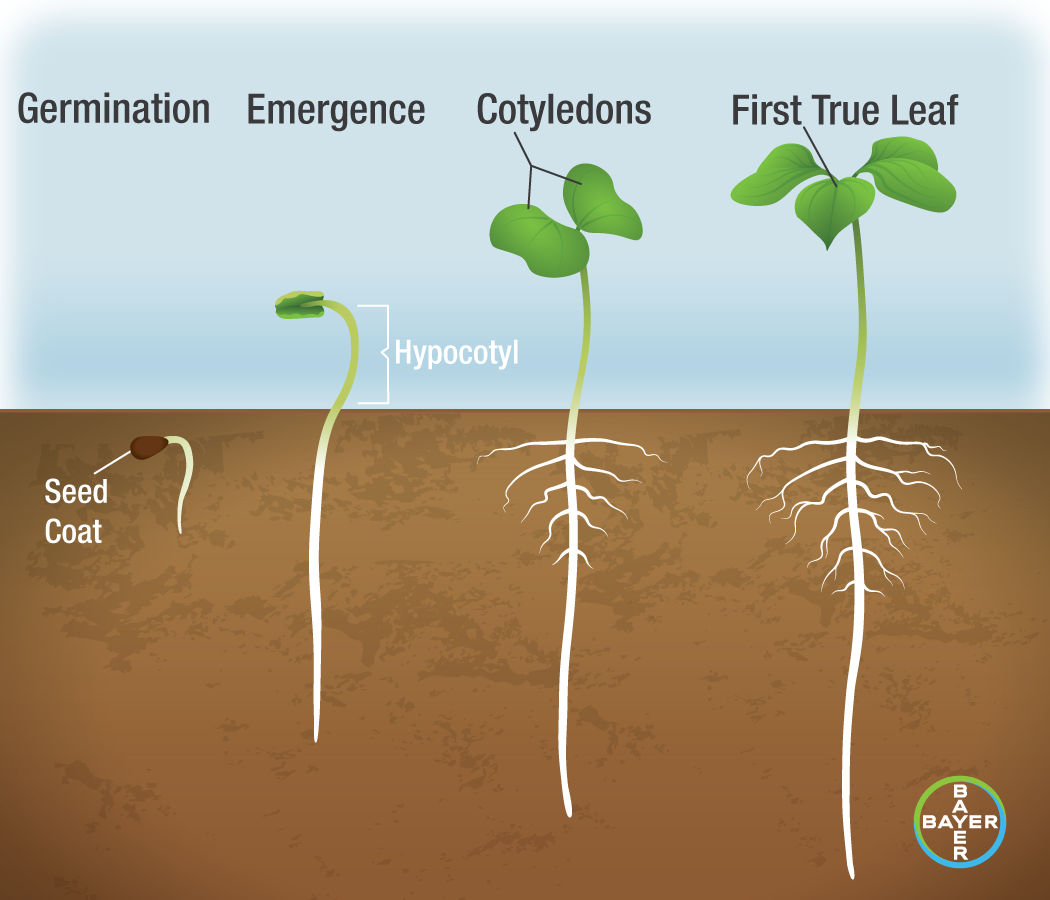
When selecting a seed treatment:
- Consider the disease and insect history of the fields.3
- Identify the diseases and insects that should be targeted. Different seed treatment products may manage very different pests during early season stand establishment.
- Discuss seed treatment options with seed companies and ag retailers.
- Review university extension trials for the relevant area and soil types. When possible, find data that has been compiled from multiple years of research.
How Do I Know Which Seed Treatment Is on My Cotton Seed?
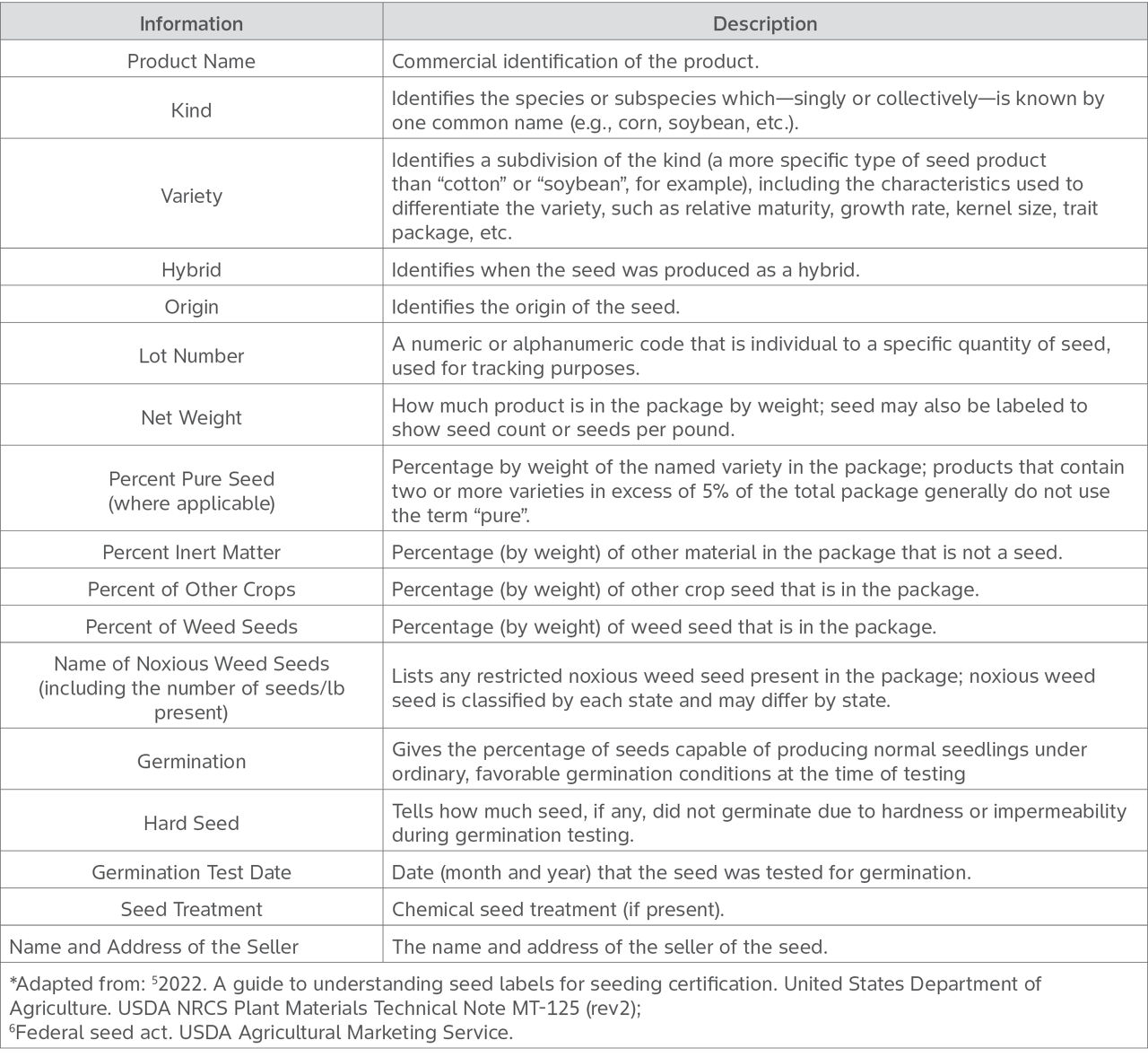
The label of any treated seed product—not just cotton seed—must state that the seed has been treated, provide the name of the treatment, and include any other important information for the user, including applicable planting restrictions and any personal protective equipment necessary for handling treated seed (Table 1).5,6
Table 1. Information available on seed bags.*
Cotton Seed Treatment Options From Bayer
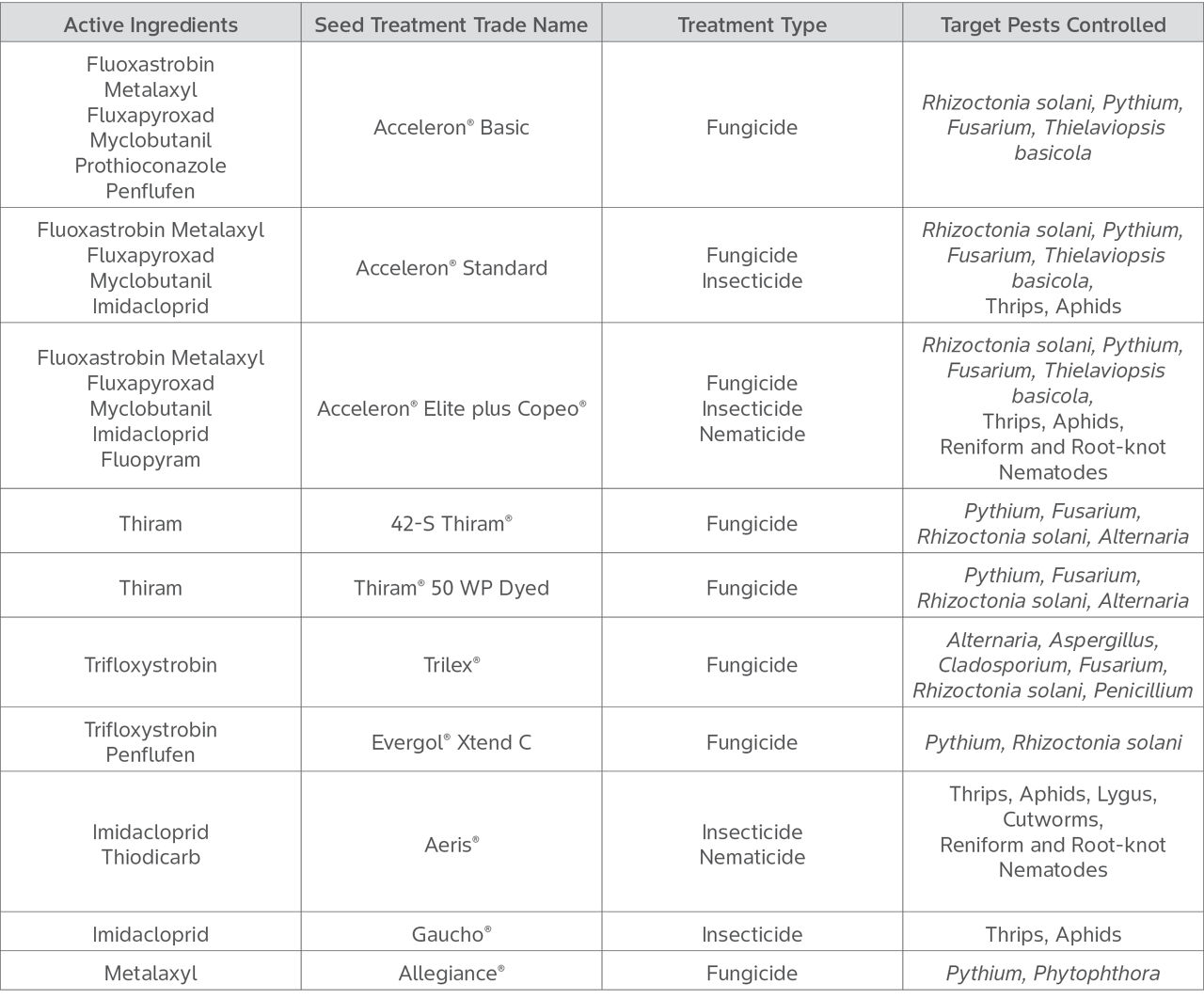
The Bayer portfolio of seed treatments includes products that offer protection against seedling diseases and early season management of yield-robbing insects and nematodes.
Acceleron® Solutions Offering an exclusive combination of fungicide, insecticide, and nematicides that provides broad spectrum protection against key early season pests and pathogens.
Aeris® seed-applied insecticide/nematicide provides two effective modes of action against thrips and broad spectrum protection against early season insect and nematode pressures, which helps establish strong seedlings and root systems.
Trilex® Advanced Seed Treatment provides broad-spectrum protection against cotton seedling pathogens, including Fusarium, Rhizoctonia, Pythium, and Thielaviopsis basicola.
Additionally, Bayer offers cotton growers EverGol® Energy Seed Treatment fungicide which, when applied on cotton seed, controls soilborne pathogens such as Rhizoctonia.
Gaucho® 600 Flowable Seed Treatment provides protection against labeled pests—such as aphids, bean leaf beetles, and seedcorn maggots—acting both on contact to protect the roots and systemically to protect the plant.
View our Seed Growth section to learn more about cotton seed treatments from Bayer that offer protection against early season insect pests as well as seed and seedling diseases, or contact your local Bayer representative.
Before selecting a seed treatment, please read the entire label for the best possible results and to confirm the product is effective on the pest it is intended to manage. Not every product is suitable for every situation nor labeled in every state. Correct application techniques and equipment will ensure the best results.
Table 2. Cotton seed treatment active ingredients, trade names, treatment types, and labeled pests.
Sources
1Faske, T., Sisson, A., Lawrence, K., et al. 2025. Cotton disease loss estimates from the United States — 2024. Crop Protection Network. CPN-7001-24. https://cropprotectionnetwork.org/publications/cotton-disease-loss-estimates-from-the-united-states-2024
22020. Cotton planting recommendations. UGA Cooperative Extension, Producer Updates. https://site.extension.uga.edu/tiftcoag/2020/04/cotton-planting-recommendations/
3Whitaker, J. 2019. Seedling diseases and management in cotton. UGA Cooperative Extension, Ben Hill County Ag. https://site.extension.uga.edu/benhillcoag/2019/05/seedling-diseases-and-management-in-cotton/
4Reisig, D. 2019. Choosing and insecticidal seed treatment on in-furrow for thrips in cotton (Reisig, Collins, Huseth). NC State Extension. https://cotton.ces.ncsu.edu/news/choosing-an-insecticidal-seed-treatment-or-in-furrow-for-thrips-in-cotton-reisig-collins-huseth/
52022. A guide to understanding seed labels for seeding certification. United States Department of Agriculture. USDA NRCS Plant Materials Technical Note MT-125 (rev2). https://www.nrcs.usda.gov/plantmaterials/mtpmctn13828.pdf
6Federal seed act. USDA Agricultural Marketing Service. https://www.ams.usda.gov/rules-regulations/fsa
Web sources verified 10/20/26. 1415_105842
Disclaimer
ALWAYS READ AND FOLLOW GRAIN MARKETING AND ALL OTHER STEWARDSHIP PRACTICES AND PESTICIDE LABEL DIRECTIONS.