Common and Southern Corn Rust Differentiation
July 28, 2026
Get Year-Round Updates From Our Agronomic Experts
Key Takeaways
- Common rust and southern rust can look similar during early scouting, but southern rust is generally more aggressive and has greater potential to reduce corn yields.
- Check pustule color, density, and leaf surface location to help tell common rust and southern rust apart.
- Scout earlier for common rust in cool, wet conditions and later for southern rust when warm weather favors rapid development.
Common vs Southern Rust: Why the Difference Matters
Common rust (Puccinia sorghi) and southern rust (Puccinia polysora) can both appear in US corn fields each year and may look similar during early scouting. Of the two diseases, southern rust is generally the greater concern because it is more aggressive and has greater potential to reduce yield. Neither rust overwinters in the Midwestern states; therefore, fungal spores must move into the Midwest by wind from overwintering locations in Mexico, the Caribbean, and the southern US.
Disease severity can vary greatly from year to year, depending on growing conditions and when spores arrive. Common rust is often found throughout most corn-growing states but usually causes little, if any, economic loss. Southern rust may not be an annual concern, but when conditions are favorable it can reach an economic threshold quickly. Southern rust pustules can quickly cover and damage upper leaf tissue, reducing photosynthetic area. When photosynthesis is compromised, yield potential can be reduced.1 Loss of leaf tissue can also reduce overall plant health, increase the potential for secondary disease development, and contribute to premature plant death, which can compromise late-season plant integrity. Yield loss from southern rust ranged from 4% to 45% in one study.2
In-field differentiation starts with three observations: pustule color, pustule density, and which side of the leaf has pustules. Use these observations together; color alone may not be enough to confidently distinguish common rust from southern rust.
Impact of Planting Date on Common and Southern Rust Development
Younger corn leaves are more vulnerable to rust infection than mature leaves.1,3 Early planting can help corn plants become established and move through vulnerable growth stages before southern rust pressure builds. Because common rust develops at lower temperatures, common rust pustules may be found earlier in the season than southern rust pustules. However, because causal spores must arrive from infected plants in southern locations, common rust is unlikely to reach threshold levels during vegetative corn growth stages. Wisconsin information indicates that 162 common rust pustules are required on a leaf to reach 1% severity.3 This would require a very high level of infection to become problematic.3
Because southern rust can develop quickly, planting date can influence risk. Later-planted fields may have greater yield loss potential because infection can occur when more young, vulnerable leaves are present.
How to Identify Common Rust and Southern Rust
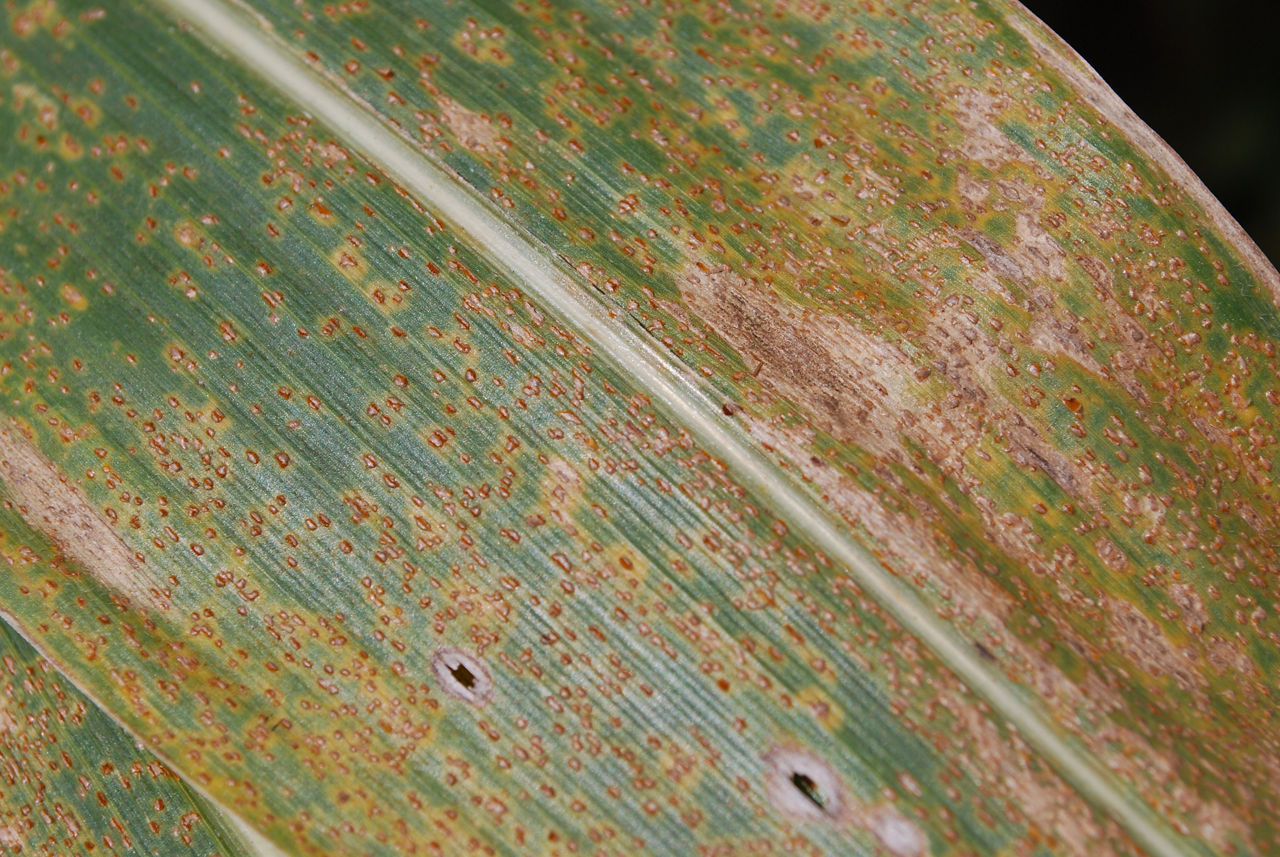
Southern rust develops numerous circular, light cinnamon-brown to bright orange pustules that are often densely clustered, mostly on the upper leaf surface (Figure 1).1,2 Occasionally, southern rust pustules can be found on the underside of a corn leaf. Southern rust may also have yellow halos surrounding the pustules.1
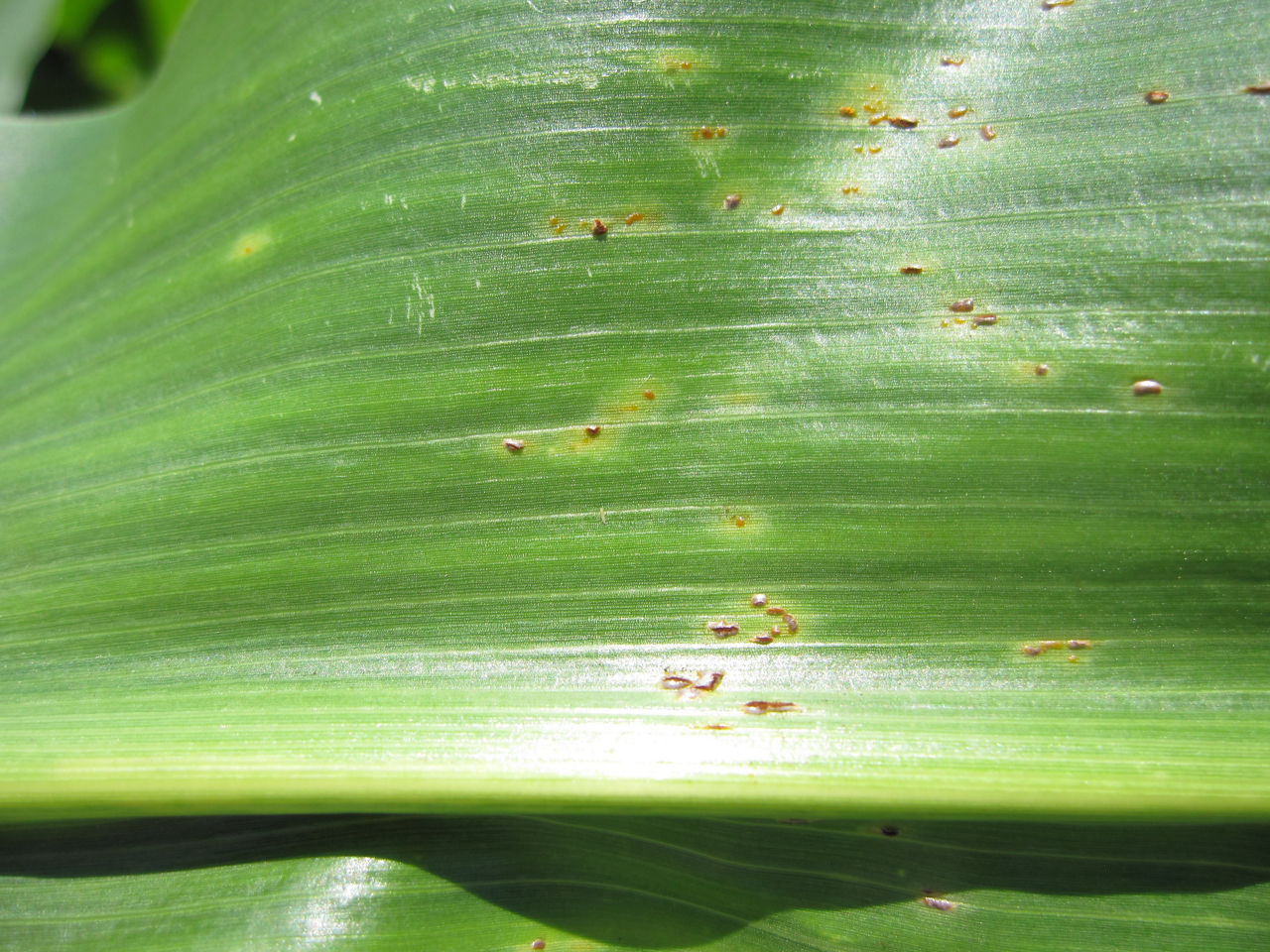
Common rust develops elongated, sporadic, dark brick-red pustules on both upper and lower leaf surfaces (Figure 2).2 The presence of pustules on both sides of the leaf is one of the most useful field distinctions when differentiating common rust from southern rust.
Favorable Growing Conditions for Common and Southern Corn Rust Development
Key growing conditions for the two rusts to develop can overlap; however, the ideal condition for each disease varies. One common characteristic for both rusts is that initial infection can occur when spores are present and leaves have about six hours of wetness from dew, rain, or irrigation.
Common rust is usually found earlier in the season, especially in the Midwest, because this disease thrives in a temperature range of 61 to 77 °F.3 Moisture is needed for infection and spread on corn plants and is often provided by cool evenings that allow dew to form on leaf surfaces. High temperatures and dry conditions help limit common rust infection and spread.
Southern rust is usually found later in the growing season because it thrives in a temperature range of 77 to 82 °F.3 However, it can continue to develop and spread above 82 °F and may be active in July and August when temperatures are generally higher. Unlike common rust, southern rust can spread with very little continued moisture.
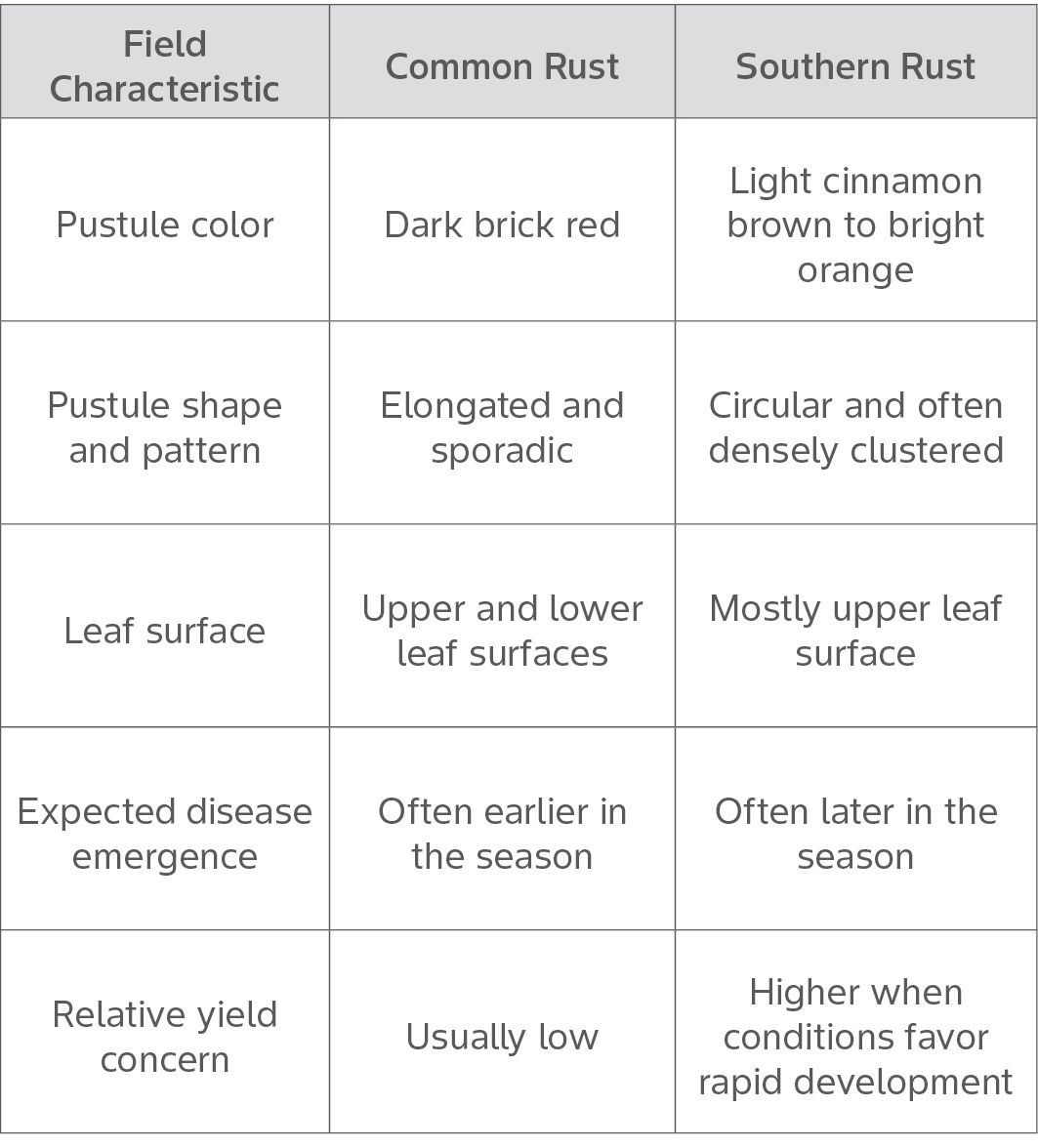
Table 1. Quick reference of common and southern rust field characteristics.
Common and Southern Rust Scouting Tips
For common rust, check fields earlier in the season when sufficient moisture has been present for infection and temperatures have been in the 60 to 70 °F range for several weeks. Turn leaves over and check for pustules on both leaf surfaces.
Scouting for southern rust can usually begin later in the season. Look closely at the upper leaf surface, where southern rust pustules are most often found. Weekly scouting may be needed when conditions favor rapid infection and spread.
How to Manage Common & Southern Corn Rust
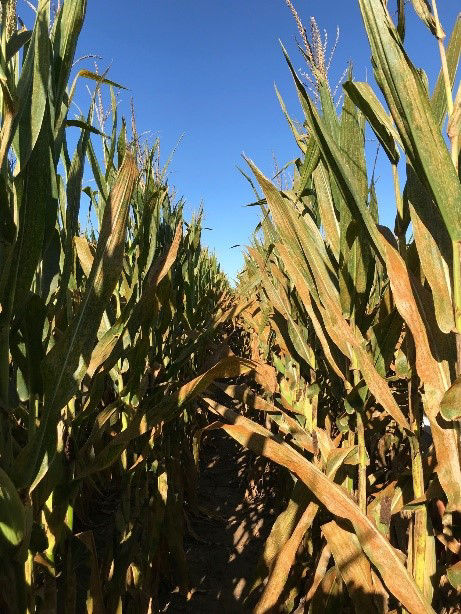
To manage common and southern rust it is important to select corn products with good disease tolerance, as products can vary greatly in their response to rust diseases (Figure 3). Both rusts are fungal diseases; therefore, timely applied fungicides may be an option for control. Scouting is important to identify whether either rust is present and how quickly disease pressure is increasing. Protecting the upper leaves is important for grain fill and yield potential, particularly when southern rust is present. If rust is appearing on upper leaves near VT (tasseling), consider whether a labeled fungicide application is justified. Fungicide applications may not be warranted every time. Disease pressure, application cost, and crop prices should be considered when determining if a fungicide application is justified.2
It is good practice to use a fungicide with at least two modes of action to help manage fungicide resistance. Since fungicide efficacy lasts about 2 weeks, a second application may be necessary. Bayer Crop Science labeled and recommended fungicides to manage common and southern corn rusts include Delaro® 325 SC fungicide and Delaro® Complete fungicide.
For additional fungicide information, please read Three Ways Fungicides Protect Crop Potential and Increase ROI and Fungicide Application Coverage in Managing Disease. Please see Managing Southern Rust: Corn Fungicides & Seed Tolerance for fungicide research information.
Tracking Southern Corn Rust Progression
Because southern rust can develop quickly and cause economic loss, seasonal information from industry and university agronomists and plant pathologists can help inform scouting priorities. One resource for tracking southern rust progression is the United States Department of Agriculture Regional IPM Centers website: https://corn.ipmpipe.org/southerncornrust/.
Sources
1Jackson-Ziems, T.A. 2014. Rust diseases of corn in Nebraska. G1680. NebGuide. University of Nebraska-Lincoln Extension. https://extensionpubs.unl.edu/publication/g1680/na/html/view
2Isakeit, T. 2020. Southern rust of corn and its management in south Texas. Texas A&M AgriLIFE Extension, Texas A&M University. https://southtexas.tamu.edu/files/2020/05/Southern-Rust-of-Corn_2020.pdf
3Wise, K. 2010. Diseases of corn. Common and southern Rusts. BP-82-W. Purdue University Extension. https://www.extension.purdue.edu/extmedia/BP/BP-82-W.pdf
Web sources verified 4/14/26. 1211_841250
Disclaimer
ALWAYS READ AND FOLLOW GRAIN MARKETING AND ALL OTHER STEWARDSHIP PRACTICES AND PESTICIDE LABEL DIRECTIONS.